
Microsoft unveils open-source ML tool it says improves 2–6 week weather forecasts
Microsoft announced a machine-learning postprocessing method it says improves the accuracy of weather forecasts two to six weeks ahead. The company said the approach, released as open-source software, is cost-effective and could help farmers and emergency responders plan with greater certainty.
AI-assisted synthesis · Based on 4 outlets' reporting · Full text read from 2 of 4 outletsHow it's made
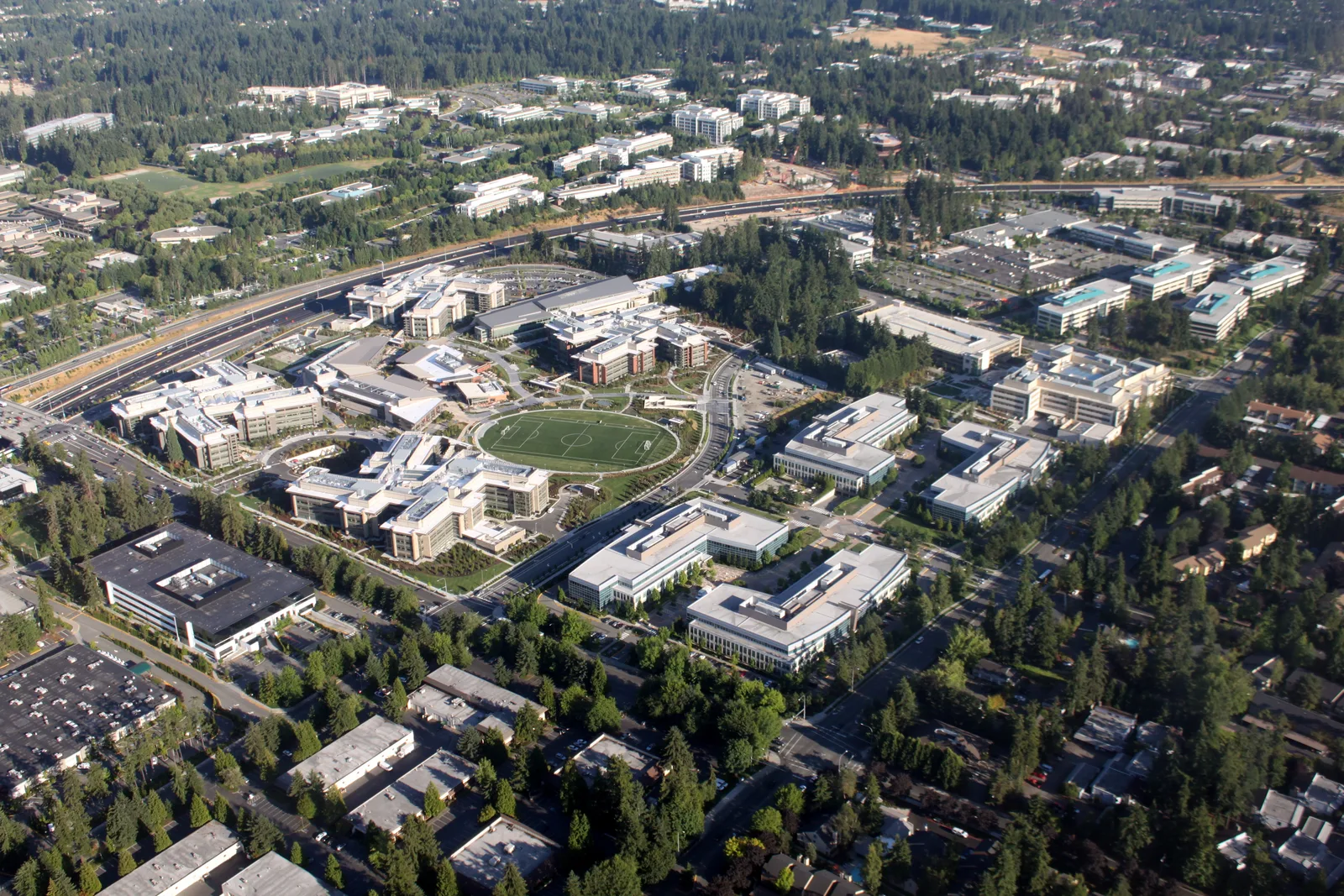 File photo
What happened
Key facts
- Microsoft researchers announced a machine-learning tool that they say improves forecast accuracy two to six weeks ahead (per The Verge).
- Microsoft researchers reported that PBC improved the accuracy of a leading physics-based model from the European Centre for Medium-Range Weather Forecasts (ECMWF) for 98 percent of precipitation targets and 92 percent of temperature targets (per The Verge).
- An author of the paper, Genevieve Flaspohler, said the models are lightweight, easy to train, and suitable for scientists without large resources to adapt locally (per The Verge).
- MIT researchers and collaborators said their machine-learning layer produced the first forecasts to beat climatological averages in the subseasonal two-to-six-week range (per lavx.hu).
- MIT-affiliated reporting said doubling of accuracy in the two-to-six-week range was achieved by the machine-learning system developed by MIT and partner institutions (per lavx.hu).
The brief
Microsoft and academic partners released a machine-learning postprocessing method they say improves forecasts in the traditionally hard-to-predict two-to-six-week range. The technique, which Microsoft labels Probabilistic Bias Correction (PBC), is being published as open-source software and is intended to sit on top of existing physics-based models to correct systematic errors.
Microsoft researchers reported that applying PBC to a leading European physics-based forecast from the European Centre for Medium-Range Weather Forecasts (ECMWF) improved accuracy for 98 percent of precipitation targets and 92 percent of temperature targets.
The company characterized the approach as cost-effective and said it could help operational users such as farmers and emergency responders plan with greater certainty.
Researchers at MIT and partner institutions described a similar machine-learning postprocessing concept and said their system achieved the first forecasts to beat climatological averages in the subseasonal two-to-six-week window. MIT reporting said the model doubled accuracy in that range, a timeframe meteorologists have long called difficult for prediction.
Microsoft and MIT collaborators published a paper on the method with authors from multiple institutions, and Matthew Chantry, ECMWF’s strategic lead for machine learning, praised the paper as a positive development for the community while cautioning that moving research into operational forecasting is challenging.
Microsoft and one paper author, Genevieve Flaspohler, emphasized the practical advantages of the new approach: they said the models are lightweight, inexpensive to train and therefore accessible to scientists and organisations without large computational resources.
That accessibility was highlighted as one reason the teams are releasing the method as open-source software, so local forecasting groups and decision-makers can experiment and adapt the postprocessing layer to specific regional needs.
The reporting ties the potential operational benefit to concrete users: Microsoft and MIT-affiliated accounts named farmers, energy operators and emergency managers as groups that could use improved lead time to prepare for extreme events.
The work challenges a longstanding boundary in forecasting: meteorological theory and practice have treated roughly two weeks as a limit for deterministic predictability, a point the MIT reporting referenced when describing the ‘‘predictability desert’’ of subseasonal forecasting.
Both Microsoft and the academic collaborators framed the new method as a way to extend useful probabilistic information beyond that conventional horizon by correcting biases and errors in existing ensemble forecasts.
Sources differ in emphasis and detail: Microsoft’s account focuses on the PBC label, the ECMWF test gains for precipitation and temperature targets, and open-source release; MIT reporting emphasizes beating climatological averages and a reported doubling of accuracy in the two-to-six-week range.
Independent operational rollout and real-world testing remain open steps: ECMWF’s Matthew Chantry noted that operationalising research ideas is ‘‘a most challenging step,’’ and the reporting makes clear that improved metrics in retrospective or experimental tests do not automatically translate into immediate changes in routine forecasts.
Why it matters
- Farmers in specific agricultural regions could gain more lead time to plan planting, irrigation or harvest windows because Microsoft and collaborators say the method improves two-to-six-week precipitation and temperature forecasts; the reporting names agriculture as a target user group.
- Emergency managers and energy operators could use extended subseasonal probabilistic forecasts to prepare for extreme-weather events, with Microsoft and MIT reporting linking the improved lead time to concrete operational decisions in those sectors.
- Lower computational cost and an open-source release mean smaller national and local forecast services without large compute budgets can potentially adopt the technique, as Genevieve Flaspohler and Microsoft described the models as lightweight and easy to train.
What to watch next
- Whether national forecast centres test or adopt Probabilistic Bias Correction (PBC) or the MIT postprocessing layer in operational pipelines, as ECMWF and Microsoft publications invite local trials.
- Whether ECMWF or other major operational model centres publish independent validation of PBC’s reported gains when applied to their operational forecast systems.
- Whether farmers’ cooperatives, energy operators, or emergency management agencies report pilot use of the open-source code to inform planning for subseasonal weather risks.
How it's being covered
Coverage analysisShow details4 source articles · 4 unique outletsCoverage mix: Too few rated· 2 CenterWhere the outlets are based: Europe 50% · US/Canada 25% · Other 25%
How outlets' accounts compare
4 framing differences · 3 uncorroborated claims · 3 information gaps- S1 (The Verge) frames the advancement around Microsoft’s named method Probabilistic Bias Correction (PBC), its specific percentage gains against ECMWF targets, and the open-source release; S2 (news.lavx.hu / MIT reporting) frames the result as MIT-led work that produced the first forecasts to beat climatological averages and emphasizes a reported doubling of accuracy in the two-to-six-week range.
- The Verge reports PBC improved ECMWF precipitation targets for 98 percent and temperature targets for 92 percent; news.lavx.hu reports a doubling of accuracy in the two-to-six-week range.
- Both sources attribute improved subseasonal forecasts to a machine-learning postprocessing layer applied to existing models; they do not document whether the improvements caused operational centres to change forecasts or decision-making yet.
- The magnitude of improvement: The Verge gives specific percentage improvements against ECMWF targets (98% for precipitation, 92% for temperature), while news.lavx.hu reports a doubling of accuracy in the two-to-six-week range; the two claims are not directly reconciled in the sources.
- The Verge attributes the PBC method and the ECMWF test results to Microsoft researchers and collaborators including MIT and ECMWF authors; news.lavx.hu attributes the doubling-accuracy claim to MIT researchers and partner institutions.
- Matthew Chantry of ECMWF called the paper 'a good example of new ideas being developed for the benefit and consideration of the community' and warned about the challenge of turning ideas into operational processes.
- An author, Genevieve Flaspohler, said models like PBC are 'lightweight' and 'easy to train' so scientists without huge resources can adapt them locally.
- No report Updat3 read documents operational adoption timelines or independent, real-time operational verification by national forecast centres.
- No source provides detailed civilian impact data from real-world deployments of the method or quantified economic benefits tied to specific decisions.
- No source details funding sources or conflicts of interest for the research beyond institutional affiliations.
How we got here
The immediate backdrop was the research milestone that MIT and collaborators reported in 2023, when they said a machine‑learning layer produced subseasonal (two‑to‑six‑week) forecasts that beat climatological averages.
The structural roots include the World Meteorological Organization’s Subseasonal to Seasonal (S2S) project launched in 2015 to coordinate research on the two‑to‑six‑week forecasting horizon and the European Centre for Medium‑Range Weather Forecasts (ECMWF), which was founded in 1975 and has operated the Integrated Forecast System used as a benchmark for medium‑range and subseasonal forecasting.
Original sources
2 of 4 articles · Europe · Show allEvery story links to the reporting it was built from. How we choose sources
Spotted a factual error, a broken link or a misleading summary? Tell us.