
Moderna and Merck cancer vaccine data reveal nears Madrid congress
Moderna and Merck are expected to reveal cancer-vaccine data within days, as the European Society for Medical Oncology Congress takes place in Madrid. STAT reporters Adam Feuerstein and Andrew Joseph are covering the congress, while separate headlines from Investors.com, Nacionale and MarketWatch also flag the approaching data disclosure.
AI-assisted synthesis · Based on 5 outlets' reporting · Article text read from 2 of 5 outletsHow it's made
View timeline · 10 entries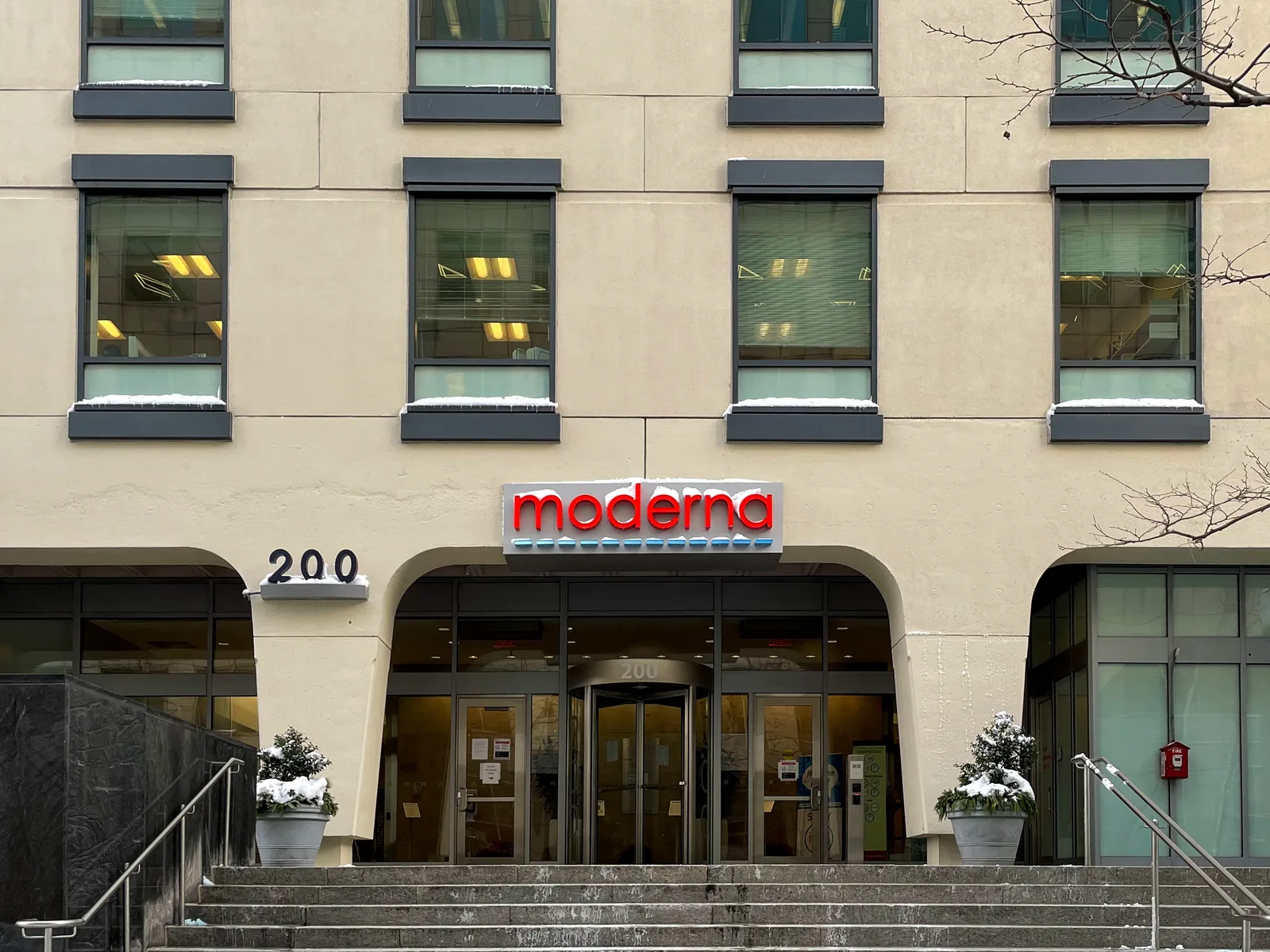 File photo
What happened
Key facts
- Moderna is about to release the trial results for its cancer vaccine.
- Data on Moderna and Merck’s cancer vaccine are expected to be revealed within days.
- The European Society for Medical Oncology Congress is taking place in Madrid.
- STAT senior writer Adam Feuerstein is reporting from the congress.
- Andrew Joseph is joining Feuerstein’s coverage.
The brief
Moderna and Merck are expected to disclose data on their cancer vaccine within days, while the European Society for Medical Oncology Congress is taking place in Madrid.
The approaching disclosure is the central event: STAT’s preview places it alongside coverage from the congress, and separate headlines from Investors.com, Nacionale and MarketWatch also point to the pending data release. STAT senior writer Adam Feuerstein is reporting from Madrid, with colleague Andrew Joseph joining his coverage.
Feuerstein traveled from Boston, and Joseph arrived from London. Their reporting is tied to the European Society for Medical Oncology Congress, where the forthcoming vaccine data is drawing attention from biotech readers. The sources describe the vaccine as a collaboration between Moderna and Merck. The data is expected within days, but no results are given in the coverage.
The central near-term development, therefore, is the disclosure itself; the reporting does not establish what the findings will show or how they may affect treatment. The outlets emphasize different aspects of the same approaching announcement. STAT focuses on the congress coverage and the expected timing.
Nacionale’s headline also says Moderna and Merck are expected to reveal cancer-vaccine data. MarketWatch frames the forthcoming trial results as important, saying a lot is riding on them, without specifying in its headline what those stakes are.
Investors.com introduces a separate market-related claim: its headline says Moderna’s stock fell 20% on reportedly leaked cancer-vaccine data. That wording attributes the information to a reported leak, rather than presenting its contents as confirmed.
The headline does not identify the data or explain the reported stock movement, so it cannot establish the leak’s accuracy or a causal connection beyond its own phrasing. Feuerstein’s coverage also includes his work as co-host of The Readout Loud and author of Adam’s Biotech Scorecard.
The congress reporting brings his biotech coverage together with Joseph’s contribution from Madrid, while the expected announcement keeps attention on the Moderna-Merck vaccine data. The immediate questions are what the companies disclose and how the reported leak relates, if at all, to the forthcoming release.
The available details do not establish trial results, the contents of any leak, or a specific consequence for patients or the companies. Until the disclosure, the reported 20% stock move and the anticipated data remain distinct claims rather than confirmed trial findings.
Why it matters
- People with cancer could have a direct stake in the Moderna-Merck vaccine data because the announcement concerns a cancer treatment; the sources provide no patient numbers or results.
- Moderna and Merck are the named companies behind the vaccine collaboration, and the expected disclosure is the concrete event that could clarify the data’s findings.
- Investors.com’s headline reports a 20% Moderna stock decline linked to reportedly leaked data, indicating a potential market cost while leaving the leak’s contents unconfirmed.
- The European Society for Medical Oncology Congress in Madrid is the setting for the reporting as the companies’ data disclosure approaches.
What to watch next
- Whether Moderna and Merck disclose their cancer-vaccine data within the reported window of days.
- What trial findings the companies reveal.
- Whether any information described as reportedly leaked by Investors.com matches the forthcoming disclosure.
- Whether the congress coverage from Adam Feuerstein and Andrew Joseph reports additional details about the data.
How it's being covered
Coverage analysisShow details5 source articles · 5 unique outletsOutlet political mix: Mostly Center· 2 Center · 1 Right · 2 unratedWhere the outlets are based: Unknown 60% · US/Canada 20% · Other 20%
How outlets' accounts compare
2 framing differences · 4 uncorroborated claims · 3 information gaps- STAT centers its coverage on the congress and the expected data announcement; Investors.com instead foregrounds its headline claim of a 20% stock decline linked to reportedly leaked data.
- MarketWatch characterizes the forthcoming trial results as carrying substantial stakes, while STAT emphasizes their timing and congress coverage.
- Investors.com links a reported 20% stock decline to reportedly leaked data in its headline; the other sources do not make that claim.
- Investors.com describes the data as reportedly leaked, but the supplied coverage does not establish the leak’s contents or confirm that the reported data are accurate.
- Investors.com’s headline says Moderna fell 20% on reportedly leaked cancer-vaccine data.
- MarketWatch’s headline says a lot is riding on the cancer-vaccine trial results.
- The coverage does not provide the vaccine’s trial design, patient population, efficacy or safety results, or a planned disclosure date.
- It does not identify what specific data were reportedly leaked or document how the reported leak relates to the forthcoming release.
- The trial results and their implications are not stated.
Timeline
Developments from this story's sources, dated background we compiled and fact-checked, and our earlier coverage. Each row says which.- In 2005, researchers Katalin Karikó and Drew Weissman published work showing that modified nucleosides could reduce unwanted inflammatory responses to synthetic mRNA, helping make therapeutic mRNA more practical.Background · from our historical context
- Moderna was founded to develop medicines based on messenger RNA.Background · compiled and fact-checked by Updat3
- Pembrolizumab, marketed as Keytruda, is an immune-checkpoint inhibitor: the FDA first approved it for melanoma in 2014, and it later became a standard treatment across several cancers.Background · from our historical context
- Moderna and Merck began collaborating to develop personalized cancer vaccines.Background · compiled and fact-checked by Updat3
- Sahin, Türeci and colleagues reported clinical studies of individualized neoantigen vaccines in melanoma.Background · compiled and fact-checked by Updat3
- Moderna and Merck expanded their collaboration on personalized cancer vaccines.Background · compiled and fact-checked by Updat3
- In June 2022, Moderna and Merck announced a phase 3 trial of V940 with pembrolizumab for high-risk melanoma after surgery.Background · from our historical context
- In February 2023, the U.S. Food and Drug Administration had granted the vaccine breakthrough-therapy designation for melanoma.Background · from our historical context
- Moderna and Merck presented initial KEYNOTE-942 results at the American Association for Cancer Research meeting.Background · compiled and fact-checked by Updat3
- The companies reported that the combination reduced the risk of recurrence or death; the findings were subsequently published in *The Lancet* on April 18, 2023.Background · from our historical context
How we got here
The closest precedent for the data expected at the Madrid congress was the phase 2b KEYNOTE-942 trial, whose first results Moderna and Merck presented at the American Association for Cancer Research meeting on April 16, 2023.
The companies reported that the combination reduced the risk of recurrence or death; the findings were subsequently published in *The Lancet* on April 18, 2023. In February 2023, the U.S. Food and Drug Administration had granted the vaccine breakthrough-therapy designation for melanoma.
Original sources
1 of 5 articles · US/Canada · Show allEvery story links to the reporting it was built from. How we choose sources
Spotted a factual error, a broken link or a misleading summary? Tell us.