
NASA plans orbital demonstrations for Blue Origin and SpaceX lunar landers
NASA plans to test Blue Origin and SpaceX lunar-lander systems in low Earth orbit during Artemis III, which NASA says is scheduled to launch in 2027. NASA says the mission will carry four astronauts aboard Orion to conduct demonstrations with test versions of the companies’ landing systems.
AI-assisted synthesis · Based on 6 outlets' reporting · Article text read from 3 of 6 outlets · 1 article captured only in partHow it's made
View timeline · 9 entries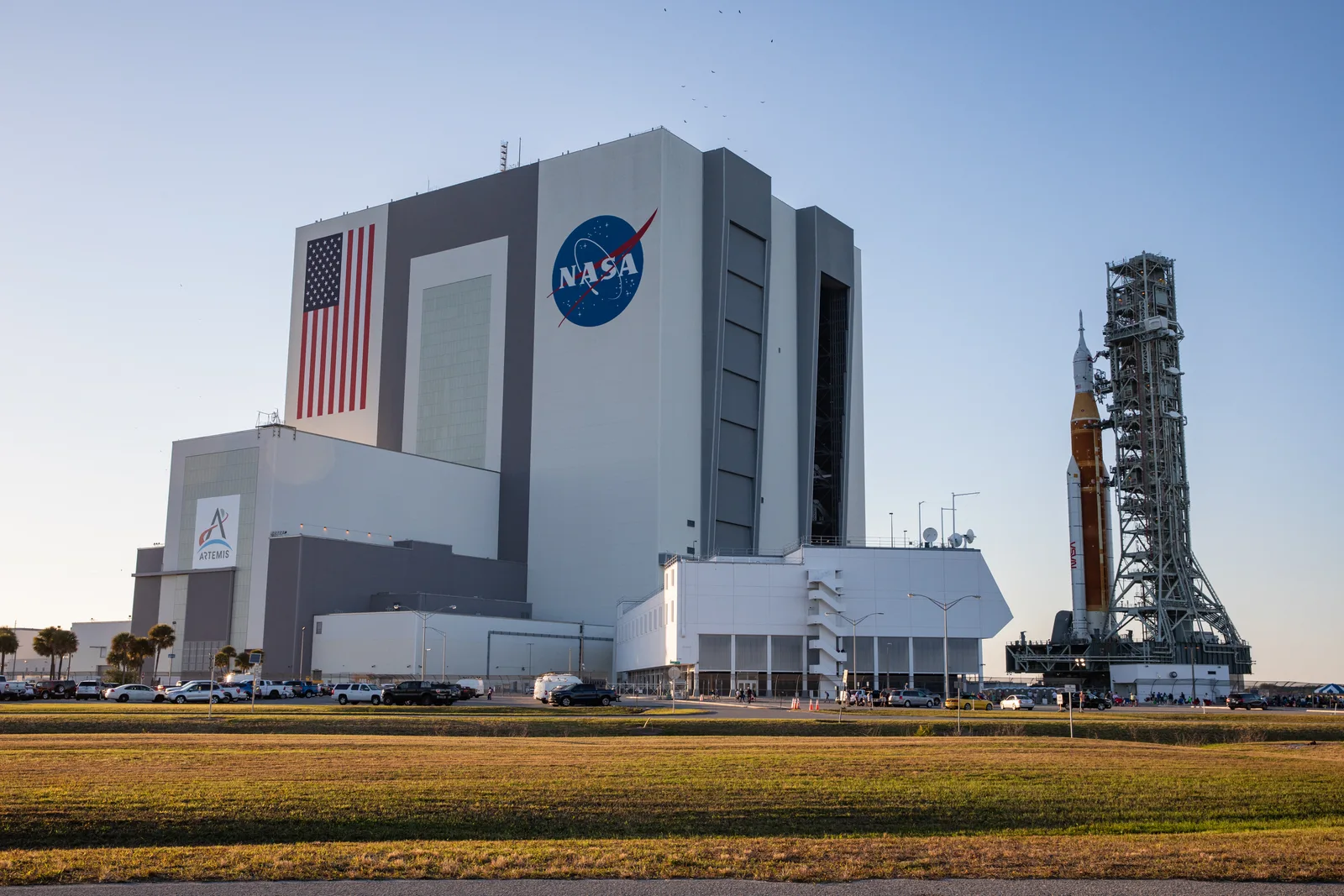 File photo
What happened
Key facts
- NASA says Artemis III will launch in 2027 and conduct demonstrations of test versions of human landing systems developed by Blue Origin and SpaceX in low Earth orbit (per nasa.gov).
- NASA says the Artemis III crew will travel aboard the Orion spacecraft (per nasa.gov).
- NASA Artemis program manager Jeremy Parsons said the Earth-orbit mission is designed to reduce risk before astronauts return to the Moon (per nasa.gov).
- Jeremy Parsons said NASA will launch three spacecraft on three different rockets and test how they operate together, an effort he said NASA has never attempted (per nasa.gov, nasawatch.com, space.com).
- Space.com reported that planned demonstrations through early 2028 include orbital refueling and uncrewed lunar landing tests to qualify the vehicles for astronaut missions to the Moon (per space.com).
- Blue Origin is developing its Blue Moon Mark 2 lander, described as a 52-foot-tall spacecraft powered by three BE-7 engines (per space.com).
- NASA said it and Blue Origin and SpaceX had streamlined the designs and changed the concepts of operations for future crewed lunar landers (per nasawatch.com, space.com, nasa.gov).
The brief
NASA plans to use Artemis III to test human-landing-system designs from Blue Origin and SpaceX in low Earth orbit before astronauts return to the lunar surface. NASA says the mission, scheduled to launch in 2027, will carry four astronauts aboard Orion for demonstrations using test versions of the companies’ landers.
NASA names Randy Bresnik, Frank Rubio, Andre Douglas, and European Space Agency astronaut Luca Parmitano as the crew. The planned work shifts the mission’s immediate focus to evaluating lander systems in Earth orbit, rather than conducting the crewed landing itself.
NASA Artemis program manager Jeremy Parsons said the demonstrations are intended to reduce risk ahead of a return to the Moon. Parsons also described a mission architecture involving three spacecraft launched on three different rockets, with NASA testing how the vehicles operate together. He said NASA has not attempted that combination before.
The agency’s account presents the orbital demonstrations as a significant operational test as well as a step toward qualifying the landers. NASA Watch reports that NASA and the two commercial providers have streamlined their lander designs and changed how they plan to operate the future crewed vehicles.
That account focuses on changes to the concepts and designs; NASA’s description emphasizes the Artemis III demonstrations and their risk-reduction purpose. At an Oct. 5 presentation at the Astronautical Congress in Antalya, Türkiye, Steve Creech, acting manager of NASA’s Human Landing System Program, laid out development timelines for both spacecraft, Space.com reported.
The demonstrations described in that account extend through early 2028 and include orbital refueling and uncrewed lunar landing tests, intended to qualify the vehicles for astronaut missions to the lunar surface. Blue Origin’s vehicle in development is the Blue Moon Mark 2, which Space.com describes as 52 feet tall and powered by three BE-7 engines.
The company’s lander and SpaceX’s system are both part of the development effort NASA is preparing to evaluate, while the planned tests cover different capabilities, including refueling and uncrewed landing. NASA’s plan makes coordination among the spacecraft and the two commercial lander programs central to Artemis III’s stated purpose.
The mission is intended to test the systems before crewed lunar operations, while the development demonstrations described by Space.com continue through early 2028.
Why it matters
- The four named Artemis III crew members are scheduled to conduct lander-system demonstrations in low Earth orbit before NASA returns astronauts to the lunar surface.
- NASA says testing three spacecraft launched on three different rockets will assess how they operate together, an arrangement Jeremy Parsons said the agency has never attempted.
- The lander development program includes orbital refueling and uncrewed lunar landing tests through early 2028, according to Space.com.
- Blue Origin’s Blue Moon Mark 2 is described as a 52-foot vehicle with three BE-7 engines, while NASA is also preparing to test SpaceX’s lander system.
What to watch next
- Whether NASA launches Artemis III in 2027, as the agency’s plan states.
- How NASA conducts the low Earth orbit demonstrations with test versions of the Blue Origin and SpaceX landing systems.
- Whether the planned orbital refueling and uncrewed lunar landing tests proceed through early 2028, as Space.com reported.
- How the three spacecraft and three rockets operate together during the demonstrations, the first such combination NASA’s Artemis program manager said the agency has attempted.
How it's being covered
Coverage analysisShow details6 source articles · 6 unique outletsOutlet political mix: Too few rated· 2 Center · 4 unratedWhere the outlets are based: Unknown 83% · US/Canada 17%
- Coverage is currently concentrated among outlets based in Unknown (5 of 6 geographically-identified sources).
How outlets' accounts compare
1 framing difference · 1 uncorroborated claim- NASA’s account centers on Artemis III’s low Earth orbit demonstrations and reducing risk before a lunar return; NASA Watch highlights streamlined designs and changed operating concepts; Space.com focuses on lander-development timelines and demonstrations through early 2028.
- Jeremy Parsons said NASA had never attempted a mission combining three spacecraft launched on three different rockets and testing how they operate together.
Timeline
Developments from this story's sources, dated background we compiled and fact-checked, and our earlier coverage. Each row says which.- Jeff Bezos founded Blue Origin.Background · compiled and fact-checked by Updat3
- Elon Musk founded SpaceX.Background · compiled and fact-checked by Updat3
- President Barack Obama signed the NASA Authorization Act of 2010, directing development of the Space Launch System and Orion.Background · compiled and fact-checked by Updat3
- The program’s policy roots include President Donald Trump’s Space Policy Directive-1, signed December 11, 2017, which directed NASA to lead a human return to the Moon with commercial and international partners.Background · from our historical context
- NASA adopted the Artemis name in March 2019.Background · from our historical context
- NASA’s April 16, 2021, selection of SpaceX to develop the first Artemis human landing system established the initial commercial path for returning astronauts to the lunar surface.Background · from our historical context
- NASA awarded SpaceX a $2.89 billion contract; Blue Origin protested the award, but the Government Accountability Office denied its protest on July 30, 2021.Background · from our historical context
- Artemis I launched without a crew on the first integrated Space Launch System and Orion flight.Background · compiled and fact-checked by Updat3
- On May 19, 2023, NASA selected Blue Origin for a separate lunar-lander contract, giving the agency a second provider for later Artemis missions.Background · from our historical context
How we got here
NASA’s April 16, 2021, selection of SpaceX to develop the first Artemis human landing system established the initial commercial path for returning astronauts to the lunar surface. NASA awarded SpaceX a $2.89 billion contract; Blue Origin protested the award, but the Government Accountability Office denied its protest on July 30, 2021.
On May 19, 2023, NASA selected Blue Origin for a separate lunar-lander contract, giving the agency a second provider for later Artemis missions. The landers sit within NASA’s broader Artemis architecture, which pairs the Orion crew spacecraft with the Space Launch System rocket and privately developed vehicles for trips between lunar orbit and the surface.
Original sources
5 of 6 articles · Unknown · Show allEvery story links to the reporting it was built from. How we choose sources
Spotted a factual error, a broken link or a misleading summary? Tell us.