
NASA seeks commercial plans to service Hubble or manage its return
NASA is asking commercial companies to propose ways to service the Hubble Space Telescope, raise its orbit or guide it into a controlled reentry. The agency says any mission must protect Hubble and take place by 2032, with proposals due November 30.
AI-assisted synthesis · Based on 4 outlets' reporting · Article text read from 3 of 4 outletsHow it's made
View timeline · 9 entries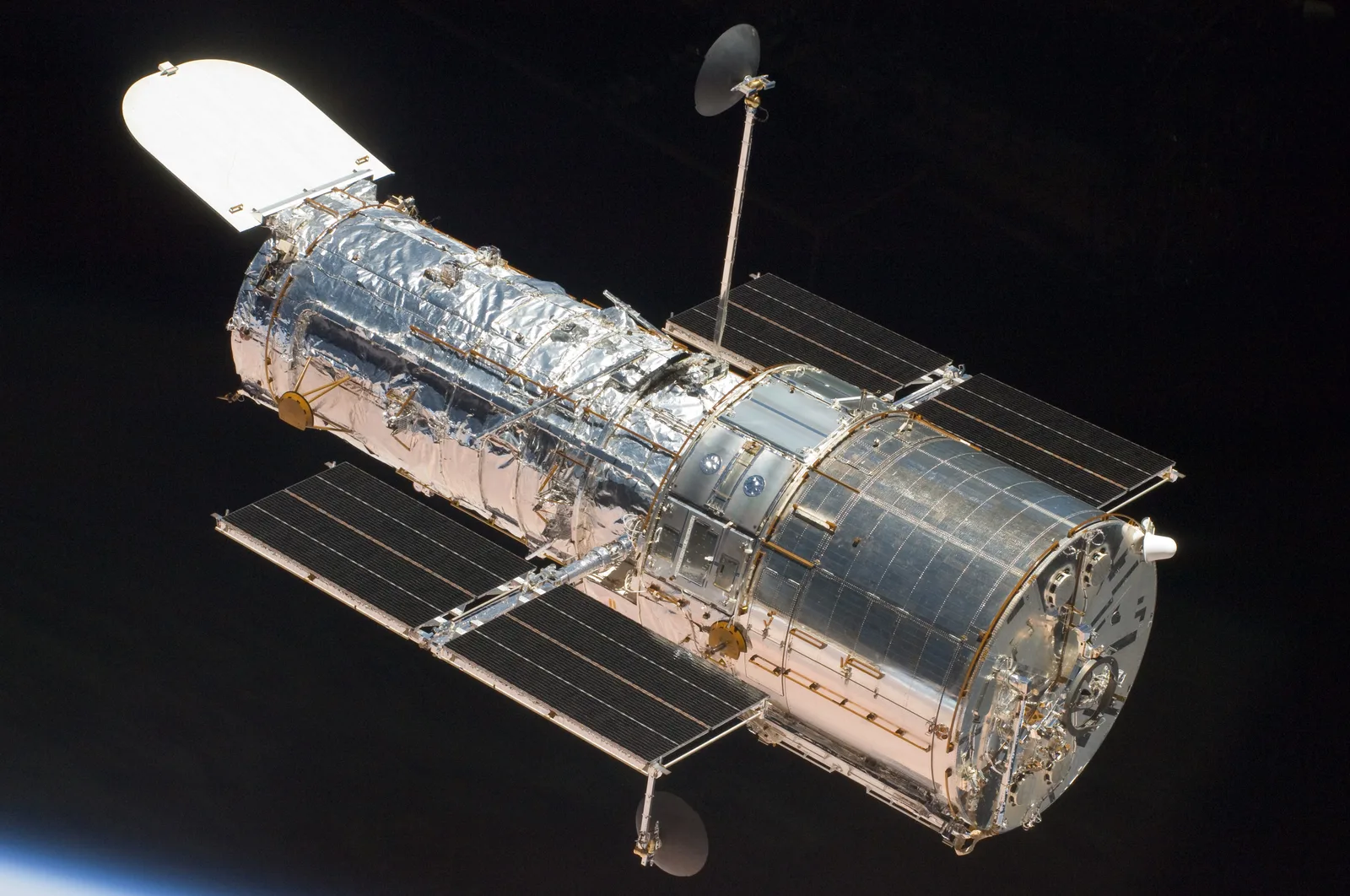 File photo
What happened
Key facts
- NASA is seeking commercial concepts to service Hubble, raise its orbit or guide it into a controlled reentry (per talkoftitusville.com, lavx.hu, nasa.gov).
- Responses to the request are due by 3 p.m. EST on November 30 (per talkoftitusville.com, nasa.gov, lavx.hu).
- NASA says a proposed mission must not harm Hubble and must take place by 2032 (per talkoftitusville.com, lavx.hu).
- NASA is asking companies about technology readiness, potential risks, launch timing and the altitude they could add (per talkoftitusville.com).
- Hubble has no propulsion system to maintain its orbit (per lavx.hu, nasa.gov).
- NASA's analysis says Hubble is likely to re-enter the atmosphere in the 2033 to 2034 timeframe (per nasa.gov).
- NASA said two years earlier that it would not pursue a commercial reboost of Hubble (per talkoftitusville.com, lavx.hu, nasa.gov).
The brief
NASA is asking commercial companies to outline ways to service the Hubble Space Telescope, raise its orbit or steer it into a controlled reentry. The request, issued by NASA’s Goddard Space Flight Center, asks industry to describe its capabilities and the practical considerations for a mission. NASA says any proposed mission must avoid damaging Hubble and happen by 2032.
The agency’s Request for Information was issued on Oct. 29, and responses are due by 3 p.m. EST on November 30. NASA is seeking information about technology readiness, risks, possible launch timing and the additional altitude a mission could provide. The request is an inquiry into commercial capabilities, rather than an announced selection of a company or a confirmed mission.
The agency outlines several possible approaches: servicing the telescope in orbit, raising it to a higher orbit, or guiding it into a controlled reentry. Hubble has no propulsion system to maintain its orbit, and NASA’s analysis says it is likely to re-enter the atmosphere in the 2033 to 2034 timeframe.
The plan NASA ultimately considers would therefore need to address the telescope’s orbit as well as the safety of any servicing or reboost operation. NASA’s proposed division of work would put a company in charge of providing the launch vehicle, spacecraft, any crew and servicing operations. Goddard would supply technical data and coordinate the mission.
NASA is also asking companies to assess how ready their technology is and identify risks, alongside the launch schedule and the altitude they could add. NASA Administrator Jared Isaacman said Hubble still has important science ahead and argued that the agency should consider reasonable opportunities to keep it operating.
Nicky Fox, associate administrator of NASA’s Science Mission Directorate, pointed to recent commercial advances in satellite capture and servicing as a reason to examine industry capabilities. The solicitation marks a shift from NASA’s position two years earlier, when the agency said it would not pursue a commercial reboost.
Separately, NASA’s request includes controlled reentry among the concepts companies may examine, so extending Hubble’s operation is not the only outcome under consideration. Hubble’s last astronaut servicing mission was STS-125 on May 11, 2009. NASA does not expect a replacement before the 2040s, when the Habitable Worlds Observatory could become operational.
NASA’s current request is intended to gather proposals and information; it does not say which option the agency will choose.
Why it matters
- Hubble has no propulsion system to maintain its orbit, and NASA estimates atmospheric reentry in the 2033 to 2034 timeframe; servicing, raising the orbit or controlled reentry are the mechanisms under consideration.
- NASA says a mission must protect Hubble and occur by 2032, making mission safety and timing central constraints for any commercial proposal.
- NASA does not expect the Habitable Worlds Observatory to become operational before the 2040s, leaving a potential gap after Hubble’s expected reentry timeframe.
- The potential commercial role is defined in the request: companies would supply the launch vehicle, spacecraft, any crew and servicing operations, while Goddard would provide technical data and coordination.
What to watch next
- Whether commercial companies submit proposals by 3 p.m. EST on November 30.
- Which servicing, orbit-raising or controlled-reentry approaches companies describe in response to NASA’s request.
- Whether NASA identifies a commercial mission that can meet its requirement to protect Hubble and take place by 2032.
- How NASA assesses companies’ technology readiness, risks, launch timing and proposed altitude increase.
How it's being covered
Coverage analysisShow details4 source articles · 4 unique outletsOutlet political mix: Too few rated· 2 Center · 2 unratedWhere the outlets are based: Europe 50% · Unknown 50%
How outlets' accounts compare
3 framing differences · 2 uncorroborated claims · 2 information gaps- Talk of Titusville and NASA emphasize commercial concepts to extend Hubble’s operation or manage its safe retirement; the Hungarian news site also stresses the telescope’s eventual reentry and the absence of a replacement before the 2040s.
- NASA’s own account foregrounds the agency’s interest in commercial servicing and quotes Jared Isaacman and Nicky Fox, while Talk of Titusville also highlights the earlier decision not to pursue a commercial reboost.
- The sources describe possible approaches and NASA’s information request, but do not identify a selected company or a final mission decision.
- Jared Isaacman said Hubble has important science ahead and that NASA should consider reasonable opportunities to keep it operating.
- Nicky Fox said commercial capabilities in satellite capture and servicing have advanced in recent years.
- The sources do not provide a cost estimate for servicing, raising Hubble’s orbit or conducting a controlled reentry.
- The sources do not name a company that has committed to submit a proposal or report a commercial bid.
Timeline
Developments from this story's sources, dated background we compiled and fact-checked, and our earlier coverage. Each row says which.- NASA and the European Space Agency formalized their partnership on Hubble in 1977, with ESA providing instruments and solar arrays.Background · from our historical context
- NASA’s Space Shuttle Discovery placed the telescope in low Earth orbit on April 25, 1990.Background · from our historical context
- The first servicing mission, flown by Endeavour in December 1993, corrected a flaw in Hubble’s primary mirror with new optics.Background · from our historical context
- Space Shuttle Discovery crews serviced Hubble and installed new instruments.Background · compiled and fact-checked by Updat3
- Space Shuttle Columbia crews serviced Hubble and installed the Advanced Camera for Surveys.Background · compiled and fact-checked by Updat3
- The final servicing mission, flown by Atlantis in May 2009, installed two instruments and repaired others.Background · from our historical context
- NASA retired the Space Shuttle fleet in 2011, ending the servicing arrangement on which Hubble’s original maintenance plan had relied.Background · from our historical context
- NASA had begun examining the idea in 2022, when SpaceX and Polaris proposed using a crewed Dragon spacecraft to raise the telescope’s orbit.Background · from our historical context
- In June 2024, NASA said it would not pursue a commercial reboost of Hubble after studying a proposal from SpaceX and the Polaris Program.Background · from our historical context
How we got here
In June 2024, NASA said it would not pursue a commercial reboost of Hubble after studying a proposal from SpaceX and the Polaris Program. NASA had begun examining the idea in 2022, when SpaceX and Polaris proposed using a crewed Dragon spacecraft to raise the telescope’s orbit.
The 2024 decision left the question of a commercial role in Hubble’s future open, while the agency continued operating the observatory. NASA’s Space Shuttle Discovery placed the telescope in low Earth orbit on April 25, 1990. NASA and the European Space Agency designed Hubble for servicing by astronauts, a capability that depended on the Space Shuttle.
Original sources
2 of 4 articles · Unknown · Show allEvery story links to the reporting it was built from. How we choose sources
Spotted a factual error, a broken link or a misleading summary? Tell us.