
Israel’s election leaves Herzog weighing a Netanyahu-led unity government
Israel’s election has left the president weighing a possible unity government, while the shape and leadership of the country’s next government remain unsettled.
AI-assisted synthesis · Based on 5 outlets' reporting · Article text read from 2 of 5 outletsHow it's made
View timeline · 10 entries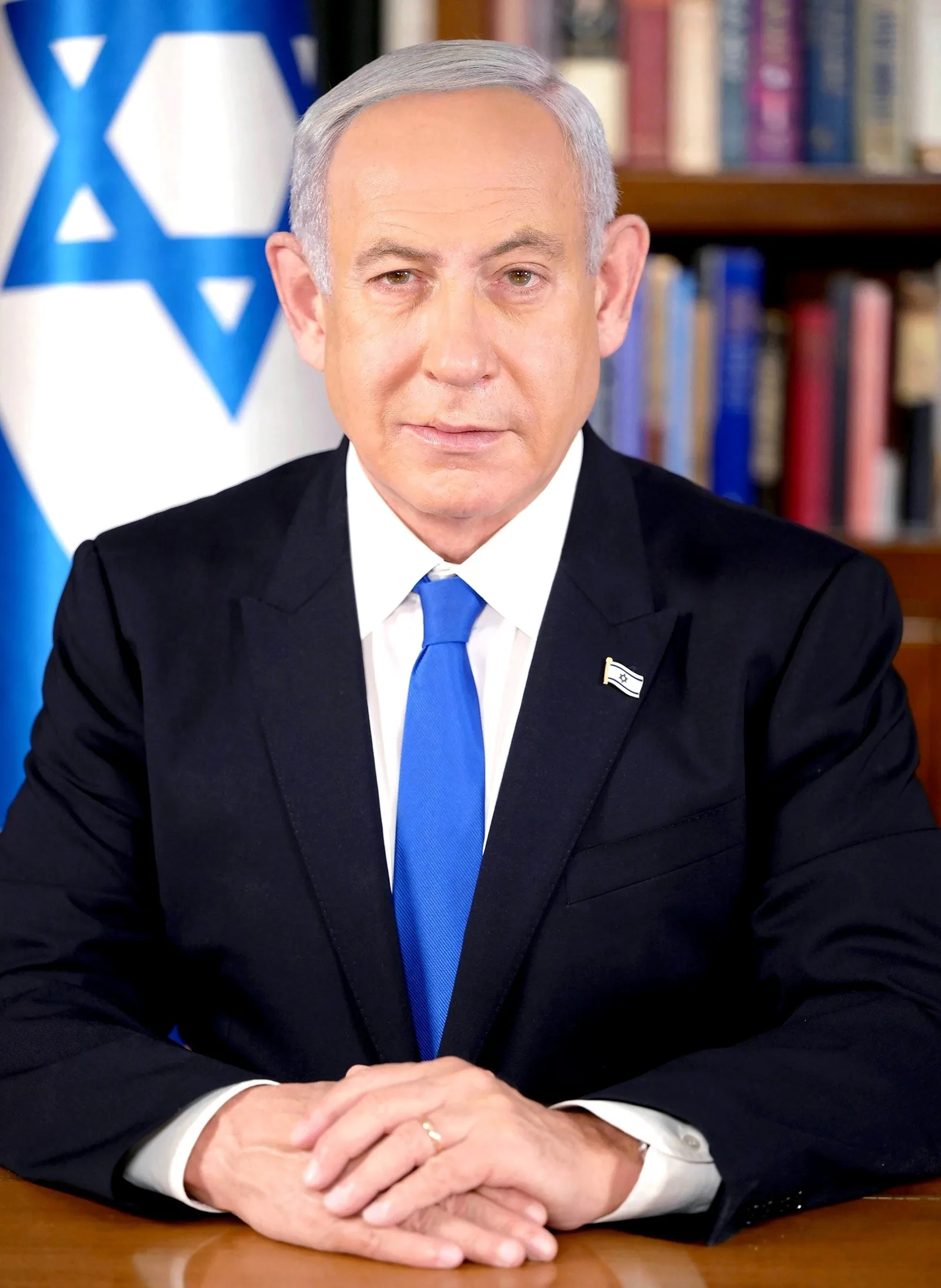 File photo
What happened
Key facts
- Israel’s election exit polls indicated that no party or bloc had a clear majority (per i24news.tv, New York Post).
- i24NEWS analyst Dan Perry said Netanyahu was unlikely to form a government with his current coalition and might seek a unity government (per i24news.tv).
- Donald Trump had expressed a preference for a unity government that included Netanyahu and Likud (per i24news.tv, New York Post).
The brief
Israel’s election left no clear majority in the exit-poll accounts, putting the question of who can assemble a government at the centre of the contest. The Jerusalem Post framed the dilemma for President Isaac Herzog as a choice between Benjamin Netanyahu and Eisenkot; i24NEWS focused on the arithmetic facing Likud and the possibility of a unity government.
The projections differed on Likud’s seat count. i24NEWS’s exit poll gave the party 27 seats, with Yashar at 20, B’Yachad at 15 and Join List at 9. The New York Post, reporting the Kan 11 exit poll, put Likud at 25 and the right-wing alliance at 50. That poll projected 52 to 53 seats for the Change opposition. These are exit-poll estimates, not final seat allocations.
The gap between the reported bloc totals leaves coalition-building central to Herzog’s decision. i24NEWS said Channel 14’s exit poll placed the coalition one seat below a majority. i24NEWS analyst Gil Hoffman said Likud was relying on soldiers’ votes to move the coalition to 61 seats, the threshold described in the outlet’s account for a majority.
The article said those ballots were expected to be counted the following day. The possibility that Netanyahu could not govern with his current coalition was raised by i24NEWS analyst Dan Perry, who said a unity government could become his route forward. That is Perry’s assessment, not a confirmed decision by Netanyahu.
The New York Post’s account, meanwhile, emphasized the opposition’s projected 52 to 53 seats and the right-wing alliance’s 50, figures that underscore the difficulty of securing a majority through either bloc alone. Trump had publicly indicated a preference for a unity government including Netanyahu and Likud, according to i24NEWS.
His stated preference adds a prominent outside voice to the debate, but the reports do not establish that Herzog or any party will follow it. Herzog’s specific choice remains the central question raised by the Jerusalem Post headline. The New York Post also quoted Israeli journalist Attila Somfalvi saying that Arab representation at 17 seats could not be disregarded.
The excerpt does not identify the party or parties included in that figure, so it does not establish how those seats would be distributed or whether they would support a particular coalition. Dr.
Michal Hatuel-Radoshitzky, an Israeli foreign-policy and national-security analyst, told the newspaper that results were not yet available and described the process as a marathon rather than a sprint. The immediate test is whether the soldiers’ ballots alter the seat arithmetic and whether Netanyahu pursues the unity option Perry described.
The exit-poll projections provide competing estimates of the parliamentary landscape; the choice Herzog faces will depend on the final allocation of seats and the coalition possibilities that follow.
Why it matters
- Israeli voters’ representation in the Knesset—and the composition of the government they elect—depends on how exit-poll estimates translate into final seats.
- The reported 61-seat threshold makes the soldiers’ vote count a concrete mechanism that could change whether the coalition reaches a majority.
- Likud’s reported totals range from 25 seats in the Kan 11 poll to 27 in i24NEWS’s poll, while the Kan 11 projection gives the right-wing alliance 50 and the Change opposition 52 to 53.
- Netanyahu’s interest in forming a government with his current coalition and Trump’s stated preference for a unity government are documented positions; the reports do not establish which option Herzog or the parties will choose.
What to watch next
- Whether the soldiers’ votes, expected to be counted the following day, bring the coalition to the 61 seats Gil Hoffman cited.
- Whether Netanyahu pursues a unity government, as i24NEWS analyst Dan Perry suggested could happen.
- How Herzog approaches the choice framed by the Jerusalem Post as one between Netanyahu and Eisenkot.
- Whether final seat allocations resemble the Kan 11 projections of 50 seats for the right-wing alliance and 52 to 53 for the Change opposition.
How it's being covered
Coverage analysisShow details6 source articles · 5 unique outletsOutlet political mix: Mixed· 1 Left · 1 Center · 3 RightWhere the outlets are based: US/Canada 40% · Middle East 40% · Other 20%
One source is from a wire service (AP, Reuters, AFP or Bloomberg), whose reporting other outlets often republish.
How outlets' accounts compare
2 factual disagreements · 2 framing differences · 3 uncorroborated claims · 1 information gap- For Likud seats, i24NEWS’s exit poll reports 27, while the New York Post’s account of Kan 11 reports 25.
- The exit-poll estimates differ: i24NEWS puts Likud at 27 seats, while the New York Post’s account of Kan 11 puts it at 25.
- The Jerusalem Post headline centers Herzog’s choice between Netanyahu and Eisenkot; i24NEWS emphasizes coalition arithmetic, soldiers’ votes and the possibility of a unity government.
- The New York Post foregrounds the Kan 11 projections for the right-wing alliance and Change opposition, while i24NEWS supplies its own party-level exit-poll estimates and relays Channel 14’s one-seat-short projection.
- i24NEWS analyst Gil Hoffman said Likud was counting on soldiers’ votes to bring the coalition to 61 seats.
- i24NEWS analyst Dan Perry said Netanyahu was unlikely to form a government with his current coalition and might seek a unity government.
- The New York Post quoted Attila Somfalvi saying that Arab representation at 17 seats could not be disregarded.
- The reports do not provide the final seat allocation or identify the precise coalition options Herzog will consider.
Timeline
Developments from this story's sources, dated background we compiled and fact-checked, and our earlier coverage. Each row says which.- The president’s role in coalition formation is set out in the Basic Law: The Government, adopted on March 18, 1992.Background · from our historical context
- Israel held an election that ended without Benjamin Netanyahu forming a government.Background · compiled and fact-checked by Updat3
- Israel held another election after the Knesset dissolved following the April vote.Background · compiled and fact-checked by Updat3
- The March 2, 2020 election produced another deadlock, preceding the Netanyahu-Gantz agreement.Background · from our historical context
- On May 17, 2020, Netanyahu and Benny Gantz’s parties entered a power-sharing agreement, with an intended rotation of the premiership.Background · from our historical context
- The rotation did not occur: the government collapsed amid disputes over the budget, and Israel held another election on March 23, 2021.Background · from our historical context
- In June 2021, Isaac Herzog was elected Israel’s president; the presidency is largely ceremonial, but the president formally assigns a member of the Knesset the task of forming a government.Background · from our historical context
- Israel held an election that returned Benjamin Netanyahu to office at the head of a coalition.Background · compiled and fact-checked by Updat3
- Benjamin Netanyahu’s coalition took office.Background · compiled and fact-checked by Updat3
- Donald Trump said the United States should stay out of Israel’s election, while leaving open the possibility of endorsing a candidate.Background · compiled and fact-checked by Updat3
How we got here
The closest precedent for Israel’s coalition arithmetic was the November 1, 2022 election, after which Benjamin Netanyahu returned as prime minister at the head of a coalition that took office on December 29. That followed five elections between April 2019 and November 2022, none of which produced a durable governing arrangement at the first attempt.
In June 2021, Isaac Herzog was elected Israel’s president; the presidency is largely ceremonial, but the president formally assigns a member of the Knesset the task of forming a government. A unity government between Netanyahu and a major rival had already been tried.
Original sources
6 articles from 5 outletsEvery story links to the reporting it was built from. How we choose sources
Spotted a factual error, a broken link or a misleading summary? Tell us.