
Netanyahu names toppling Iran’s leadership as Israel’s primary objective, outlet reports
Benjamin Netanyahu said toppling Iran’s regime was Israel’s primary objective while speaking at Tel Hai University, according to Iran International. He said he had discussed bringing down Iran’s leadership with Donald Trump, and his spokesman said their talks covered regional threats and U.S.-Israeli cooperation.
AI-assisted synthesis · Based on 5 outlets' reporting · Article text read from 1 of 5 outlets · 1 article captured only in partHow it's made
View timeline · 11 entries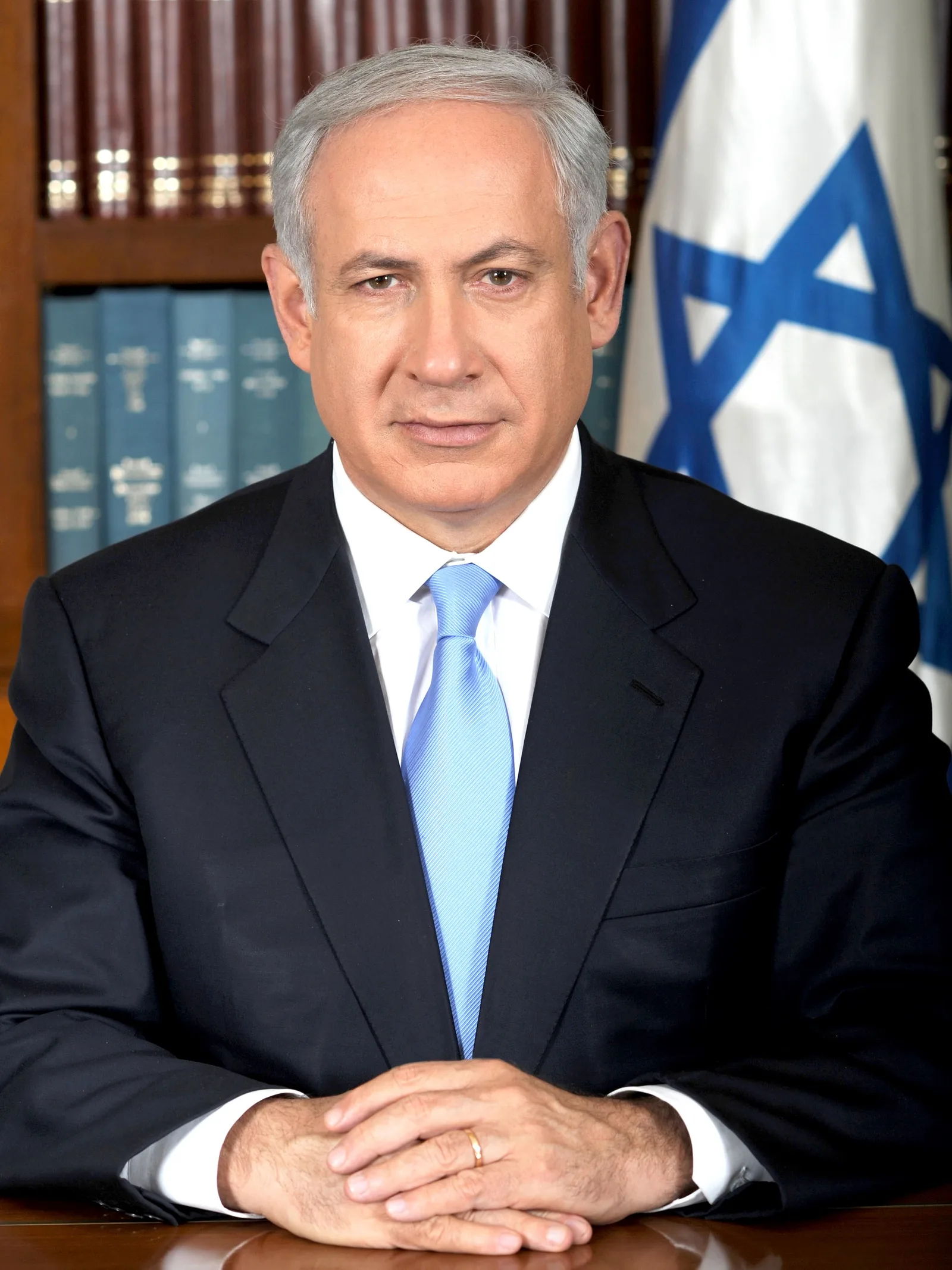 File photo
What happened
Key facts
- Benjamin Netanyahu called toppling Iran’s regime Israel’s “primary objective” while speaking at the opening of the academic year at Tel Hai University in Kiryat Shmona (per iranintl.com).
- Netanyahu said he had discussed overthrowing Iran’s government with Donald Trump (per iranintl.com, news.az).
- Netanyahu said he discussed bringing down Iran’s leadership with Trump, including on Sunday (per iranintl.com, The Jerusalem Post, news.az).
- Netanyahu’s spokesman, Doron Spielman, confirmed that Netanyahu and Trump met at Uvda air force base in Israel’s southern Negev desert (per iranintl.com).
- Doron Spielman said the talks addressed regional threats and U.S.-Israeli cooperation through offensive and defensive measures (per iranintl.com).
- Netanyahu’s remarks did not establish whether Trump agreed with the goal or committed to further military action (per iranintl.com).
- Danny Citrinowicz said Netanyahu and Trump might agree on military targets while differing on strategic objectives (per iranintl.com).
The brief
Benjamin Netanyahu said toppling Iran’s regime is Israel’s “primary objective,” describing that goal while speaking at the opening of the academic year at Tel Hai University in Kiryat Shmona, Iran International reported. His statement sets out the Israeli prime minister’s stated objective toward Iran; it does not establish that the United States shares that goal.
Netanyahu said he had discussed bringing down Iran’s leadership with U.S. President Donald Trump, including on Sunday. His spokesman, Doron Spielman, confirmed the two met at Uvda air force base in Israel’s southern Negev desert.
Spielman said their discussions covered regional threats and cooperation between the United States and Israel through offensive and defensive measures. Iran International reported that Netanyahu’s remarks did not establish whether Trump agreed with removing Iran’s leadership or had committed to further military action.
The Jerusalem Post headline separately attributed to unnamed sources its claim that Trump was “very close” to renewing strikes. That headline does not specify what Trump had decided or provide details of any such strikes. Danny Citrinowicz said the two leaders might share views on military targets but differ over their broader objectives.
He characterized Trump’s aim as reaching an agreement with Iran’s current leadership, rather than the outcome Netanyahu identified. This is Citrinowicz’s assessment; the account does not present it as a statement by Trump. Other headlines describe the stated goal in different terms.
The Times of Israel headline says Netanyahu described Israel as “committed” to eliminating what it called the “terrorist regime in Iran”; news.az says he discussed overthrowing Iran’s government with Trump. ABC News’s headline reports a Trump-Netanyahu meeting amid rising tensions with Iran, without specifying in the headline what they discussed.
The reported meeting and Netanyahu’s remarks therefore put two distinct questions in view: whether Trump shares the Israeli prime minister’s stated goal of removing Iran’s leadership, and whether the discussions lead to any U.S. commitment to military action. Spielman described the subjects of the talks, while the account does not establish an agreement on either question.
Why it matters
- Netanyahu’s stated objective concerns Iran’s leadership; the account does not document any resulting action or direct civilian harm.
- The specific policy difference Citrinowicz identifies is between Netanyahu’s goal of removing Iran’s leadership and what he describes as Trump’s preference for an agreement with Iran’s current leadership.
- Spielman said the meeting addressed regional threats and U.S.-Israeli cooperation, including offensive and defensive measures.
What to watch next
- Whether Trump publicly states that he shares Netanyahu’s goal of removing Iran’s leadership.
- Whether the United States makes any commitment to further military action, which Netanyahu’s remarks did not establish.
- Whether Netanyahu and Trump pursue the strategic difference described by Danny Citrinowicz: toppling Iran’s leadership or reaching an agreement with its current leadership.
How it's being covered
Coverage analysisShow details5 source articles · 5 unique outletsOutlet political mix: Mixed· 2 Center · 3 RightWhere the outlets are based: Middle East 40% · US/Canada 20% · Other 40%
How outlets' accounts compare
Timeline
Developments from this story's sources, dated background we compiled and fact-checked, and our earlier coverage. Each row says which.- On August 19, 1953, a CIA- and MI6-backed coup, known as Operation Ajax, overthrew Prime Minister Mohammad Mosaddegh and restored the Shah’s authority.Background · from our historical context
- The Iranian Revolution ended the monarchy and Iran’s alignment with Israel.Background · compiled and fact-checked by Updat3
- Hezbollah, founded in Lebanon in 1982, became one part of Iran’s regional network of partners.Background · from our historical context
- Benjamin Netanyahu first became Israel’s prime minister.Background · compiled and fact-checked by Updat3
- In 2002, disclosures about undeclared Iranian nuclear facilities brought the program into a prolonged dispute with the International Atomic Energy Agency.Background · from our historical context
- Iran and six world powers signed the Joint Comprehensive Plan of Action on July 14, 2015, limiting Iran’s nuclear activities in exchange for sanctions relief.Background · from our historical context
- President Donald Trump withdrew the United States from the agreement on May 8, 2018.Background · from our historical context
- Iran began exceeding some nuclear limits in 2019, saying its steps responded to the U.S. withdrawal and renewed sanctions.Background · from our historical context
- Iran fired missiles at Israel.Background · compiled and fact-checked by Updat3
- Israel struck military sites in Iran.Background · compiled and fact-checked by Updat3
- The United States and Israel launched coordinated strikes across Iran.Background · compiled and fact-checked by Updat3
How we got here
On February 28, 2026, the United States and Israel launched coordinated strikes on Iran, targeting power plants, air defenses and military infrastructure; the war that began with those attacks was ongoing by October 21, 2026. That military rupture followed decades of conflict over Iran’s nuclear program, Israel’s security and the regional balance of power.
On August 19, 1953, a CIA- and MI6-backed coup, known as Operation Ajax, overthrew Prime Minister Mohammad Mosaddegh and restored the Shah’s authority. The 1979 Iranian Revolution ended the monarchy and Iran’s alignment with Israel; opposition to the Shah’s U.S.-backed rule and SAVAK, his security service, was among the factors historians cite in explaining the revolution.
Original sources
1 of 5 articles · US/Canada · Show allEvery story links to the reporting it was built from. How we choose sources
Spotted a factual error, a broken link or a misleading summary? Tell us.