
Trump weighs helping Netanyahu as election projections leave blocs short of a majority
Donald Trump said he would consider helping Benjamin Netanyahu form a unity government as projections put Netanyahu’s bloc at 53 seats, below a Knesset majority. Israeli police rejected Likud’s voter-fraud allegations, while parties representing Arab Israelis were projected to win 19 seats.
AI-assisted synthesis · Based on 4 independent reports from 5 outlets · Article text read from 2 of 4 reportsHow it's made
View timeline · 10 entries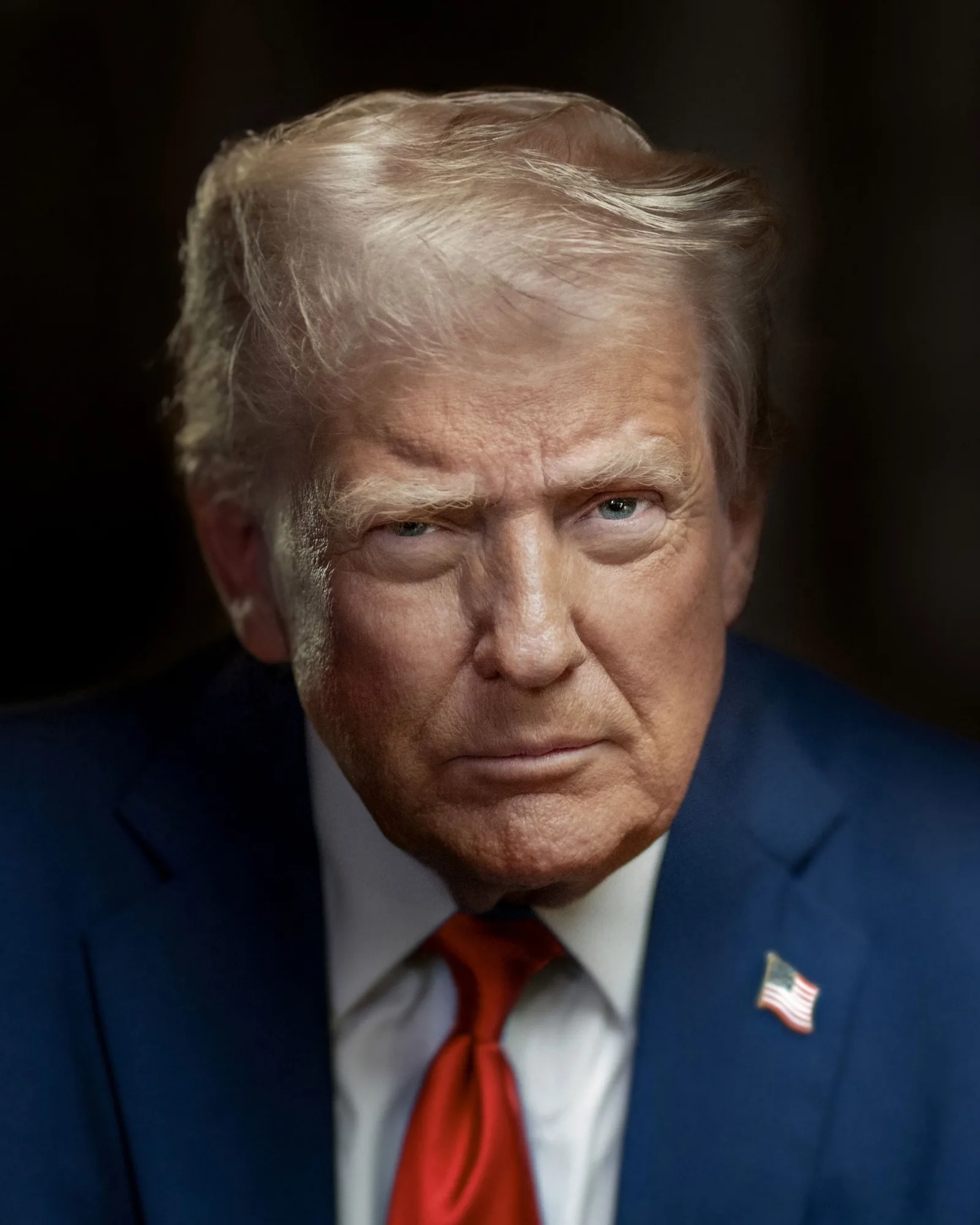 File photo
What happened
Key facts
- Benjamin Netanyahu and Likud claimed the election had been stolen, while neither bloc was projected to reach the 61 seats required for a Knesset majority (per aa.com.tr).
- With nearly 94% of votes counted, Netanyahu’s bloc was projected to win 53 of the Knesset’s 120 seats, compared with 48 for Gadi Eisenkot’s opposition bloc (per The Independent).
- Donald Trump told Axios he would “take a look” at helping form a Netanyahu-led unity government and said his endorsement had made a big difference for Netanyahu (per The Independent).
- Israeli police rejected Likud’s voter-fraud claims, and the Central Elections Committee saw no current grounds for concern about the vote’s integrity (per aa.com.tr).
- Likud alleged bribery, intimidation, violence, forgery and use of prohibited software in polling stations in Arab communities, and said it was submitting hundreds of testimonies and evidence to police, the Shin Bet and the Central Elections Committee (per aa.com.tr).
- Trump endorsed Netanyahu on October 18 and said he wanted him to remain in power to help him soon “finish the job” against Iran (per The Independent).
The brief
Donald Trump said he would consider helping Benjamin Netanyahu form a unity government, as election projections left Netanyahu’s bloc short of a majority in the Knesset. With nearly 94% of votes counted, the bloc was projected to win 53 of 120 seats; Gadi Eisenkot’s opposition bloc was forecast to take 48. Neither bloc was projected to reach the 61 seats needed for a majority.
The Independent reported Trump’s comments to Axios, including his offer to “take a look” at helping Netanyahu and his assessment that his endorsement had made a big difference. Trump also said he had first received “horror reports” about Netanyahu’s prospects, but believed he was in a stronger position.
Trump endorsed Netanyahu on October 18 and said he wanted him to stay in office to help him soon “finish the job” against Iran. The election dispute centers on Likud’s allegations of fraud. The party claimed Arab parties had stolen the election through bribery, intimidation, violence, forgery and prohibited software used to mobilize voters.
Anadolu Agency, citing an Israel Hayom report that relied on unnamed sources, said Israeli police found no evidence supporting the allegations and that the Central Elections Committee saw no current grounds to question the vote’s integrity. Those assessments contradict Likud’s claims; they do not establish that the alleged conduct occurred.
Likud said it was sending hundreds of testimonies and pieces of evidence to police, the Shin Bet and the Central Elections Committee, and demanded an investigation. The Independent reported that police had received 48 complaints about fraud and impersonation nationwide by Tuesday night, down from nearly 80 in the previous election.
The complaint count records reports to police, not a finding that fraud took place. The vote projections also leave the role of parties representing Arab Israelis central to possible coalition-building. They were forecast to win 19 seats, and The Independent said Eisenkot had little realistic route to power without broad support from them.
Likud’s allegations specifically concern polling stations in Arab communities; the allegations remain the party’s claims, not an established finding. The Independent’s account foregrounds the seat arithmetic, Trump’s possible assistance and the coalition role of Arab parties. Anadolu Agency focuses on the fraud allegations and the police and election committee assessments.
The Irish Times, Financial Times and Politico headlines also report Netanyahu’s stolen-election claim, with the first two specifying his party’s reference to “foreign entities”; their headlines do not provide further detail on that allegation.
The immediate political question is whether Trump follows through on his stated offer and whether either bloc can assemble sufficient parliamentary support. The projections do not show a majority for either bloc, while the 19 projected seats for Arab parties make their support relevant to the opposition’s prospects.
Police and election officials, meanwhile, have not backed Likud’s fraud allegations in the reported assessments.
Why it matters
- The projected 53 seats for Netanyahu’s bloc leave it eight short of the 61-seat Knesset majority threshold, shaping the options for forming a government.
- Parties representing Arab Israelis were projected to win 19 seats; their support is a potential route for Gadi Eisenkot’s opposition bloc, which was forecast at 48 seats.
- Arab communities are at the center of Likud’s allegations, while police recorded 48 complaints about fraud and impersonation nationwide as of Tuesday night; the Central Elections Committee saw no current grounds for concern about vote integrity.
- Trump’s stated willingness to consider helping Netanyahu gives the U.S. president a potential role in the government-formation process, while the projected seat counts determine the parliamentary support Netanyahu would still need.
What to watch next
- Whether Donald Trump takes further steps toward helping Benjamin Netanyahu form a unity government.
- Whether either bloc assembles the 61 Knesset seats required for a majority.
- Whether parties representing Arab Israelis, projected to win 19 seats, provide broad support to Gadi Eisenkot’s opposition bloc.
- Whether police or the Central Elections Committee change their assessments after Likud submits the evidence and testimonies it says it is providing.
How it's being covered
Coverage analysisShow details5 source articles · 5 unique outlets · 4 distinct reportsOutlet political mix: Mixed· 2 Left · 2 Center · 1 unratedWhere the outlets are based: Europe 60% · US/Canada 20% · Other 20%
How outlets' accounts compare
3 framing differences · 4 uncorroborated claims · 2 information gaps- The Independent emphasizes the projected seat distribution, Trump’s possible help and the role of Arab parties in coalition-building; Anadolu Agency emphasizes the fraud allegations and the police and election committee assessments.
- The Irish Times and Financial Times headlines describe Likud’s claim as involving “foreign entities,” while Politico’s headline frames Netanyahu’s claim around his failure to secure victory.
- Likud alleged election fraud, but Israeli police rejected the claims; Anadolu Agency also reported that the Central Elections Committee saw no current grounds for concern about vote integrity.
- Likud attributed the election outcome to alleged fraud in Arab communities; police and the Central Elections Committee assessments did not support that account.
- Trump told Axios he would “take a look” at helping Netanyahu form a unity government.
- Trump said his endorsement had made a big difference for Netanyahu.
- Likud said Arab parties had “stolen” the election; this is an allegation, not an established finding.
- The sources do not give a complete final seat count or establish which parties will ultimately support a government.
- The sources do not report a final determination by an election authority or court on the specific fraud allegations.
Timeline
Developments from this story's sources, dated background we compiled and fact-checked, and our earlier coverage. Each row says which.- Netanyahu first became prime minister in 1996, after winning a direct election for the post; Israel later ended that system and returned to choosing the prime minister through parliamentary coalitions.Background · from our historical context
- He returned to office in 2009 and became Israel’s longest-serving prime minister.Background · from our historical context
- Donald Trump recognized Jerusalem as Israel’s capital.Background · compiled and fact-checked by Updat3
- The United States moved its embassy in Israel to Jerusalem.Background · compiled and fact-checked by Updat3
- Donald Trump recognized Israeli sovereignty over the Golan Heights.Background · compiled and fact-checked by Updat3
- Israel held a Knesset election in which Benjamin Netanyahu's bloc won a majority.Background · compiled and fact-checked by Updat3
- Netanyahu returned as prime minister on December 29, 2022, at the head of a coalition including Likud and ultra-Orthodox and religious-nationalist parties.Background · from our historical context
- On January 4, 2023, Justice Minister Yariv Levin announced a plan to change Israel’s judicial system.Background · from our historical context
- The United States and Israel launched coordinated military strikes across Iran.Background · compiled and fact-checked by Updat3
- On October 18, 2026, Donald Trump endorsed Benjamin Netanyahu and said he wanted him to remain in power to help him soon “finish the job” against Iran.Background · from our historical context
How we got here
On October 18, 2026, Donald Trump endorsed Benjamin Netanyahu and said he wanted him to remain in power to help him soon “finish the job” against Iran. That endorsement followed a long political partnership: Trump recognized Jerusalem as Israel’s capital in December 2017, moved the U.S.
Embassy there in May 2018, and recognized Israeli sovereignty over the Golan Heights in March 2019, decisions welcomed by Netanyahu’s government. The Knesset has 120 seats, and a government needs the support of at least 61 members; voters elect party lists under nationwide proportional representation.
Original sources
3 of 5 articles · Europe · Show allEvery story links to the reporting it was built from. How we choose sources
Spotted a factual error, a broken link or a misleading summary? Tell us.