
Newsom calls for conditions on US military aid to Israel
California Gov. Gavin Newsom said U.S. military aid to Israel should have conditions, citing settler violence in the West Bank and Israeli Prime Minister Benjamin Netanyahu’s policies. Newsom said the position was becoming the Democratic Party’s consensus, and pointed to Israel’s scheduled Oct. 27 election as relevant to the debate.
AI-assisted synthesis · Based on 4 outlets' reporting · Article text read from 2 of 4 outletsHow it's made
View timeline · 8 entries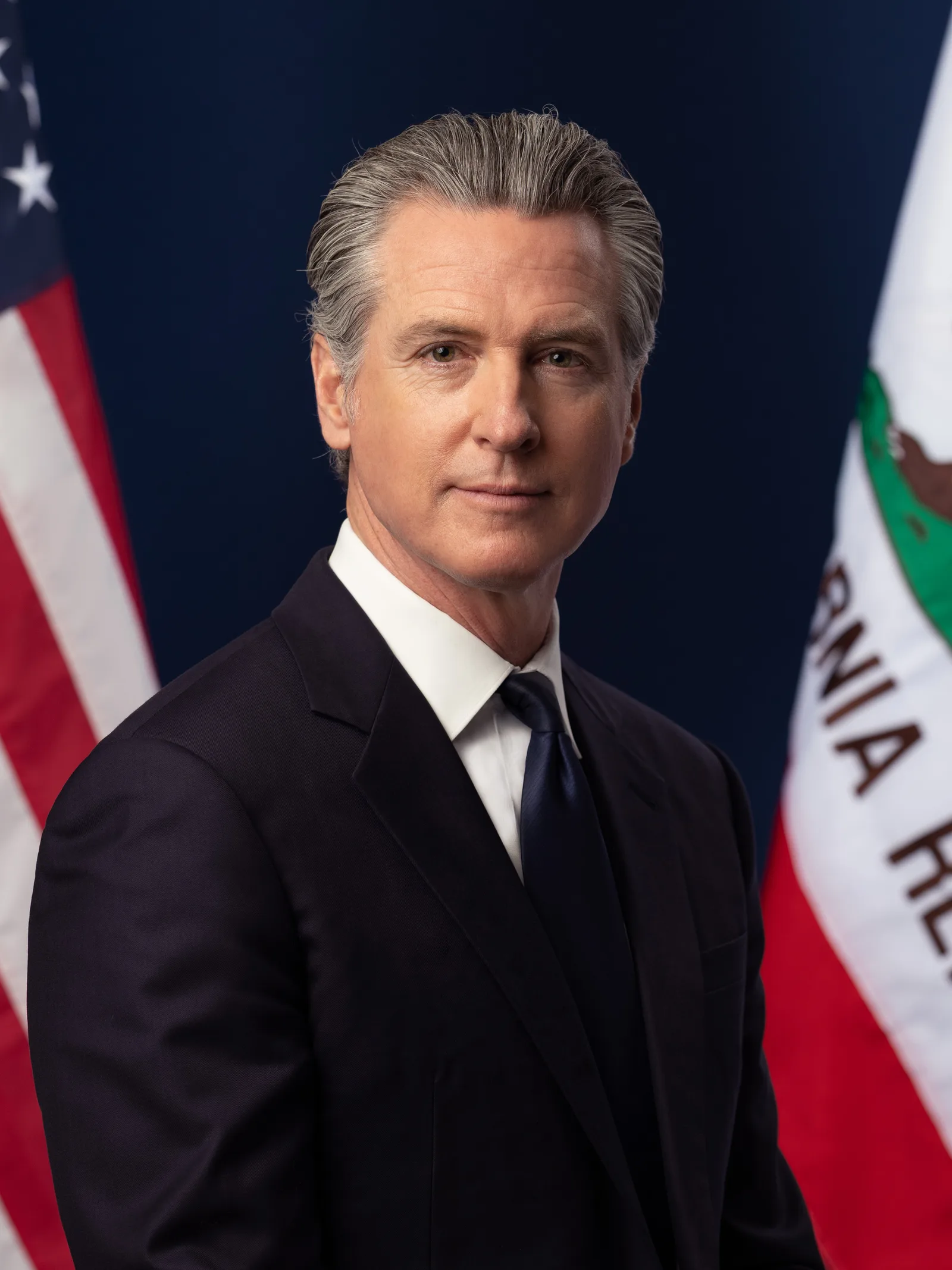 File photo
What happened
Key facts
- California Governor Gavin Newsom said U.S. military aid to Israel should be conditioned (per aa.com.tr, Washington Examiner, ua.news).
- Newsom said conditioning aid was becoming the Democratic Party’s consensus position (per aa.com.tr, Washington Examiner).
- Newsom said Netanyahu’s policies undermine prospects for a two-state solution (per aa.com.tr, Washington Examiner).
- Newsom said Netanyahu’s policies were against the interests of the American people (per Washington Examiner, aa.com.tr).
- Newsom described Israel’s war in Gaza as a “moral catastrophe” and did not specify which forms of military assistance should face conditions (per aa.com.tr, Washington Examiner).
- Newsom said Israel’s scheduled Oct. 27 election could influence the debate over military aid (per aa.com.tr, Washington Examiner).
The brief
California Governor Gavin Newsom said U.S. military aid to Israel should be conditioned, citing settler violence in the West Bank and the policies of Israeli Prime Minister Benjamin Netanyahu. Newsom presented conditional aid as a position gaining ground among Democrats and said Israel’s scheduled election could affect the debate.
In remarks to the Washington Examiner in New Hampshire, Newsom said conditioning aid was becoming the Democratic Party’s consensus position. Anadolu Agency also reported his position, emphasizing the West Bank violence and Netanyahu’s policies. The Washington Examiner likewise described Newsom’s view as a developing party consensus.
Neither account establishes that Democrats have adopted a formal party policy. Newsom did not identify which U.S. military assistance he would condition or set out specific conditions in the reported remarks.
Anadolu Agency reported that he had previously described Israel’s war in Gaza as a “moral catastrophe.” The Washington Examiner also noted that earlier characterization, but its account of the current remarks focused on his call for conditions and the political debate around it. The two accounts give related but distinct descriptions of Newsom’s criticism of Netanyahu.
Anadolu Agency reported that Newsom said the Israeli prime minister’s policies undermine prospects for a two-state solution. The Washington Examiner reported that Newsom characterized those policies as contrary to the interests of the American people.
Both accounts also said Newsom cited settler violence in the West Bank; neither provides further details about particular incidents. Newsom’s comments come as lawmakers have taken separate positions on weapons sales.
Anadolu Agency reported that most Senate Democrats voted in the spring to block a weapons sale and that more than 100 House Democrats opposed a separate measure in July. Those actions concern particular measures; the report does not establish that they amount to a general policy of conditioning all U.S. military aid to Israel. Newsom also pointed to Israel’s scheduled Oct.
27 election as a factor that could shape the discussion. The Washington Examiner quoted him saying the election would “play a big role,” while Anadolu Agency reported that he said it could influence the aid debate. Neither account specifies how the election would change U.S. policy or which aid decisions might follow.
The reporting documents Newsom’s proposal, his stated grounds for it, and his view that it is gaining support among Democrats. It does not establish a change in U.S. policy, a defined set of aid conditions, or the outcome of the congressional measures described.
The immediate political question raised by Newsom is whether the election and debate among Democrats affect future decisions on military assistance.
Why it matters
- Israeli civilians and military personnel are the population directly connected to the policy debate: Newsom is calling for conditions on U.S. military aid, but the accounts do not specify which assistance would be affected or quantify any resulting effects.
- Residents of the West Bank are directly implicated in Newsom’s stated rationale: he cited settler violence there, though the reports do not give incident details or figures for harm.
- The U.S. policy mechanism at issue is military aid to Israel. Newsom did not specify which forms of assistance should be conditioned, leaving the scope of his proposal undefined.
- Congressional votes show distinct political mechanisms under discussion: most Senate Democrats voted in the spring to block a weapons sale, while more than 100 House Democrats opposed a separate measure in July.
What to watch next
- Whether Israel’s scheduled Oct. 27 election influences the U.S. military-aid debate, as Newsom said it could.
- Whether Newsom specifies which forms of U.S. military assistance he would condition.
- Whether Democrats adopt a formal party position on conditioning aid, beyond Newsom’s description of a growing consensus.
- Whether the Senate or House takes further action on weapons-sale measures.
How it's being covered
Coverage analysisShow details4 source articles · 4 unique outletsOutlet political mix: Too few rated· 1 Center · 1 Right · 2 unratedWhere the outlets are based: Middle East 50% · US/Canada 25% · Other 25%
How outlets' accounts compare
2 framing differences · 5 uncorroborated claims · 3 information gaps- Anadolu Agency emphasizes Newsom’s claim that Netanyahu’s policies undermine prospects for a two-state solution; the Washington Examiner instead reports his view that those policies run against the interests of the American people.
- Anadolu Agency foregrounds Newsom’s earlier description of Israel’s war in Gaza as a “moral catastrophe”; the Washington Examiner mentions that earlier characterization but centers its account on the aid proposal and party consensus.
- Newsom attributes his call for conditions to settler violence in the West Bank and Netanyahu’s policies; the reports present these as his rationale, not as independently established causal findings.
- Newsom describes conditional aid as becoming the Democratic Party’s consensus, but neither account documents a formal party decision.
- Newsom said, “Aid has to be conditioned.”
- Newsom described conditional aid as becoming the Democratic Party’s “consensus position.”
- Newsom said Israel’s scheduled election could play a significant role in the debate.
- Neither account gives details or figures on settler-violence incidents in the West Bank.
- Neither account quantifies civilian harm in Gaza or connects specific incidents to Newsom’s aid proposal.
- The reports do not specify which U.S. military assistance Newsom would condition or what conditions he proposes.
Timeline
Developments from this story's sources, dated background we compiled and fact-checked, and our earlier coverage. Each row says which.- The political and security context includes Israel’s occupation of the West Bank and East Jerusalem after the June 1967 war; Israel disputes some legal characterizations of that status.Background · from our historical context
- Congress enacted the Leahy law barring assistance to foreign security-force units implicated in gross human-rights violations.Background · compiled and fact-checked by Updat3
- Israel withdrew its settlements and forces from Gaza.Background · compiled and fact-checked by Updat3
- Hamas won the Palestinian legislative elections.Background · compiled and fact-checked by Updat3
- After Hamas and Fatah split in 2007, Hamas governed Gaza, while Israel and Egypt imposed restrictions on movement and goods into the territory.Background · from our historical context
- Gavin Newsom was elected governor of California.Background · compiled and fact-checked by Updat3
- Hamas attacked Israel on October 7, 2023, killing about 1,200 people and taking about 250 hostages; Hamas cited the occupation and conditions facing Palestinians among its stated reasons.Background · from our historical context
- On February 8, 2024, Biden had issued National Security Memorandum 20, requiring assurances from recipients of U.S. military assistance about compliance with international law and access for humanitarian aid.Background · from our historical context
How we got here
On May 8, 2024, the administration told Congress that it was reasonable to assess that U.S.-supplied weapons had been used in some cases inconsistent with international humanitarian law, while saying it could not make definitive findings about specific incidents.
On February 8, 2024, Biden had issued National Security Memorandum 20, requiring assurances from recipients of U.S. military assistance about compliance with international law and access for humanitarian aid.
Original sources
1 of 4 articles · Europe · Show allEvery story links to the reporting it was built from. How we choose sources
Spotted a factual error, a broken link or a misleading summary? Tell us.