
Nigeria reports imported Ebola case as WHO flags a complex outbreak
Nigeria’s health authorities reported an imported Bundibugyo-strain Ebola case in the Federal Capital Territory, with laboratory confirmation on October 20. The World Health Organization said authorities had identified 44 contacts for monitoring, while Nigeria’s health minister said high-risk contacts had been quarantined.
AI-assisted synthesis · Based on 5 outlets' reporting · Article text read from 3 of 5 outletsHow it's made
View timeline · 7 entries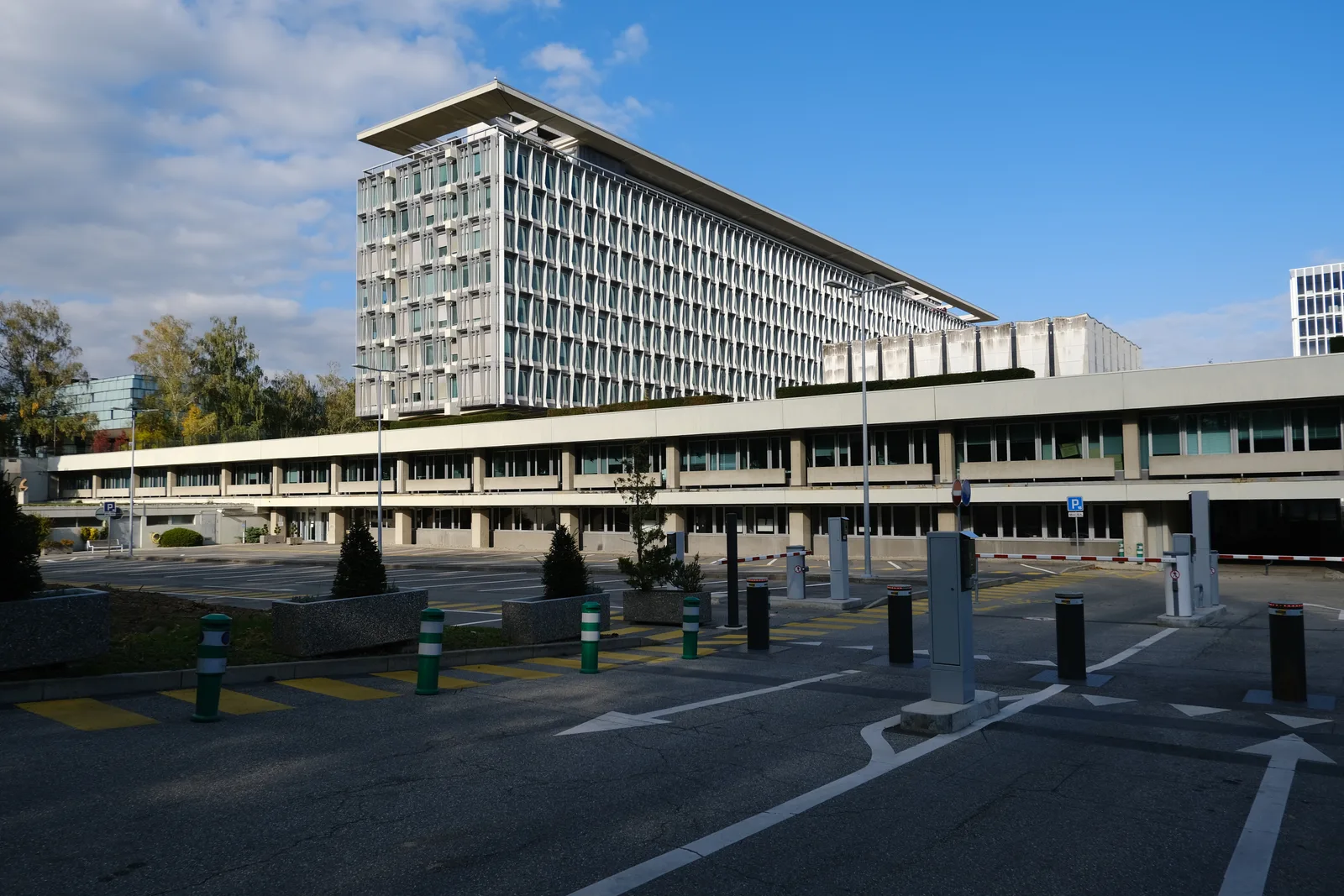 File photo
What happened
Key facts
- Nigeria reported an imported Ebola case involving the Bundibugyo strain in the Federal Capital Territory (per The Times of India, nationpathindia.com, The Japan Times).
- The WHO said Nigeria was the fifth country to report the virus since the Democratic Republic of the Congo declared an outbreak on May 15, 2026 (per The Times of India).
- The WHO described the outbreak as complex and said the virus had spread from east Africa to Nigeria, marking its first case in west Africa (per The Japan Times, The Times of India).
The brief
Nigeria’s health authorities confirmed an imported case of Bundibugyo-strain Ebola in the Federal Capital Territory, the country’s first reported case in the outbreak. Laboratory testing confirmed the infection on October 20.
The World Health Organization described the outbreak as “complex” and said the virus had crossed from east Africa to Nigeria, its first reported case in west Africa. Nigeria’s Federal Ministry of Health and Social Welfare said the patient was a woman who had travelled from Uganda.
She developed symptoms on October 7, according to the WHO’s regional office, and visited a private healthcare facility in Abuja on October 11, the WHO said. Nigerian health authorities later isolated her and provided medical care. The immediate public-health task is tracing and monitoring possible contacts.
The WHO said authorities had identified 44 people who may have come into contact with the patient. A separate account also put the initial monitored contact count at 44. The reports describe the figure as contacts identified for monitoring, rather than confirmed infections.
Health Minister Muhammad Ali Pate said the woman’s contacts had been tracked since her arrival in Nigeria and that high-risk individuals had been quarantined at a facility. He did not give a number for those quarantined. That statement adds a containment measure to the contact-monitoring figure, but does not specify how many of the 44 contacts were classified as high risk.
The Nigeria Centre for Disease Control and Prevention activated its incident management system to coordinate the response, according to the WHO. The contact investigation and the patient’s isolation are the concrete steps Nigerian authorities have reported as they work to limit further transmission.
The WHO said Nigeria was the fifth country to report the virus since the Democratic Republic of the Congo declared an outbreak on May 15, 2026. The agency’s warning situates Nigeria’s case within an outbreak that has moved from east Africa into west Africa; it did not, in the material reported here, provide a forecast of further spread.
The outbreak’s strain and the imported status of the case are central to the reporting: Nigeria confirmed Bundibugyo virus disease, while the WHO characterized the broader outbreak as complex. The account identifies the origin of the patient’s travel as Uganda and the case location as the Federal Capital Territory, but does not identify a specific source of exposure.
Why it matters
- The patient is receiving care in isolation, while 44 people identified as possible contacts are being monitored; tracing and monitoring are the reported mechanisms for limiting further transmission.
- The WHO says the virus has reached Nigeria from east Africa, marking its first reported case in west Africa, giving the case significance beyond the Federal Capital Territory.
- Muhammad Ali Pate says high-risk contacts have been quarantined, but no count was disclosed, leaving the scale of that containment measure unspecified.
What to watch next
- Whether Nigeria’s health authorities identify additional contacts beyond the 44 people initially reported for monitoring.
- Whether Nigeria’s health authorities report further information on the high-risk contacts Muhammad Ali Pate said were quarantined.
- Whether the Nigeria Centre for Disease Control and Prevention reports further steps through its activated incident management system.
How it's being covered
Coverage analysisShow details5 source articles · 5 unique outletsOutlet political mix: Center Only· 4 Center · 1 unratedWhere the outlets are based: Asia 40% · Unknown 40% · Other 20%
- Coverage is currently concentrated among Center-rated outlets (4 of 4 rated sources); comparatively few Left or Right-rated outlets have published on the event.
One source is from a wire service (AP, Reuters, AFP or Bloomberg), whose reporting other outlets often republish.
How outlets' accounts compare
2 framing differences · 2 uncorroborated claims · 2 information gaps- The Times of India and NationPath India emphasize the 44 contacts identified for monitoring; The Japan Times adds Muhammad Ali Pate’s statement that high-risk individuals were quarantined without giving their number.
- The Japan Times foregrounds the WHO’s warning that the outbreak is complex and the virus’s spread into west Africa; The Times of India emphasizes Nigeria’s contact tracing and response coordination.
- The WHO described the outbreak as “complex.”
- Muhammad Ali Pate said high-risk individuals “have been quarantined, fully, in a facility.”
- The sources do not identify how or where the patient acquired the infection.
- The number of high-risk individuals quarantined is not stated.
Timeline
Developments from this story's sources, dated background we compiled and fact-checked, and our earlier coverage. Each row says which.- The broader Ebola record began with separate outbreaks in what are now the DRC and South Sudan in 1976.Background · from our historical context
- An outbreak of Bundibugyo virus began in Uganda, causing 149 reported cases and 37 deaths.Background · compiled and fact-checked by Updat3
- Researchers established Bundibugyo virus as a distinct Ebola species.Background · compiled and fact-checked by Updat3
- The same virus was reported in the DRC in 2012, when an outbreak in Orientale Province caused 57 cases and 29 deaths.Background · from our historical context
- The World Health Organization declared Ebola a Public Health Emergency of International Concern during the West African epidemic.Background · compiled and fact-checked by Updat3
- The World Health Organization declared Nigeria’s Ebola outbreak over.Background · compiled and fact-checked by Updat3
- Before Nigeria’s report, the Democratic Republic of the Congo declared an Ebola outbreak on May 15, 2026, providing the immediate regional backdrop.Background · from our historical context
How we got here
Before Nigeria’s report, the Democratic Republic of the Congo declared an Ebola outbreak on May 15, 2026, providing the immediate regional backdrop. The Bundibugyo virus had been identified in Uganda during an outbreak that began in August 2007; that outbreak caused 149 reported cases and 37 deaths, and researchers established the virus as a distinct Ebola species in 2008.
The same virus was reported in the DRC in 2012, when an outbreak in Orientale Province caused 57 cases and 29 deaths. Those episodes established that Bundibugyo Ebola had occurred in both Uganda and the DRC before the 2026 outbreak. The broader Ebola record began with separate outbreaks in what are now the DRC and South Sudan in 1976.
Original sources
2 of 5 articles · Unknown · Show allEvery story links to the reporting it was built from. How we choose sources
Spotted a factual error, a broken link or a misleading summary? Tell us.