
Analysts say more than 12m bpd passed through Strait of Hormuz this month despite Iranian attacks
Analysts reported that more than 12 million barrels per day of oil flowed through the Strait of Hormuz this month despite attacks from Iran. U.S. military protection covered over 9 million barrels per day, and analysts and a CENTCOM spokesman gave differing daily flow figures.
AI-assisted synthesis · Based on 5 outlets' reporting · Article text read from 2 of 5 outletsHow it's made
View timeline · 5 entries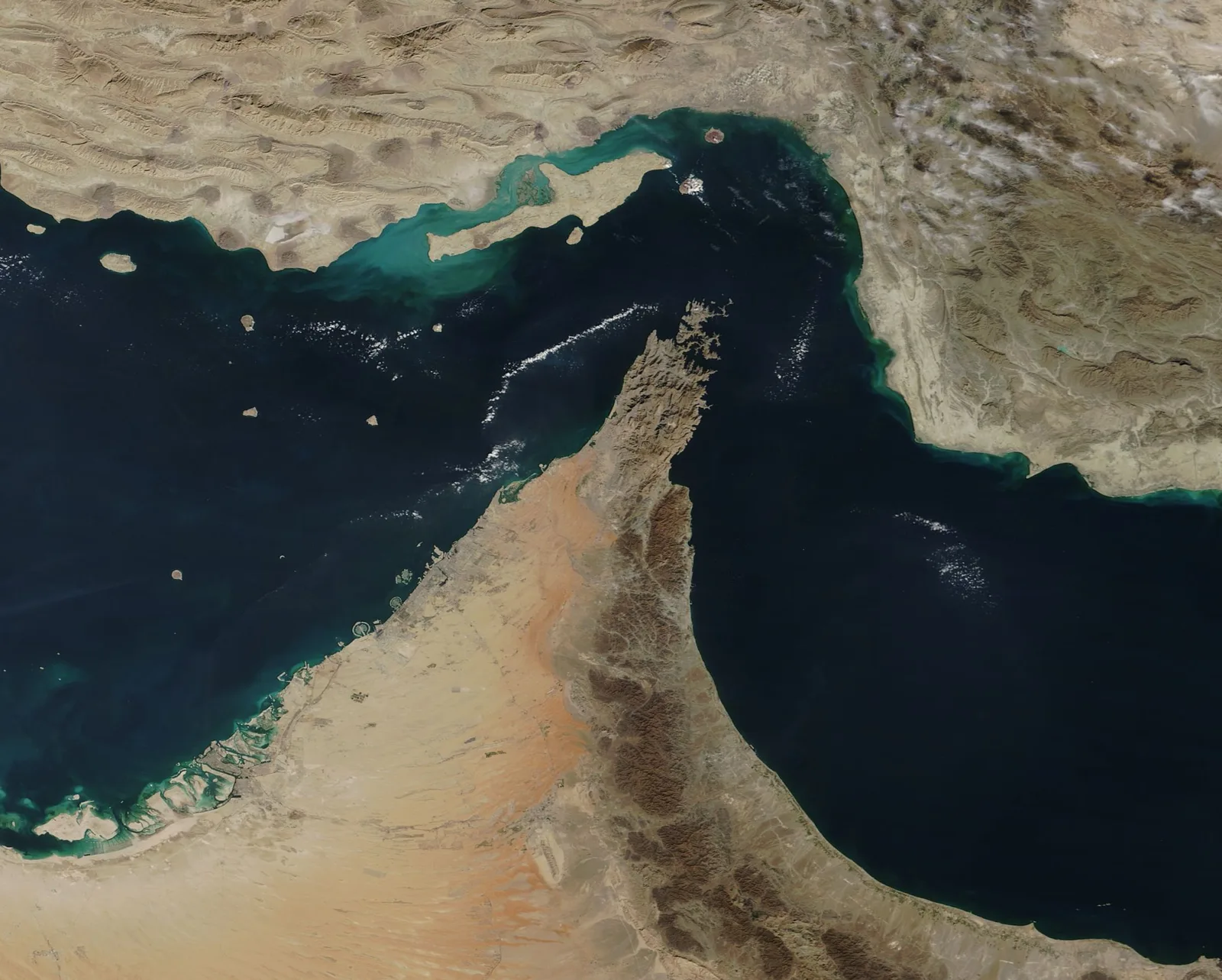 File photo
What happened
Key facts
- Analysts reported that more than 12 million barrels of oil per day passed through the Strait of Hormuz this month (per New York Post).
- TankerTracker.com and Kpler reported that more than 9 million barrels per day transited daily under U.S. military protection (per New York Post).
- Kpler reported that nearly 23 million barrels passed through the Strait of Hormuz on one Thursday, and only a tenth of that passed through on the prior Wednesday (per New York Post, nationalsecurityjournal.org).
- Sources in this pack reported attacks on vessels and shipping in and near the Strait of Hormuz associated with the Iran war; outlets in the pack noted seafarer deaths and ship strikes in the wider reporting (per New York Post, nationalsecurityjournal.org, BBC).
The brief
Analysts say oil flows through the Strait of Hormuz have been sustained at more than 12 million barrels per day this month despite a string of attacks the reporting links to Iran.
TankerTracker.com and Kpler told one outlet that over 9 million barrels per day moved while under U.S. military protection, and a CENTCOM spokesman gave higher single-day estimates that do not match the analysts' averages.
The mismatch in daily figures illustrates how analysts and military spokespeople are using different samples and snapshots to describe transit volumes: Kpler reported nearly 23 million barrels transited on one Thursday and only roughly 2.3 million on the prior Wednesday, while CENTCOM spokesman Capt. Tim Hawkins estimated about 19 million barrels on a separate Monday.
The reporting also said 26 vessels faced attacks so far in October, a tally described as the most dangerous period for tankers and cargo ships since the war began in the sources' coverage. One outlet's excerpt referenced figures that at least 24 seafarers were killed in attacks since the war began, citing an International Maritime Organization number reported by ABC.
Analysts and the sources in this pack attributed the attacks in the shipping lanes to actions coming from Iran. TankerTracker.com and Kpler measured the volume of oil under U.S. protection and found that a substantial share of the month's 12 million-plus barrels per day transited in convoys or under surveillance.
That detail and the differing single-day flow numbers suggest monthly averages and daily spikes are being reported side by side, producing apparently conflicting snapshots rather than a single reconciled dataset.
The International Energy Agency figure cited in one excerpt noted Gulf crude exports reached 13.9 million barrels per day in September, providing a recent benchmark cited alongside the October flows.
Headlines from other outlets in the pack signalled continuing maritime risk: one headline said a container ship was hit by a projectile and sank, and another tied Hormuz oil movements to westward market effects.
The accounts in the sources combine commercial maritime data from TankerTracker.com and Kpler, military statements from CENTCOM, and media tallies of vessel attacks; where the sources differ, they do so on particular daily flow estimates and on which single-day snapshots best represent current throughput.
The core, consistent finding across the sourced reporting is that despite attacks linked to Iran in the area, commercial crude continued to move through the Strait at rates above 12 million barrels per day this month, with a significant portion transiting under U.S. military protection.
Why it matters
- Energy consumers in importing countries face higher logistical risk because over 9 million barrels per day of crude were moving under U.S. military protection, increasing transport costs tied to convoying and naval support as reported by TankerTracker.com, Kpler and CENTCOM.
- Owners and crews of commercial tankers bear direct danger: one source cited 26 vessels attacked in October and other reporting referenced at least 24 seafarer deaths since the war began, indicating a concrete human and insurance-cost toll on maritime operators.
- Oil market participants tracking flows and refining inputs must reconcile divergent daily estimates (for example, Kpler's near-23 million barrel single-day figure versus CENTCOM's 19 million) because those snapshots affect pricing, availability and chartering decisions.
- U.S. military forces are materially involved in securing routes: the documented figure of more than 9 million barrels per day transiting under U.S. protection shows a sustained operational commitment by CENTCOM to keep crude moving through Hormuz.
What to watch next
- Whether TankerTracker.com or Kpler publish reconciled monthly flow data that resolve the differing single-day snapshots cited by the outlets.
- Whether CENTCOM provides further daily transit estimates that align with or revise Capt. Tim Hawkins's 19 million-barrel single-day figure.
- Whether reporting updates the tally of vessels attacked in October beyond the 26 reported in the outlet that cited analysts.
- Whether the International Energy Agency or commercial analysts revise Gulf export benchmarks following the September 13.9 million barrels per day figure cited in the sources.
How it's being covered
Coverage analysisShow details5 source articles · 5 unique outletsOutlet political mix: Mixed· 1 Left · 2 Center · 1 Right · 1 unratedWhere the outlets are based: US/Canada 60% · Europe 20% · Other 20%
How outlets' accounts compare
1 factual disagreement · 2 framing differences · 3 uncorroborated claims · 5 information gaps- New York Post attributes transit volumes under protection to TankerTracker.com and Kpler and attributes the 19 million-barrel estimate to CENTCOM spokesman Capt. Tim Hawkins; nationalsecurityjournal.org attributes the 13.9 million bpd September figure to the International Energy Agency.
- New York Post frames the story as an analysts' finding that throughput exceeded 12 million bpd despite Iranian attacks and emphasizes U.S. military protection; nationalsecurityjournal.org cites an IEA September benchmark and highlights much lower October snapshot figures reported elsewhere, producing a different emphasis on shortages.
- S2: 'more than 12 million barrels per day' (analysts); S2/Kpler: 'nearly 23 million barrels' on one Thursday and 'only a tenth' on Wednesday; S2/CENTCOM (Capt. Tim Hawkins): 'some 19 million barrels' on one Monday; S1/IEA: 13.9 million bpd in September.
- New York Post quoted CENTCOM spokesman Capt. Tim Hawkins estimating 'some 19 million barrels' passed through on one Monday.
- New York Post reported analysts saying 'more than 12 million barrels of oil have pass through the Strait of Hormuz per day this month.'
- nationalsecurityjournal.org cited an IEA figure that Gulf crude exports reached '13.9 million barrels per day in September.'
- New York Post and the other reporting attribute attacks in the shipping lanes to actions coming from Iran, but none of the sources in the pack provides independent, publicly documented evidence of direct linkage beyond those attributions.
- No report Updat3 read provides a detailed, reconciled dataset showing how the monthly average above 12 million bpd was calculated from daily flows, nor do they reconcile methodology differences between TankerTracker.com, Kpler and CENTCOM.
- None of the sources in this packet gives a complete, sourced list of the 26 attacked vessels or a breakdown of casualties linked specifically to the October attacks in the Strait of Hormuz.
- No source here cites any formal, independent verification of the attribution that the attacks came from Iran beyond the reporting lines and analysts' statements.
- Daily flow totals are unclear: New York Post gives a monthly >12 million bpd figure but also reports single-day spikes (nearly 23 million on one Thursday) and lows (about a tenth of that on Wednesday); CENTCOM's Capt. Tim Hawkins gave a different single-day estimate (19 million).
Timeline
Developments from this story's sources, dated background we compiled and fact-checked, and our earlier coverage. Each row says which.- The United Nations adopted the Convention on the Law of the Sea, which sets rules for passage through international straits.Background · compiled and fact-checked by Updat3
- The U.S. Navy launched Operation Praying Mantis, striking Iranian naval forces and installations after a U.S. ship hit an Iranian mine.Background · compiled and fact-checked by Updat3
- Two tankers were damaged in the Gulf of Oman; the United States blamed Iran, which denied involvement.Background · compiled and fact-checked by Updat3
- Iran’s Islamic Revolutionary Guard Corps seized the British-flagged tanker Stena Impero in the Strait of Hormuz.Background · compiled and fact-checked by Updat3
- The United States and Israel launched coordinated military strikes against Iran.Background · compiled and fact-checked by Updat3
How we got here
The immediate backdrop includes the March 13, 2026 coordinated strikes by the United States and Israel on Iranian nuclear and military infrastructure, an operation that U.S. and Israeli officials described publicly as aimed at degrading Tehran’s capabilities.
The structural framework governing commercial passage through the Strait is rooted in the United Nations Convention on the Law of the Sea (UNCLOS, 1982), which codified transit passage rights, and in the International Maritime Organization’s safety and security rules (IMO conventions, various dates from 1974 onward) that guide ship reporting and routing.
Original sources
5 articles from 5 outletsEvery story links to the reporting it was built from. How we choose sources
Spotted a factual error, a broken link or a misleading summary? Tell us.