
Hormuz oil flows climb to 11.7 million barrels a day in October
Oil flows through the Strait of Hormuz averaged 11.7 million barrels a day in October, up from 9.8 million in September, according to Kpler estimates reported by OilPrice.com. The outlet said the October rate was approaching, but remained below, the February pre-war average of 14.5 million barrels a day.
AI-assisted synthesis · Based on 4 outlets' reporting · Article text read from 1 of 4 outletsHow it's made
View timeline · 12 entries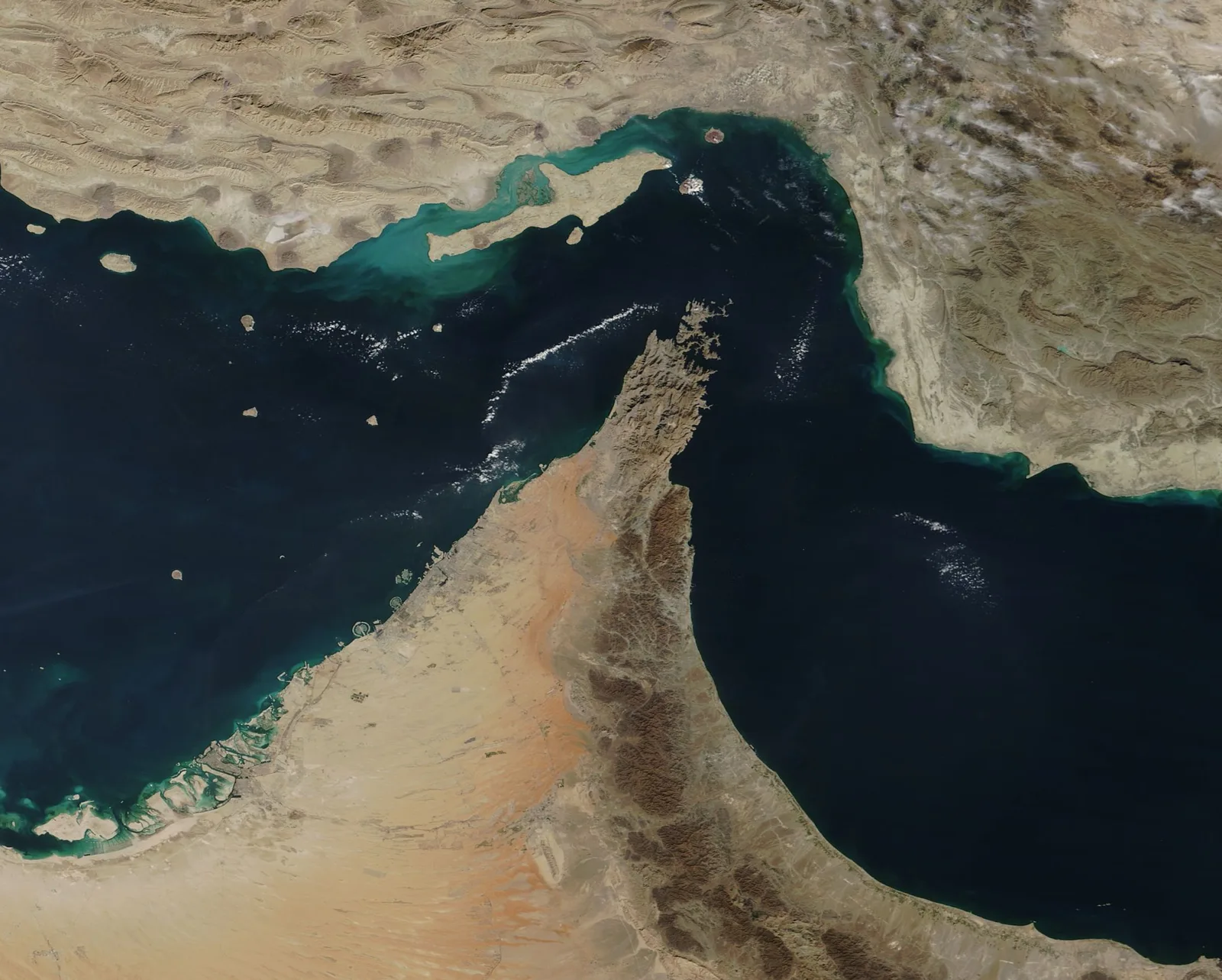 File photo
What happened
Key facts
- The estimated daily Hormuz flow rose from 9.8 million barrels in September to 11.7 million barrels in October (per oilprice.com).
- The 11.7-million-barrel daily October estimate was close to the pre-war February average of 14.5 million barrels a day (per oilprice.com).
- UK Maritime Trade Operations data and statements from Iran’s Islamic Revolutionary Guard Corps indicated that at least 25 ships, most of them tankers, were hit in Hormuz during October’s first 20 days (per oilprice.com).
- Kpler analysts said crude passing through the strait fell 27% from a wartime high in the prior week to at least 10.1 million barrels a day in early October (per oilprice.com).
- Kpler reported that the daily average flow of oil out of the Persian Gulf had fallen to 8.5 million barrels from more than 20 million barrels a day two weeks earlier (per oilprice.com).
The brief
Oil flows through the Strait of Hormuz averaged 11.7 million barrels a day in October, up from 9.8 million in September, according to estimates by Kpler cited by OilPrice.com. The outlet described the October volume as nearing the pre-war February average of 14.5 million barrels a day, although the figures it gives leave the October estimate below that benchmark.
The monthly rise sits alongside evidence of sharply changing traffic within the period. Kpler analysts said crude moving through the strait fell 27% from a wartime high in the preceding week to at least 10.1 million barrels a day in early October. The outlet did not identify the dates covered by that weekly comparison beyond placing it in early October.
Kpler counted seven commodity carriers crossing the strait on October 6, which its analysts described as the lowest daily count since late July. That carrier count is a separate measure from the reported daily oil volumes: the figures describe traffic and crude flows, respectively. Ship damage was also reported during October.
OilPrice.com said UK Maritime Trade Operations data and statements from Iran’s Islamic Revolutionary Guard Corps indicated that at least 25 ships were hit in Hormuz during the first 20 days of the month. Most were tankers. The account does not specify who hit the ships or provide a breakdown of damage or casualties.
A further Kpler estimate in the outlet’s account put the daily average flow of oil out of the Persian Gulf at 8.5 million barrels. Kpler contrasted that figure with more than 20 million barrels a day two weeks earlier. The outlet presents this as a broader Gulf-flow measure, distinct from the 11.7-million-barrel estimate for flows out of Hormuz during October.
The figures therefore describe both an October recovery from September’s Hormuz average and substantial variation in reported daily flows during the month. They come from Kpler estimates and the cited maritime data and statements; the account does not give a separate independent verification of the flow estimates.
The accompanying headlines describe oil prices as falling back while traders remained focused on the Middle East conflict, and separately as rising on fears of conflict escalation; they provide no price figures or further market detail.
Why it matters
- The reported October Hormuz flow of 11.7 million barrels a day remained below the 14.5-million-barrel February average, a comparison that quantifies the gap in the outlet’s account.
- The cited data and statements indicate at least 25 ships were hit in Hormuz in October’s first 20 days, most of them tankers; the account does not identify who hit them.
- Kpler’s figures show different reported measures of traffic and oil movement: seven commodity carriers crossed on October 6, while the outlet also cites a 8.5-million-barrel daily average out of the Persian Gulf.
What to watch next
- Whether Kpler’s reported average for oil flows through Hormuz changes from the October estimate of 11.7 million barrels a day.
- Whether subsequent counts of ships hit in Hormuz add to the at least 25 cited for October’s first 20 days.
- Whether the daily average flow out of the Persian Gulf moves from Kpler’s reported 8.5 million barrels a day.
How it's being covered
Coverage analysisShow details5 source articles · 4 unique outletsOutlet political mix: Mostly Center· 3 Center · 1 RightWhere the outlets are based: US/Canada 25% · Europe 25% · Other 50%
- Coverage is currently concentrated among Center-rated outlets (3 of 4 rated sources); comparatively few Left-rated outlets have published on the event.
One source is from a wire service (AP, Reuters, AFP or Bloomberg), whose reporting other outlets often republish.
How outlets' accounts compare
Timeline
Developments from this story's sources, dated background we compiled and fact-checked, and our earlier coverage. Each row says which.- In 1980, Iraq invaded Iran, beginning the war that would draw shipping and outside naval forces into the Gulf.Background · from our historical context
- In 1982, the United Nations Convention on the Law of the Sea set out the legal framework for transit passage through international straits.Background · from our historical context
- From 1984, both countries attacked commercial shipping in the Persian Gulf, in what became known as the Tanker War.Background · from our historical context
- In July 1987, the United States began escorting reflagged Kuwaiti tankers through the Gulf under Operation Earnest Will.Background · from our historical context
- On April 18, 1988, US forces attacked Iranian oil platforms and naval vessels during Operation Praying Mantis, which Washington said followed the mining of the USS *Samuel B. Roberts*.Background · from our historical context
- Two tankers were damaged in the Gulf of Oman; the United States blamed Iran, which denied involvement.Background · compiled and fact-checked by Updat3
- Iran’s Islamic Revolutionary Guard Corps seized the British-flagged tanker Stena Impero in the Strait of Hormuz.Background · compiled and fact-checked by Updat3
- The United States and Israel launched coordinated strikes across Iran.Background · compiled and fact-checked by Updat3
- Iran announced that vessels passing through the Strait of Hormuz would need prior authorization from the IRGC Navy.Background · compiled and fact-checked by Updat3
- The United States and Iran signed a memorandum of understanding concerning freedom of navigation in the Strait of Hormuz; implementation later stalled over security disagreements.Background · compiled and fact-checked by Updat3
- Maritime security sources recorded at least 10 vessels targeted, including oil and liquefied natural gas tankers off Fujairah and Sohar.Background · compiled and fact-checked by Updat3
- Iran presented a proposal to reopen the Strait of Hormuz after an interim ceasefire collapsed.Background · compiled and fact-checked by Updat3
How we got here
Before the United States and Israel launched coordinated strikes on Iran on February 28, 2026, the strait of Hormuz was carrying an average of 14.5 million barrels of oil a day in February, according to the figures cited by Oilprice.com.
Hormuz is the narrow outlet from the Persian Gulf to the Gulf of Oman and the open ocean, making it a key route for oil exports from Gulf producers. In 1982, the United Nations Convention on the Law of the Sea set out the legal framework for transit passage through international straits.
Original sources
2 of 5 articles · Unknown · Show allEvery story links to the reporting it was built from. How we choose sources
Spotted a factual error, a broken link or a misleading summary? Tell us.