
Olivia Chow defeats Brad Bradford to retain Toronto mayor’s office
Olivia Chow won re-election as Toronto mayor, defeating challenger Brad Bradford. Chow said in her victory speech that her role is to serve everyone in the city.
AI-assisted synthesis · Based on 5 outlets' reporting · Article text read from 2 of 5 outlets · 1 article captured only in partHow it's made
View timeline · 10 entries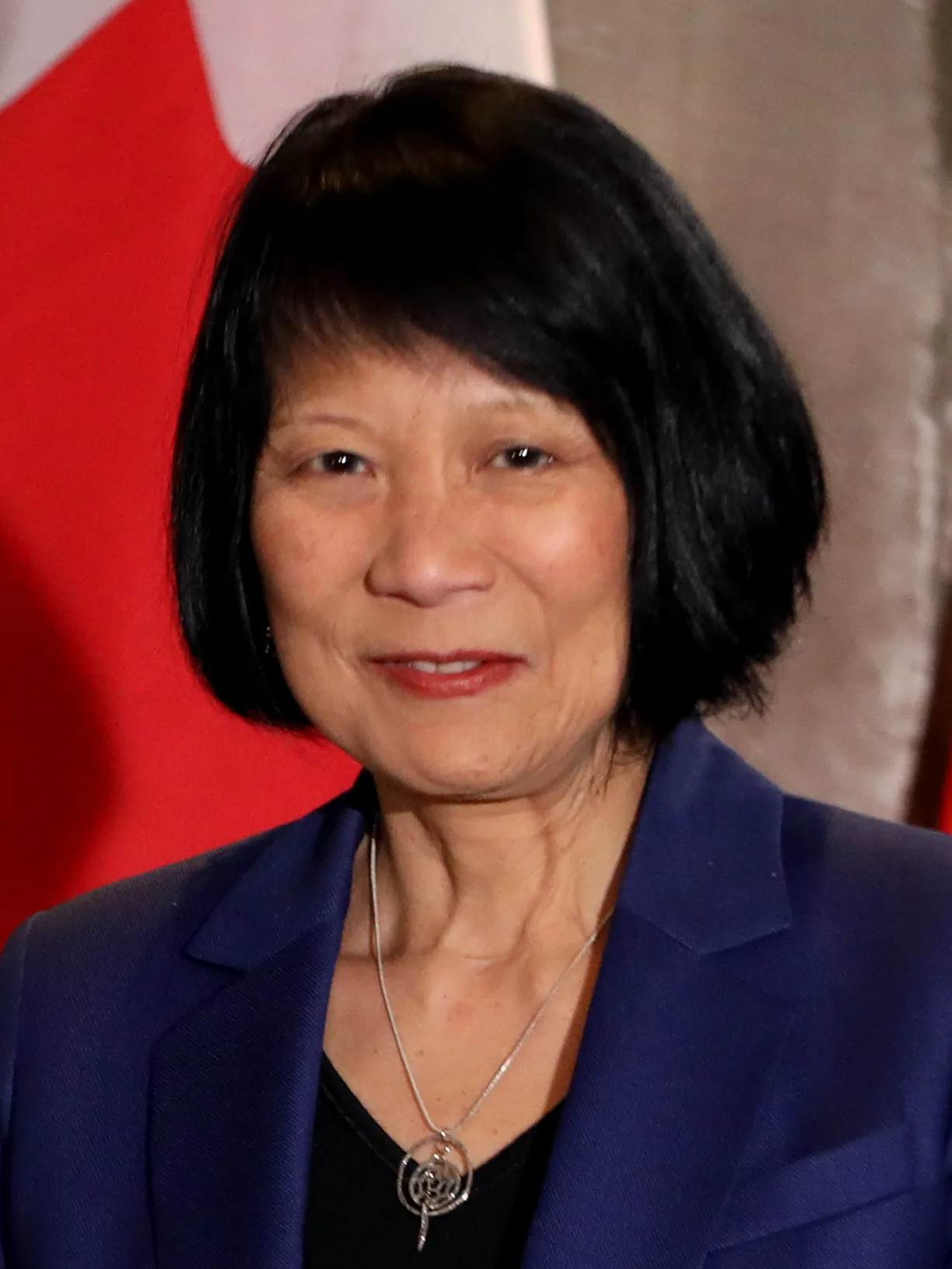 File photo
What happened
Key facts
- Olivia Chow was re-elected as Toronto mayor, defeating challenger Brad Bradford (per The Globe and Mail, nationalpost.com, winnipegfreepress.com).
- Chow won by more than 10 points over Bradford (per nationalpost.com).
- The City of Toronto said long lines at some polling stations delayed the results (per The Globe and Mail, nationalpost.com, citynews.ca).
- Chow said the work of coming together would begin after the election and described herself as mayor for every neighbourhood, community and person in Toronto (per nationalpost.com, The Globe and Mail).
- Sarah Polley, who canvassed for Chow, said she felt nervous (per The Globe and Mail, nationalpost.com).
- Chow's first-term record included two large property-tax increases and a provincial agreement providing $1.2-billion in operating funds over three years and transferring the Gardiner Expressway and Don Valley Parkway to the province (per The Globe and Mail).
- Brad Bradford said a new structure could reduce the average household water bill by $300 by funding capital projects through debt (per The Globe and Mail).
The brief
Olivia Chow won re-election as Toronto mayor, defeating city councillor Brad Bradford by more than 10 points, according to the National Post. The Globe and Mail also reported Chow’s victory over Bradford, and the Winnipeg Free Press, Toronto Star and CityNews Toronto headlines likewise reported her re-election and Bradford’s defeat.
The count began appearing later in the evening. The Globe and Mail reported that polls closed at 8 p.m., with early results showing around 9:15 p.m. The City of Toronto attributed the delay to long lines at some polling stations. Chow delivered her acceptance speech just before 11 p.m., the National Post reported.
In that speech, Chow said that after the campaign, “the work of coming together begins.” She described the mayor’s role as serving every neighbourhood and community, and every person who calls Toronto home, regardless of background, beliefs or whom they love. The National Post reported those remarks as part of her acceptance speech.
The result followed a contest between Chow and Bradford, an east-end councillor, over the city’s mayoralty. The Globe and Mail described Bradford’s challenge as stiff. Sarah Polley, who canvassed for Chow, said she felt nervous, the same outlet reported. The National Post characterized Chow’s margin as more than 10 points.
The Globe and Mail’s account also set out elements of Chow’s record in office: two large property-tax increases and a provincial agreement with Premier Doug Ford’s government. That agreement provided $1.2-billion in operating funds over three years and shifted responsibility for the Gardiner Expressway and Don Valley Parkway to the province.
The outlet said Chow had inherited a $1.8-billion budget gap. Bradford offered a separate assessment of a proposed financial structure: he said it could lower the average household water bill by $300 by using debt to fund capital projects. That figure was a forecast attributed to Bradford, not a reported outcome.
The election coverage did not state whether the proposal would proceed. The outlets emphasized different aspects of the result: the National Post supplied the margin and details of Chow’s speech, while the Globe and Mail focused on the count delay and her governing record.
Together, their accounts place the immediate test for Chow’s new term in her stated aim of bringing the city together and in the fiscal choices already described during the campaign coverage.
Why it matters
- Toronto households bear the direct cost of the two large property-tax increases described in the Globe and Mail’s account of Chow’s first term.
- The provincial agreement shifted responsibility for the Gardiner Expressway and Don Valley Parkway to the province and supplied $1.2-billion in operating funds over three years.
- Brad Bradford’s proposed use of debt for capital projects was tied to a possible $300 reduction in the average household water bill; that was his projection, not a confirmed saving.
- Chow won by more than 10 points, giving her a new term after a contest in which Bradford challenged her for the mayoralty.
What to watch next
- Whether Chow advances her stated aim of bringing Toronto’s neighbourhoods and communities together during her new term.
- Whether the provincial agreement’s $1.2-billion in operating funds and transfer of the two expressways shape city decisions.
- Whether Bradford’s proposed debt-funded capital structure moves forward and produces the projected $300 average household water-bill reduction.
How it's being covered
Coverage analysisShow details7 source articles · 5 unique outletsOutlet political mix: Mostly Center· 4 Center · 1 RightWhere the outlets are based: US/Canada 80% · Unknown 20%
- Coverage is currently concentrated among Center-rated outlets (4 of 5 rated sources); comparatively few Left-rated outlets have published on the event.
- Coverage is currently concentrated among outlets based in US/Canada (4 of 5 geographically-identified sources).
How outlets' accounts compare
1 framing difference · 2 uncorroborated claims · 2 information gaps- The National Post highlighted Chow’s margin of more than 10 points and her speech; the Globe and Mail emphasized Bradford’s challenge, the delayed count and Chow’s first-term fiscal record.
- Chow said, “the work of coming together begins,” and described her role as serving every person in Toronto.
- Bradford said a debt-funded approach to capital projects could reduce the average household water bill by $300.
- The sources do not provide a breakdown of the vote totals or turnout.
- Bradford’s $300 average household water-bill reduction was presented as a possibility, not an established result.
Timeline
Developments from this story's sources, dated background we compiled and fact-checked, and our earlier coverage. Each row says which.- Toronto’s unified city government began operating.Background · compiled and fact-checked by Updat3
- Brad Bradford, a Toronto city councillor for Beaches–East York since 2018, was among the elected officials who later challenged her for the mayoralty.Background · from our historical context
- Ontario’s Strong Mayors, Building Homes Act, passed on September 8, 2022, gave Toronto’s mayor additional powers, including certain budget and appointment authorities.Background · from our historical context
- Brad Bradford won re-election to Toronto city council.Background · compiled and fact-checked by Updat3
- In February 2023, before the by-election, Ontario Premier Doug Ford and Tory announced a proposed “New Deal” for the city, citing Toronto’s financial pressures.Background · from our historical context
- Olivia Chow won Toronto’s mayoral byelection with about 37 per cent of the vote; Brad Bradford finished eighth.Background · compiled and fact-checked by Updat3
- Olivia Chow took office as Toronto mayor.Background · compiled and fact-checked by Updat3
- The agreement was finalized in November 2023: Ontario committed $1.2 billion in operating support over three years and took responsibility for the Gardiner Expressway and Don Valley Parkway.Background · from our historical context
- Toronto adopted its 2024 budget, raising the residential property-tax rate by 9.5 per cent.Background · compiled and fact-checked by Updat3
- A Canada Pulse Insights poll for CityNews put Chow 17 percentage points ahead of Bradford among decided or leaning Toronto voters.Background · compiled and fact-checked by Updat3
How we got here
Olivia Chow entered Toronto’s mayoralty through the June 26, 2023, by-election, held after John Tory resigned on February 17, 2023. Chow won that by-election and was sworn in on July 12, 2023, beginning the term whose record voters assessed in 2026.
Brad Bradford, a Toronto city councillor for Beaches–East York since 2018, was among the elected officials who later challenged her for the mayoralty. One defining issue during Chow’s first term was Toronto’s finances and its relationship with the provincial government.
Original sources
7 articles from 5 outletsEvery story links to the reporting it was built from. How we choose sources
Spotted a factual error, a broken link or a misleading summary? Tell us.