
Japan and U.S. plan joint production of F-35 air-to-air missiles
The United States and Japan agreed to establish a Japanese facility to jointly produce advanced medium-range air-to-air missiles. Japanese Defense Minister Shinjiro Koizumi said the missiles are essential for the F-35, while the two governments described stronger alliance deterrence and response capabilities as a goal.
AI-assisted synthesis · Based on 7 outlets' reporting · Article text read from 2 of 7 outletsHow it's made
View timeline · 7 entries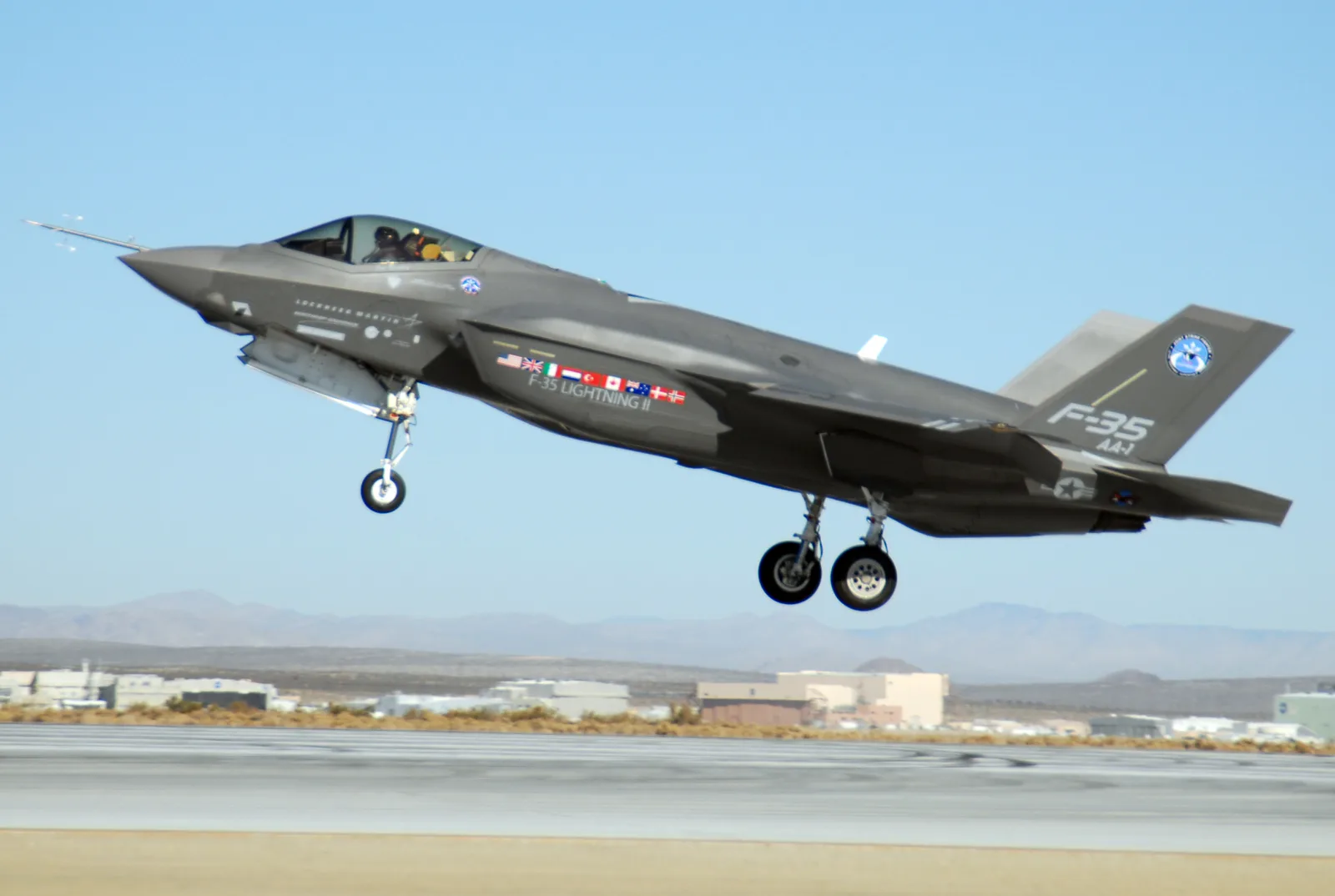 File photo
What happened
Key facts
- The United States and Japan agreed to establish a Japanese facility for joint missile production (per freepressjournal.in, The Economic Times, fortune.com).
- The joint production effort is called “Operation Supercharge.” (per freepressjournal.in, fortune.com, The Economic Times).
- The facility is intended to produce advanced medium-range air-to-air missiles described by Shinjiro Koizumi as essential for the F-35 (per freepressjournal.in).
- Koizumi said the United States and Japan agreed to strengthen their alliance’s deterrence and response capabilities with greater speed and intensity (per freepressjournal.in, The Economic Times).
The brief
The United States and Japan agreed to establish a facility in Japan for joint production of missiles, with Japanese Defense Minister Shinjiro Koizumi describing the project as a new element of the two countries’ defence cooperation. The initiative, named “Operation Supercharge,” concerns advanced medium-range air-to-air missiles.
Koizumi said the missiles are essential for the F-35. The Free Press Journal reported that he gave no further details of the agreement. The Economic Times likewise described the facility as a joint production project, while headlines from NPR and Taipei Times also reported the agreement.
NewsBytes specified the connection to the F-35; Fortune’s headline characterized the project as a message linked to China’s naval activity. During a meeting with U.S. Defense Secretary Pete Hegseth in Cebu, Koizumi said he and Hegseth shared concern about what he called an increasingly severe regional situation.
He said they had agreed to strengthen the Japan-U.S. alliance’s deterrence and response capabilities with greater speed and intensity. The Economic Times described the arrangement as part of a strategic partnership addressing regional security concerns and highlighted China’s assertiveness in Asia.
Koizumi also said the two governments reaffirmed support for a rules-based international order and opposed attempts to change the status quo through force, coercion or other means. The Economic Times similarly emphasized the importance of maintaining such an order.
Fortune’s headline connected the missile facility specifically to China’s naval activity, while ABC News framed the agreement against what its headline called China’s aggression; those characterizations appear as the outlets’ framing rather than as a stated finding by either government in the reported remarks.
Hegseth told ASEAN defense chiefs that the U.S. approach was “strong, quiet and clear.” The Free Press Journal reported this remark alongside Koizumi’s comments at their Cebu meeting, but did not present it as a description of the missile project’s technical terms.
The agreement’s stated mechanism is joint production at a Japanese facility, and Koizumi linked the missiles to the F-35. The reporting does not establish the production schedule, investment, manufacturing volume or other terms, nor does it identify a specific next decision or deadline.
The immediate stated purpose from the two governments’ meeting was to strengthen alliance deterrence and response capabilities, while Koizumi’s remarks placed that aim within his concern about the regional security environment.
Why it matters
- Japan would host the facility, making Japanese production capacity the concrete mechanism at the centre of the agreement; the reports do not give a production volume or investment figure.
- The planned missiles are advanced medium-range air-to-air weapons, and Koizumi said they are essential for the F-35, tying the project to the aircraft’s stated operational role.
- The United States and Japan say the initiative is intended to strengthen their alliance’s deterrence and response capabilities; Koizumi connected that goal to his concern about the regional security environment.
- The Economic Times and headlines from Fortune and ABC News place the agreement in the context of China’s regional military activity, but the cited government remarks do not detail a specific Chinese action as the trigger.
What to watch next
- Whether the United States and Japan announce production volumes or a manufacturing schedule for the Japanese facility.
- Whether the governments disclose investment amounts or other terms of the joint production arrangement.
- Whether Japanese or U.S. officials provide further details on how the missiles will be integrated with the F-35.
- Whether the governments explain what concrete measures will implement their stated goal of strengthening alliance deterrence and response capabilities.
How it's being covered
Coverage analysisShow details7 source articles · 7 unique outletsOutlet political mix: Center Only· 7 CenterWhere the outlets are based: US/Canada 57% · Asia 43%
- Coverage is currently concentrated among Center-rated outlets (7 of 7 rated sources); comparatively few Left or Right-rated outlets have published on the event.
One source is from a wire service (AP, Reuters, AFP or Bloomberg), whose reporting other outlets often republish.
How outlets' accounts compare
2 framing differences · 2 uncorroborated claims · 4 information gaps- The Economic Times describes the project as a strategic partnership addressing regional security concerns and highlights China’s assertiveness; Fortune’s headline links it to China’s naval activity, while ABC News’ headline uses the phrase “China’s aggression.”
- The Free Press Journal emphasizes Koizumi’s comments about alliance deterrence and a rules-based order, as well as Hegseth’s “strong, quiet and clear” remark; the Economic Times focuses more on the agreement’s strategic and regional-security context.
- Koizumi described the missiles as essential for the F-35.
- Hegseth characterized the U.S. approach as “strong, quiet and clear.”
- The sources do not report a specific prior action that triggered the agreement.
- The sources do not give civilian impact data or describe a direct civilian consequence of the missile-production plan.
- The sources do not cite an international legal process or a documented economic interest beyond the planned joint production facility.
- The sources do not give the facility’s production schedule, investment, output volume or other detailed terms.
Timeline
Developments from this story's sources, dated background we compiled and fact-checked, and our earlier coverage. Each row says which.- The production relationship rests on the U.S.-Japan Treaty of Mutual Cooperation and Security, signed on January 19, 1960.Background · from our historical context
- The U.S. Air Force first fielded the missile in 1991.Background · from our historical context
- Japan selected the F-35A as its next-generation fighter.Background · compiled and fact-checked by Updat3
- Japan adopted the Three Principles on Transfer of Defense Equipment and Technology, replacing its earlier arms-export ban.Background · compiled and fact-checked by Updat3
- Mitsubishi Heavy Industries operated a final assembly and check-out facility in Nagoya, where Japan-assembled aircraft began rolling out in 2017.Background · from our historical context
- In December 2018, Japan approved a plan to acquire 105 additional F-35s, including 42 F-35Bs, expanding its planned fleet.Background · from our historical context
- U.S. President Joe Biden and Japanese Prime Minister Fumio Kishida announced a framework for cooperation on defense equipment and industrial production.Background · compiled and fact-checked by Updat3
How we got here
On April 10, 2024, U.S. President Joe Biden and Japanese Prime Minister Fumio Kishida announced a new framework for cooperation on defense equipment and industrial production, alongside broader changes to the alliance’s command arrangements. The production relationship rests on the U.S.-Japan Treaty of Mutual Cooperation and Security, signed on January 19, 1960.
The treaty established the basis for U.S. forces to operate from Japan and for the two countries to cooperate on Japan’s security.
Original sources
3 of 7 articles · Asia · Show allEvery story links to the reporting it was built from. How we choose sources
Spotted a factual error, a broken link or a misleading summary? Tell us.