
Mahmoud Khalil seeks Supreme Court review of detention ruling
Mahmoud Khalil asked the U.S. Supreme Court to review a ruling in his immigration case, according to his lawyers. The request challenges an appeals court decision that blocked federal judges from considering his claims before he completes the immigration process.
AI-assisted synthesis · Based on 6 outlets' reporting · Article text read from 2 of 6 outletsHow it's made
View timeline · 10 entries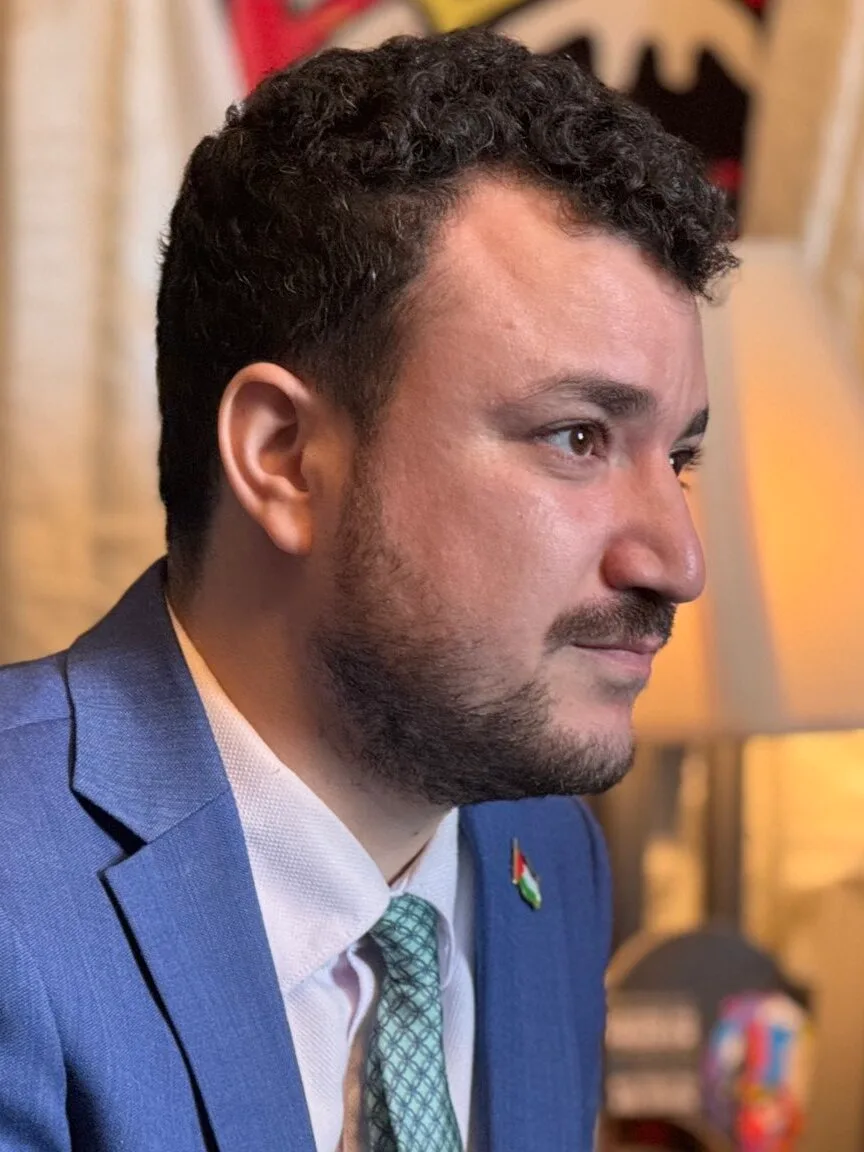 File photo
What happened
Key facts
- Mahmoud Khalil asked the U.S. Supreme Court to hear or review his case (per Washington Examiner, The Japan Times, NBC News).
- The Washington Examiner says the appeals court ruled that federal judges could not consider Khalil’s arguments until he exhausted his options and appeals in the immigration system.
- The Japan Times says the appeals court ruled that federal immigration law barred a lower-court judge from ordering Khalil’s release from U.S. Immigration and Customs Enforcement custody (per The Japan Times).
- Khalil is a green card holder and was arrested by immigration authorities in March 2025 (per Washington Examiner, The Japan Times).
- A federal judge ordered Khalil’s release on June 20, 2025, and he has remained free since then (per Washington Examiner, The Japan Times).
- Khalil’s lawyers argued that upholding the appeals court ruling would give the government a tool to silence critics and chill speech, including by U.S. citizens (per Washington Examiner).
- The Japan Times describes the ruling as opening the possibility that the Trump administration could rearrest and deport Khalil (per The Japan Times, Washington Examiner).
The brief
Mahmoud Khalil has asked the U.S. Supreme Court to review a ruling in his immigration case, seeking to challenge the limits an appeals court placed on federal judges’ ability to consider his claims. His lawyers filed the request, according to the Washington Examiner and The Japan Times, which both report that the petition asks the justices to take up his case.
The dispute concerns a decision by the 3rd U.S. Circuit Court of Appeals. The Washington Examiner describes the ruling as requiring Khalil to exhaust his options and appeals in the immigration system before federal judges can consider his arguments.
The Japan Times focuses on the custody consequence: it says the court ruled that federal immigration law barred a lower-court judge from ordering Khalil’s release from U.S. Immigration and Customs Enforcement custody. These accounts describe related limits on judicial review, with different emphasis on when judges can hear claims and whether they can order release.
Khalil is a green card holder. Immigration authorities arrested him in March 2025, and a federal judge ordered his release on June 20, 2025, according to the Washington Examiner. The Examiner reports that he has remained free since that order.
The Japan Times says the appeals ruling opened the possibility that the Trump administration could rearrest and deport him; it does not report that a new arrest has occurred.
Khalil’s lawyers argue that leaving the appeals court ruling in place would give the government “a powerful and unprecedented weapon to silence its critics.” They also warned that the ruling could chill speech by others, including U.S. citizens, the Washington Examiner reported. That is the petitioners’ stated concern, rather than a court finding about the ruling’s effects.
The outlets place the case in different immediate frames. The Washington Examiner presents Khalil as a Columbia University demonstrator whose case became a flash point in the Trump administration’s actions involving foreign students who protested Israel.
The Japan Times calls him a Palestinian activist and emphasizes the administration’s campaign to detain and deport noncitizens involved in pro-Palestinian campus activism. Both accounts connect the litigation to campus activism, while the Examiner foregrounds the legal challenge and the Japan Times foregrounds the risk of renewed custody and deportation.
The Supreme Court request now asks the justices to review the appeals court’s treatment of Khalil’s claims. The reporting identifies no decision by the Supreme Court, so the immediate unresolved question is whether the justices will take up the case.
If they do, the dispute would remain focused on the relationship between the immigration process and federal judges’ authority to consider Khalil’s claims or order his release.
Why it matters
- Khalil’s case concerns whether federal judges can consider his claims before he completes the immigration process, a constraint with direct consequences for his ability to challenge detention and deportation in court.
- The Japan Times says the appeals ruling leaves open the possibility of Khalil’s rearrest and deportation; the Washington Examiner reports that he has remained free since a federal judge ordered his release on June 20, 2025.
- Khalil’s lawyers argue the ruling could chill speech by U.S. citizens as well as other critics, extending their concern beyond his own immigration case.
What to watch next
- Whether the U.S. Supreme Court agrees to take up Khalil’s case.
- Whether the Supreme Court request challenges the appeals court’s limits on judges considering immigration claims, ordering release, or both.
- Whether the Trump administration rearrests Khalil; the Japan Times describes that as a possibility under the appeals ruling, not as an action already taken.
How it's being covered
Coverage analysisShow details6 source articles · 6 unique outletsOutlet political mix: Mixed· 2 Left · 2 Center · 2 Right· Wide spread of viewpointsWhere the outlets are based: US/Canada 50% · Europe 17% · Other 33%
One source is from a wire service (AP, Reuters, AFP or Bloomberg), whose reporting other outlets often republish.
How outlets' accounts compare
2 framing differences · 2 uncorroborated claims · 1 information gap- The Washington Examiner centers the petition’s challenge to requiring Khalil to exhaust immigration-system options before federal judges consider his arguments; The Japan Times emphasizes the appeals ruling’s effect on a lower-court judge’s authority to order release from immigration custody.
- The Washington Examiner describes Khalil as a Columbia University demonstrator and foregrounds the legal challenge; The Japan Times calls him a Palestinian activist and stresses the possibility of rearrest and deportation.
- The Washington Examiner reports that Khalil’s lawyers called the ruling a potential “powerful and unprecedented weapon to silence its critics.”
- The Japan Times says the appeals ruling opened the possibility that the Trump administration could rearrest and deport Khalil.
- The reports do not establish whether the Supreme Court will take up Khalil’s case.
The rated outlets covering this story span both Left and Right, with the outermost outlets far apart politically. It highlights divergent source perspectives, where framing may differ.
Timeline
Developments from this story's sources, dated background we compiled and fact-checked, and our earlier coverage. Each row says which.- Congress enacted the Antiterrorism and Effective Death Penalty Act and the Illegal Immigration Reform and Immigrant Responsibility Act, changing judicial review of removal cases.Background · compiled and fact-checked by Updat3
- The Supreme Court ruled in Zadvydas v. Davis that immigration detention after a removal order could not continue indefinitely when removal was not reasonably foreseeable.Background · compiled and fact-checked by Updat3
- The Department of Homeland Security established U.S. Immigration and Customs Enforcement.Background · compiled and fact-checked by Updat3
- Congress passed the REAL ID Act, directing most challenges to final removal orders to courts of appeals.Background · compiled and fact-checked by Updat3
- After Hamas-led attackers killed people in Israel and took hostages on October 7, 2023, Israel launched a military campaign in Gaza; Israel described that campaign as a response to the attack.Background · from our historical context
- Columbia students began a pro-Palestinian encampment on April 17, 2024, and the university called police, who arrested more than 100 demonstrators.Background · from our historical context
- In 2025, the Third U.S. Circuit Court of Appeals ruled that federal courts could not consider his constitutional challenge through that route before immigration proceedings and their appeals were complete.Background · from our historical context
- In March 2025, immigration authorities arrested Columbia University graduate Mahmoud Khalil, a lawful permanent resident, at his New York residence and transferred him to detention in Louisiana.Background · from our historical context
- In March 2025, Secretary of State Marco Rubio said he had determined that Khalil’s presence could have serious adverse foreign-policy consequences, a determination the administration relied on in pursuing his removal.Background · from our historical context
- In June 2025, U.S. District Judge Michael Farbiarz found that the government’s stated basis for Khalil’s removal was likely unconstitutional and ordered his release from immigration detention.Background · from our historical context
How we got here
In March 2025, immigration authorities arrested Columbia University graduate Mahmoud Khalil, a lawful permanent resident, at his New York residence and transferred him to detention in Louisiana.
The Trump administration invoked a provision of the Immigration and Nationality Act allowing the secretary of state to seek removal of a noncitizen whose presence is deemed to have adverse foreign-policy consequences. In June 2025, U.S.
Original sources
3 of 6 articles · US/Canada · Show allEvery story links to the reporting it was built from. How we choose sources
Spotted a factual error, a broken link or a misleading summary? Tell us.