
Herzog criticizes Dutch government as he receives five ambassadors in Jerusalem
Israeli President Isaac Herzog received credentials from five new ambassadors in Jerusalem, voicing concern over ties with the Netherlands and urging stronger relations with France, Austria and African countries.
AI-assisted synthesis · Based on 5 outlets' reporting · Article text read from 2 of 5 outletsHow it's made
View timeline · 7 entries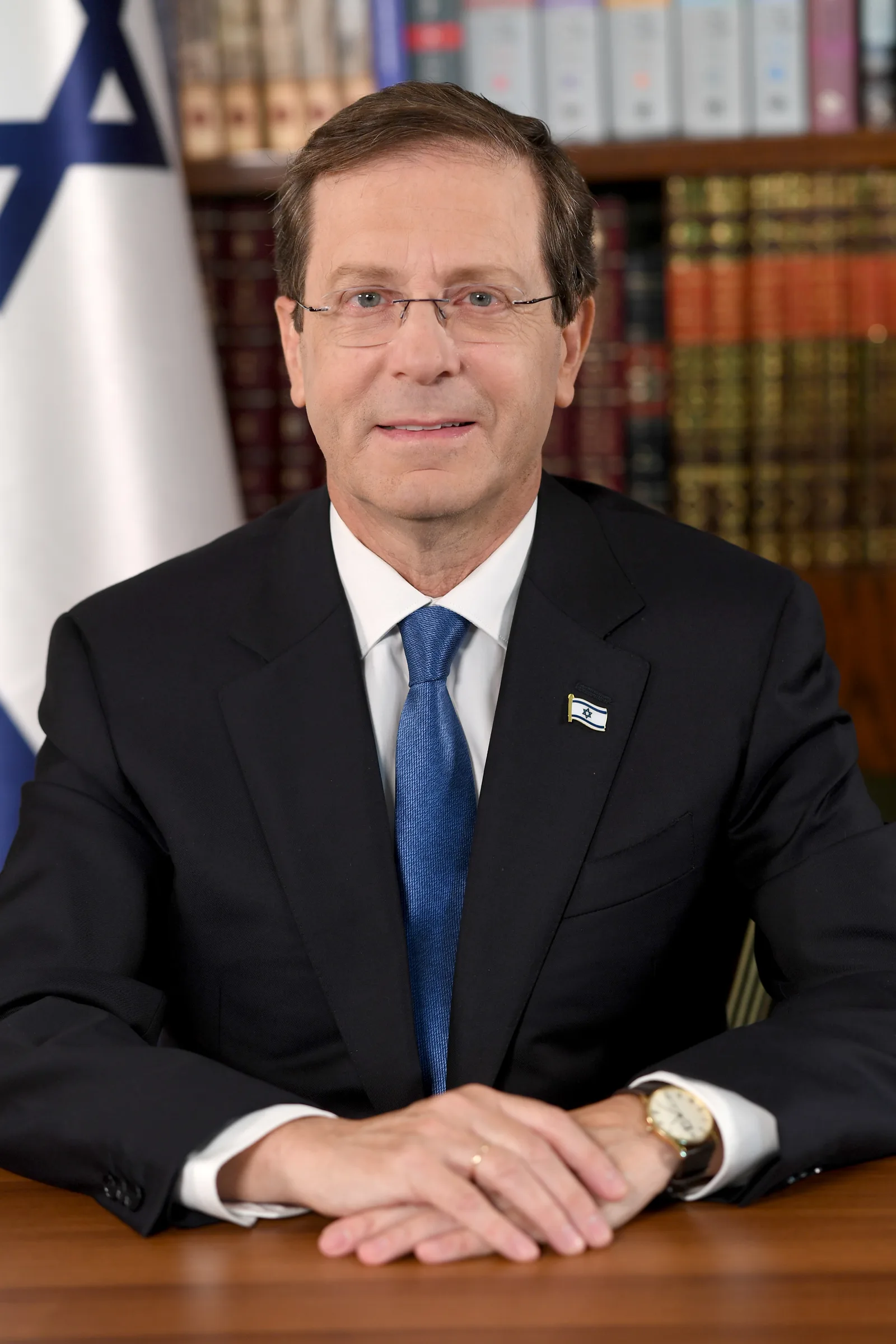 File photo
What happened
Key facts
- The new ambassadors from Rwanda and Ghana are Maj. Gen. Emmanuel Bayingana and Evelyn Korantemaa Ofosu-Amable, respectively.
- Herzog said he was concerned by what he saw and heard from public opinion and the government in the Netherlands, and described the pressure on Israel as an “onslaught.”
- Herzog said Israel had a role in defending Europe and was a vibrant democracy.
- The Netherlands’ new ambassador is Stella Ronner-Grubačić; France’s is Christophe Parisot; Austria’s is Arad Benkö.
The brief
Israeli President Isaac Herzog received the credentials of five new ambassadors to Israel in Jerusalem on the day before elections, welcoming diplomats from the Netherlands, France, Austria, Rwanda and Ghana. The ceremony brought together representatives of countries with different relationships with Israel, as Herzog used his remarks to address ties with several of them.
The ambassadors were Stella Ronner-Grubačić of the Netherlands, Christophe Parisot of France, Arad Benkö of Austria, Maj. Gen. Emmanuel Bayingana of Rwanda and Evelyn Korantemaa Ofosu-Amable of Ghana. The credential ceremonies took place at the President’s Residence in Jerusalem.
Herzog characterized Israel’s relationship with the Netherlands as difficult and criticized Dutch criticism of Israel. He said there was “an onslaught on Israel” without sufficient recognition of Israel’s role in defending Europe or its democratic character.
Those were Herzog’s assessments of the criticism and of Israel’s role; the reported remarks did not include a Dutch response. Herzog also called for stronger ties with France and expanded cooperation with Austria and African nations. The French portfolio carries a separate diplomatic backdrop: on Sept.
8, France led 11 other countries in announcing that they would sanction, or consider sanctioning, goods from Jewish communities in Judea and Samaria. The governments cited Israeli government actions they said undermined a two-state solution. The announcement combined a firm commitment by some countries with consideration of sanctions by others. On Sept.
5, French Foreign Minister Jean-Noël Barrot said France had done more for the Palestinian cause than any other country since Oct. 7. That statement and the sanctions announcement provide context for Herzog’s appeal to strengthen ties with France, but the reporting does not say the sanctions were discussed at the credential ceremony.
Herzog also referred to a past meeting with King Willem-Alexander, saying the monarch had maintained a clear public position against antisemitism and anti-Israel sentiment. The remarks addressed the king’s stance, not a policy announcement by the Dutch government. The ceremony itself marked the arrival of the five ambassadors as Israel approached election day.
Why it matters
- The five newly accredited ambassadors represent the Netherlands, France, Austria, Rwanda and Ghana, giving their governments formal diplomatic representatives in Israel.
- Dutch-Israeli ties were described by Herzog as difficult, and he publicly criticized Dutch criticism of Israel; that characterization sets a diplomatic stake for the Netherlands’ newly accredited ambassador.
- France’s role in leading 11 other countries to announce or consider measures affecting goods from Jewish communities in Judea and Samaria creates a concrete trade-policy stake alongside Herzog’s call for stronger ties.
- The French governments’ stated concern was that Israeli government actions undermined a two-state solution, while Herzog emphasized expanded cooperation; these are distinct positions relevant to the relationship.
What to watch next
- Whether Stella Ronner-Grubačić addresses the Dutch-Israeli relationship after presenting her credentials.
- Whether Christophe Parisot advances the stronger France-Israel ties Herzog called for amid the French-led sanctions announcement.
- Whether Arad Benkö, Maj. Gen. Emmanuel Bayingana or Evelyn Korantemaa Ofosu-Amable pursue the expanded cooperation Herzog called for with Austria and African nations.
How it's being covered
Coverage analysisShow details5 source articles · 5 unique outlets · 4 distinct reportsOutlet political mix: Mostly Right· 1 Center · 4 RightWhere the outlets are based: Middle East 80% · US/Canada 20%
- Coverage is currently concentrated among Right-rated outlets (4 of 5 rated sources); comparatively few Left-rated outlets have published on the event.
- Coverage is currently concentrated among outlets based in Middle East (4 of 5 geographically-identified sources).
How outlets' accounts compare
3 framing differences · 2 uncorroborated claims · 2 information gaps- Israel National News foregrounds Herzog’s criticism of Dutch criticism and his call for closer ties with France, Austria and African nations; JNS foregrounds France’s role in the announcement concerning sanctions or possible sanctions on goods from Jewish communities in Judea and Samaria.
- Herzog characterized Dutch criticism as an onslaught lacking understanding of Israel’s role; the account gives his view but no Dutch response.
- The governments announcing or considering measures cited Israeli government actions they said undermined a two-state solution; this is their stated rationale.
- Herzog said there was “an onslaught on Israel” without sufficient recognition of Israel’s role in defending Europe or its democratic character.
- French Foreign Minister Jean-Noël Barrot said France had done more for the Palestinian cause than any other country since Oct. 7.
- The sources do not provide the Dutch government’s account of the state of Dutch-Israeli relations.
- The sources do not identify which of the 12 countries had decided to impose sanctions and which were still considering them.
Timeline
Developments from this story's sources, dated background we compiled and fact-checked, and our earlier coverage. Each row says which.- France’s involvement also has a longer diplomatic history: France recognized Israel on May 20, 1949, and the two countries established diplomatic relations that year.Background · from our historical context
- That announcement formed part of a longer dispute over how governments should distinguish Israel from Israeli settlements in territory captured in 1967.Background · from our historical context
- Israel captured Gaza, the West Bank and East Jerusalem during the Six-Day War.Background · compiled and fact-checked by Updat3
- Israel and the Palestine Liberation Organization signed the Declaration of Principles, beginning a process for Palestinian self-government and further negotiations.Background · compiled and fact-checked by Updat3
- The European Union-Israel Association Agreement entered into force.Background · compiled and fact-checked by Updat3
- In 2015, the European Union issued interpretive guidance requiring goods from Israeli settlements to be labelled as originating in settlements rather than in Israel.Background · from our historical context
- On Sept. 8, France led 11 other countries in announcing that they would sanction, or consider sanctioning, goods from Jewish communities in Judea and Samaria, citing Israeli government actions they said undermined a two-state solution.
How we got here
On September 8, France led 11 other countries in announcing that they would impose, or consider imposing, restrictions on goods from Jewish communities in Judea and Samaria, saying Israeli government actions undermined the prospect of a two-state solution.
That announcement formed part of a longer dispute over how governments should distinguish Israel from Israeli settlements in territory captured in 1967.
Original sources
5 articles from 5 outletsEvery story links to the reporting it was built from. How we choose sources
Spotted a factual error, a broken link or a misleading summary? Tell us.