
Putin agrees to renew US-Ukraine peace talks after Witkoff meeting
Vladimir Putin agreed to resume trilateral negotiations with Ukraine and the US after meeting Steve Witkoff in St. Petersburg on Oct. 21, 2026. Yuri Ushakov said talks would continue after Nov. 10 and address postwar security for Russia and Ukraine.
AI-assisted synthesis · Based on 5 independent reports from 7 outlets · Article text read from 2 of 5 reportsHow it's made
View timeline · 10 entries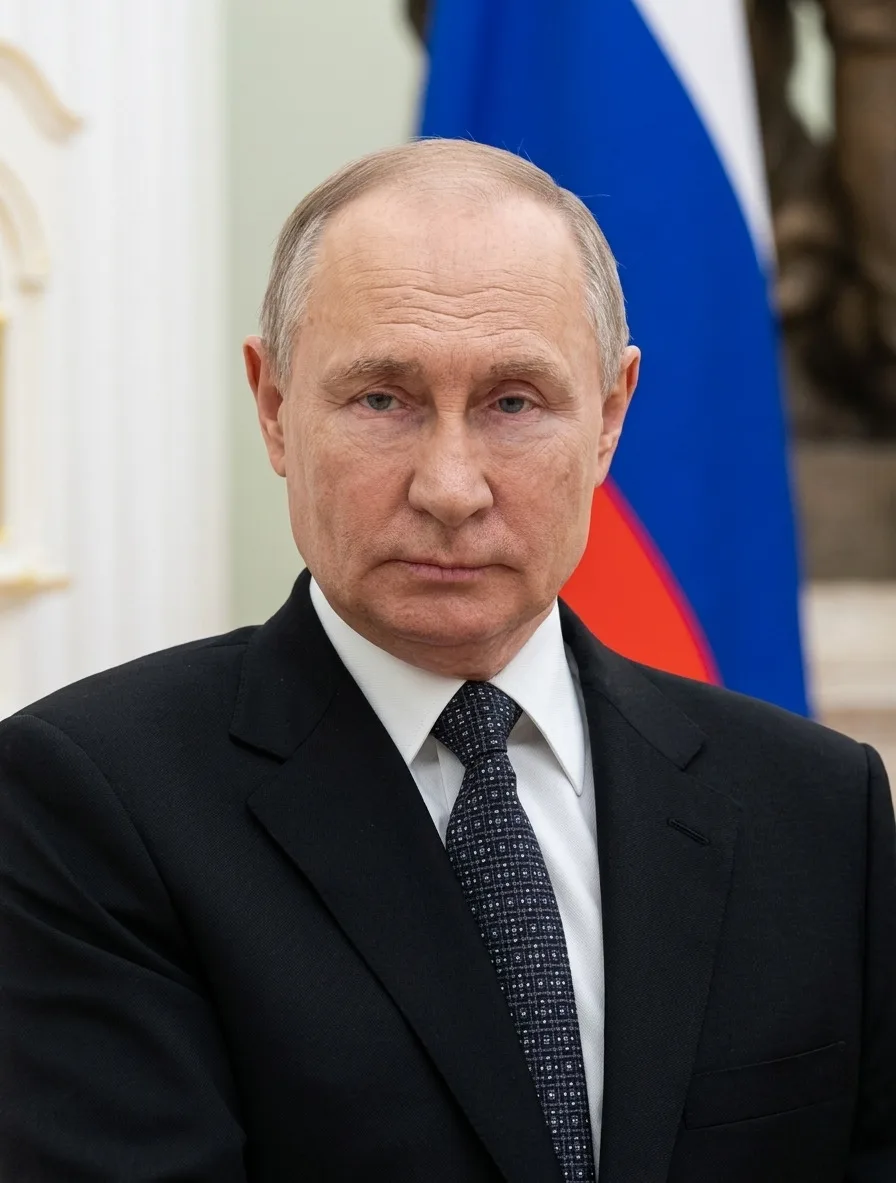 File photo
What happened
Key facts
- Kremlin foreign affairs adviser Yuri Ushakov said Vladimir Putin agreed “in principle” to continue trilateral peace talks with the US and Ukraine after Nov. 10.
- Ushakov said future trilateral talks would address a security system for Russia and Ukraine after the conflict ends.
- The Kremlin said Putin agreed to resume trilateral talks.
- The proposed talks involve Russia, Ukraine and the United States.
- The Kremlin said the talks are planned for next month.
- The announcement concerns resuming talks, not a reported agreement on their subject or outcome.
The brief
The Kremlin said Vladimir Putin agreed to resume trilateral talks involving Russia, Ukraine and the United States, following a meeting with U.S. special envoy Steve Witkoff in St. Petersburg. The announcement, relayed by Kremlin foreign affairs adviser Yuri Ushakov, describes a return to negotiations rather than a completed agreement between the parties.
Ushakov said Putin had agreed “in principle” to continue peace talks after November 10. The New York Post reported that the meeting with Witkoff took place on October 21, 2026, and that Ushakov made the announcement afterward. The Independent also reported the Kremlin’s plan to resume trilateral talks, describing them as scheduled for next month.
The proposed format brings Russia, Ukraine and the United States into the same talks. The New York Post’s account adds a proposed subject: Ushakov said future discussions would address a security system for Russia and Ukraine after the conflict ends. That account does not report a negotiated security arrangement or a settled outcome.
The coverage varies in detail rather than in its account of the central announcement. The Independent gives the Kremlin’s basic statement and says the talks are planned for next month. The New York Post reports Ushakov’s “in principle” qualification, the timing after November 10, the Witkoff meeting and the proposed post-conflict security discussion.
The Hindu’s headline also characterizes the proposed talks as peace talks; the other headline reports describe them as trilateral talks on the Ukraine war. Ushakov’s remarks are the stated basis for the proposed timing and agenda.
The reported plan points to renewed diplomatic contact, but the accounts do not report that Ukraine or the United States agreed to the proposed timing or security discussion, or that talks have already taken place. For now, the next reported step is the planned continuation of trilateral talks after November 10, which the Kremlin also described as taking place next month.
Whether the parties convene and whether post-conflict security enters their discussions are central to what follows from Putin’s stated agreement.
Why it matters
- Russia, Ukraine and the United States are the proposed participants, making the trilateral format the immediate mechanism for renewed diplomatic talks.
- Ushakov said the discussions would address a post-conflict security system for Russia and Ukraine, placing security arrangements among the stated stakes.
- The talks are proposed to continue after November 10; the Kremlin’s next-month timeline makes convening the talks the immediate practical test of the announcement.
What to watch next
- Whether Russia, Ukraine and the United States resume trilateral talks after November 10.
- Whether the Kremlin’s plan for talks next month proceeds.
- Whether the proposed discussions address a post-conflict security system for Russia and Ukraine.
How it's being covered
Coverage analysisShow details7 source articles · 7 unique outlets · 5 distinct reportsOutlet political mix: Mostly Center· 1 Left · 5 Center · 1 RightWhere the outlets are based: Unknown 43% · Asia 29% · Other 28%
How outlets' accounts compare
3 framing differences · 2 uncorroborated claims · 1 information gap- The New York Post reports Ushakov’s qualification that Putin agreed “in principle,” the meeting with Witkoff, and a proposed discussion of post-conflict security; The Independent gives the shorter account that the Kremlin plans to resume trilateral talks next month.
- The Hindu’s headline calls the talks peace talks, while the KCBY, Ottumwa Courier and Enidnews headlines describe them as talks on the Ukraine war.
- The accounts do not establish whether Ukraine or the United States accepted the proposed timing or the post-conflict security topic.
- Ushakov said Putin agreed “in principle” to continue the talks after November 10.
- Ushakov said future talks would address “building a security system for Russia and Ukraine after the conflict ends.”
- The accounts do not provide a position from the Ukrainian government or the U.S. government on the proposed talks.
Timeline
Developments from this story's sources, dated background we compiled and fact-checked, and our earlier coverage. Each row says which.- Ukraine, Russia, the United States and the United Kingdom signed the Budapest Memorandum on security assurances.Background · compiled and fact-checked by Updat3
- NATO’s Bucharest Summit declaration said Ukraine and Georgia would become members of the alliance.Background · compiled and fact-checked by Updat3
- Fighting broke out in eastern Ukraine’s Donbas region.Background · compiled and fact-checked by Updat3
- Vladimir Putin signed a treaty with Crimean leaders to incorporate Crimea into Russia; Ukraine rejected the annexation.Background · compiled and fact-checked by Updat3
- Representatives of Ukraine, Russia and the OSCE signed the Minsk II package to address the conflict in eastern Ukraine.Background · compiled and fact-checked by Updat3
- Russia launched its full-scale invasion of Ukraine.Background · compiled and fact-checked by Updat3
- Russian and Ukrainian delegations met in Istanbul for peace talks.Background · compiled and fact-checked by Updat3
- In September 2022, Russia announced the annexation of four Ukrainian regions it had partly occupied, and Ukraine continued to reject Russian claims over its territory.Background · from our historical context
- Vladimir Putin set conditions for a ceasefire and negotiations, including Ukraine withdrawing from four regions Russia claimed to have annexed; Ukraine rejected the terms.Background · compiled and fact-checked by Updat3
- Donald Trump and Vladimir Putin discussed a proposed pause in attacks on energy infrastructure during a phone call.Background · compiled and fact-checked by Updat3
How we got here
The last major direct negotiating track began in March 2022, after Russia’s full-scale invasion of Ukraine on February 24. Russian and Ukrainian delegations met in Istanbul on March 29; the talks produced draft proposals but no agreement.
In September 2022, Russia announced the annexation of four Ukrainian regions it had partly occupied, and Ukraine continued to reject Russian claims over its territory. The diplomatic framework before the invasion included the 2014 and 2015 Minsk agreements, which sought to halt fighting in eastern Ukraine between Ukrainian forces and Russia-backed separatists.
Original sources
1 of 7 articles · Europe · Show allEvery story links to the reporting it was built from. How we choose sources
Spotted a factual error, a broken link or a misleading summary? Tell us.