
Putin proposes summit with two major powers on Ukraine war
Russian President Vladimir Putin proposed a summit with two of the world’s biggest powers to discuss resolving the war in Ukraine. The proposal puts a summit focused on a possible resolution forward for discussion.
AI-assisted synthesis · Based on 4 independent reports from 5 outlets · Article text read from 1 of 4 reportsHow it's made
View timeline · 11 entries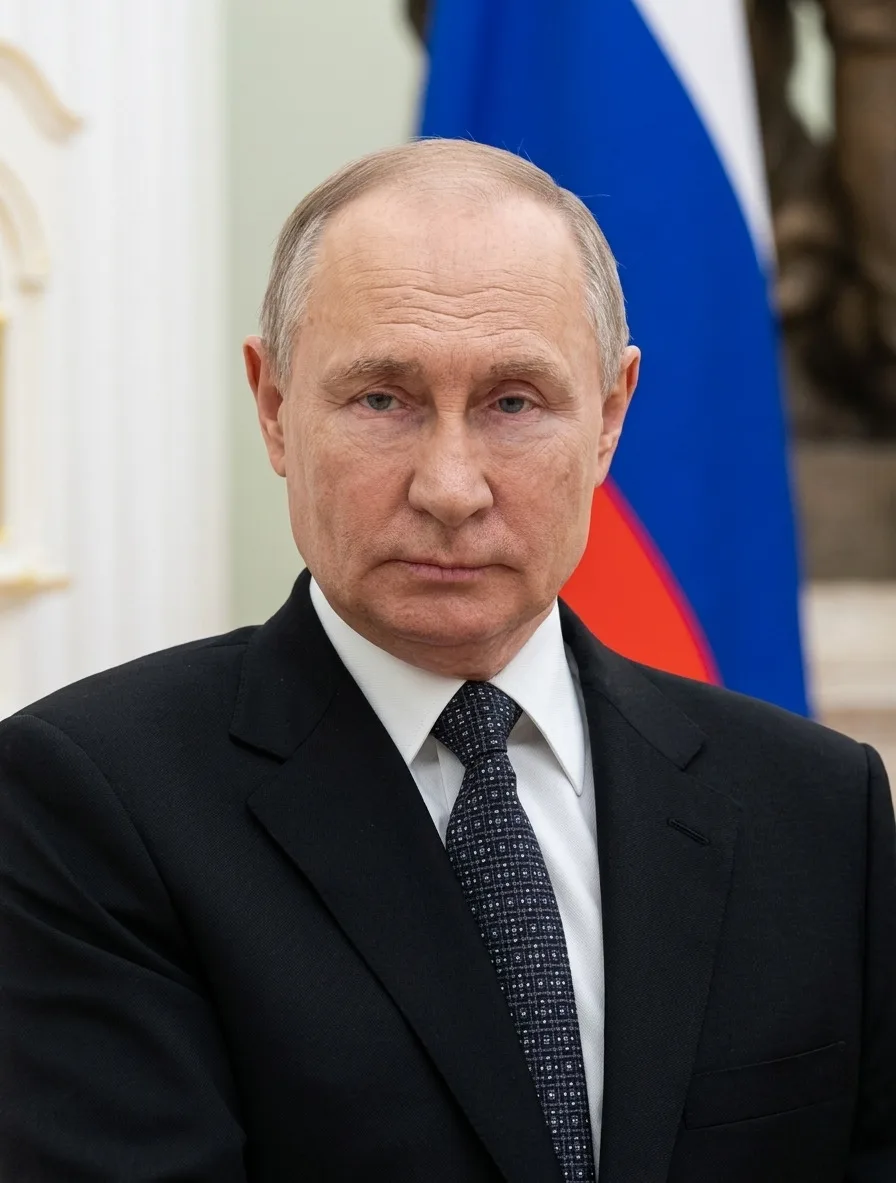 File photo
What happened
Key facts
- Vladimir Putin proposed a summit concerning the war in Ukraine (per The Sydney Morning Herald, The Age, thestatesman.com).
- Putin is identified as the Russian president (per The Sydney Morning Herald).
- The proposed summit would include Donald Trump (per thestatesman.com, Reuters, trtworld.com).
- The proposed summit would include Xi Jinping (per thestatesman.com).
- Putin proposed holding the summit with two of the world’s biggest powers (per The Sydney Morning Herald).
- The proposed summit would discuss the war in Ukraine (per The Sydney Morning Herald, thestatesman.com, Reuters).
- The proposed summit would discuss a resolution to the war in Ukraine (per The Sydney Morning Herald).
- Reuters’s headline describes the proposed discussion as concerning a Ukraine deal (per Reuters, The Sydney Morning Herald).
- TRT World’s headline calls the proposed meeting a trilateral summit (per trtworld.com, The Sydney Morning Herald).
The brief
Russian President Vladimir Putin has proposed a summit with two major powers to discuss the war in Ukraine, according to The Sydney Morning Herald. The outlet’s account says the meeting would focus on a resolution to the war. The proposal is the central development: Putin has put a summit involving two other powers forward for discussion.
The Sydney Morning Herald describes the proposed participants as “two of the world’s biggest super-powers” but does not name them in its article text. Headlines from thestatesman.com, Reuters and TRT World identify Donald Trump and Xi Jinping as the other proposed participants.
TRT World characterizes the suggested format as a trilateral summit, while Reuters’s headline says the discussion would concern a Ukraine deal. The stated subject is the war in Ukraine and the possibility of resolving it. The Sydney Morning Herald does not provide additional details about what a resolution might entail.
Its account presents the summit as a proposal to discuss the issue, rather than as a meeting that has taken place. The Age’s headline characterizes Putin’s proposal as a “major step to end war with Ukraine.” That is the headline’s assessment; the Sydney Morning Herald’s article text describes a proposed summit intended to discuss a resolution.
The two formulations place different emphasis on the proposal’s significance, without supplying separate details about its terms. The proposal is attributed to Putin, identified by The Sydney Morning Herald as Russia’s president. The headlines naming Trump and Xi provide the only identification of the two other proposed participants.
The reported purpose remains discussion of the Ukraine war, with the Sydney Morning Herald specifically describing the subject as a possible resolution. The account does not say whether Trump or Xi has accepted the proposal, or provide a date or location for a summit. It also gives no further agenda or proposed settlement terms.
The documented next step is therefore whether the proposal advances into an agreed meeting and what subjects its participants would discuss.
Why it matters
- The proposal puts discussion of a resolution to the Ukraine war at the center of a suggested summit.
- Donald Trump and Xi Jinping are named in headlines as proposed participants alongside Putin.
- The Sydney Morning Herald describes the proposed gathering as involving two of the world’s biggest powers.
What to watch next
- Whether Donald Trump accepts the proposed summit invitation.
- Whether Xi Jinping accepts the proposed summit invitation.
- Whether the proposal becomes an agreed meeting and what subjects participants would discuss.
How it's being covered
Coverage analysisShow details5 source articles · 5 unique outlets · 4 distinct reportsOutlet political mix: Center Only· 4 Center · 1 unratedWhere the outlets are based: Asia 60% · Middle East 20% · Other 20%
- Coverage is currently concentrated among Center-rated outlets (4 of 4 rated sources); comparatively few Left or Right-rated outlets have published on the event.
One source is from a wire service (AP, Reuters, AFP or Bloomberg), whose reporting other outlets often republish.
How outlets' accounts compare
Timeline
Developments from this story's sources, dated background we compiled and fact-checked, and our earlier coverage. Each row says which.- The Soviet Union dissolved in December 1991, leaving Ukraine an independent state with those inherited nuclear weapons and borders.Background · from our historical context
- In 2008, NATO’s Bucharest Summit declaration said Ukraine and Georgia “will become members” of the alliance, without setting a timetable.Background · from our historical context
- Vladimir Putin signed a treaty with Crimean leaders to incorporate Crimea into Russia; Ukraine rejected the annexation.Background · compiled and fact-checked by Updat3
- The Minsk II agreement, signed on February 12, 2015, set out steps toward a ceasefire and political settlement in eastern Ukraine, but key provisions were not implemented.Background · from our historical context
- Russia’s full-scale invasion of Ukraine began on February 24, 2022, after years of conflict in eastern Ukraine.Background · from our historical context
- Negotiations between Russian and Ukrainian delegations in Istanbul in March 2022 produced draft proposals but no agreement; the talks did not end the fighting.Background · from our historical context
- The United Nations-brokered Black Sea Grain Initiative, signed on July 22, 2022, showed that Russia and Ukraine could reach a limited agreement with international mediation, though it did not settle the war.Background · from our historical context
- China published a 12-point position paper on a political settlement of the Ukraine crisis.Background · compiled and fact-checked by Updat3
- Donald Trump won the presidency, and Republicans gained control of the Senate.Background · compiled and fact-checked by Updat3
- Donald Trump and Vladimir Putin discussed a proposed pause in attacks on energy infrastructure during a phone call.Background · compiled and fact-checked by Updat3
- President Donald Trump announced an immediate energy ceasefire between Russia and Ukraine.Background · compiled and fact-checked by Updat3
How we got here
Russia’s full-scale invasion of Ukraine began on February 24, 2022, after years of conflict in eastern Ukraine. Negotiations between Russian and Ukrainian delegations in Istanbul in March 2022 produced draft proposals but no agreement; the talks did not end the fighting.
The United Nations-brokered Black Sea Grain Initiative, signed on July 22, 2022, showed that Russia and Ukraine could reach a limited agreement with international mediation, though it did not settle the war. The conflict in Donbas followed Russia’s 2014 annexation of Crimea.
Original sources
3 of 5 articles · Asia · Show allEvery story links to the reporting it was built from. How we choose sources
Spotted a factual error, a broken link or a misleading summary? Tell us.