
Trump is open to Putin’s Ukraine summit proposal without Zelensky
Vladimir Putin reportedly proposed a summit with Donald Trump and Xi Jinping, excluding Volodymyr Zelensky, during a phone call with Trump. The proposal has not been finalized, while the accounts describe the meeting as a possible forum for discussing an end to the war in Ukraine.
AI-assisted synthesis · Based on 7 outlets' reporting · Article text read from 2 of 7 outlets · 1 article captured only in partHow it's made
View timeline · 14 entries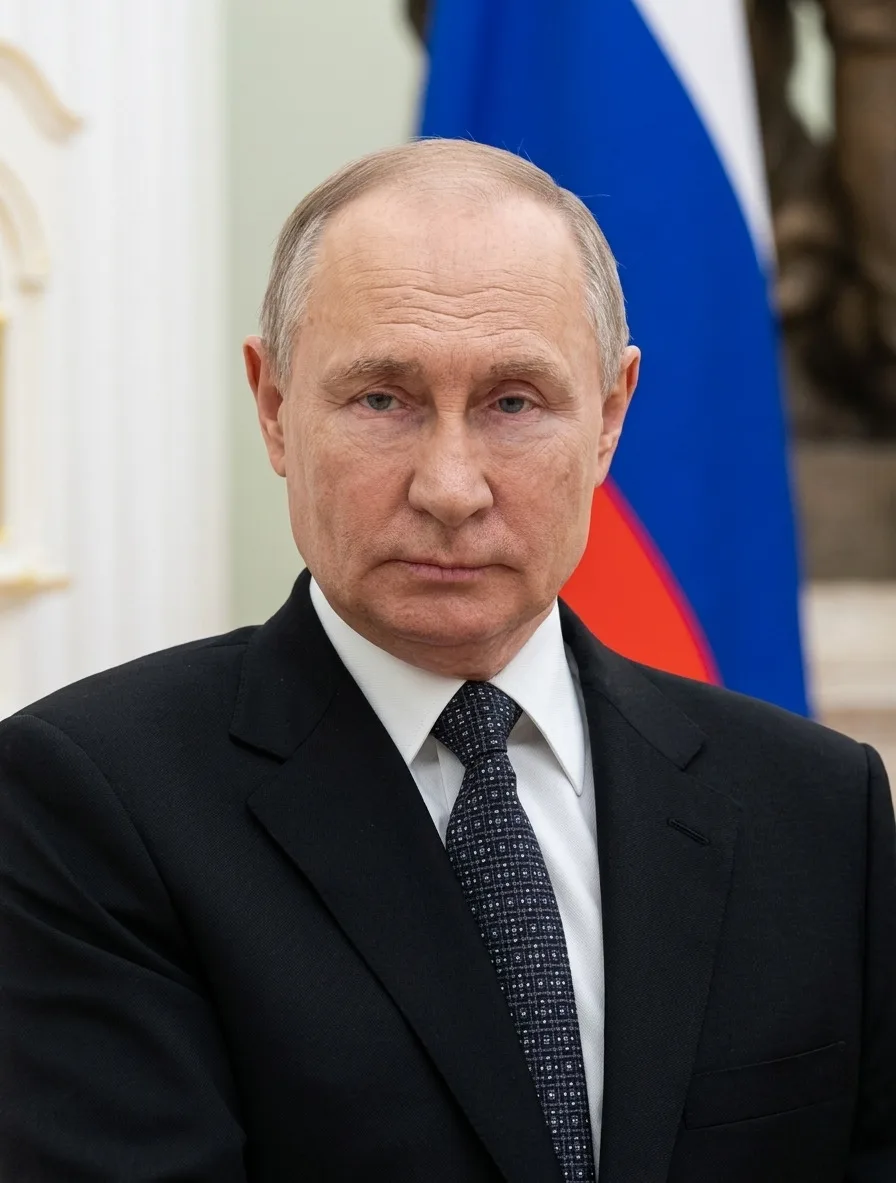 File photo
What happened
Key facts
- Vladimir Putin proposed a summit with Donald Trump and Xi Jinping that would exclude Volodymyr Zelensky.
- The proposed meeting is intended to discuss ending the war in Ukraine.
- Donald Trump expressed willingness to attend a meeting that could help end the war.
- The New York Post reported that critics compared Putin’s proposal to the 1945 Yalta Summit and argued it could favor Moscow and undermine U.S. interests in Europe and the Pacific.
- Russian President Vladimir Putin proposed a summit involving Trump and Xi Jinping but not Zelensky.
- The proposed meeting would discuss ending the war in Ukraine.
- Marco Rubio said discussions about possible meetings were underway, but nothing had been finalized.
- Mediaite highlighted concerns that the meeting could strain U.S.-Europe ties and encourage further Russian military actions.
The brief
Vladimir Putin reportedly proposed a summit with Donald Trump and Xi Jinping that would exclude Ukrainian President Volodymyr Zelensky, according to accounts by The Wall Street Journal cited by The Times of India and by ktsmradio.iheart.com. The proposal came up in a telephone conversation between Putin and Trump on October 9.
The proposed gathering would discuss ending the war in Ukraine, but the sources describe it as a possibility rather than a finalized meeting. Trump is open to attending a summit that could help end the war, ktsmradio.iheart.com reported. The Times of India quoted Secretary of State Marco Rubio saying that Trump wanted the war to end.
Rubio also said discussions about a possible meeting had not produced a finalized plan. The Times of India placed those comments during Rubio's visit to Uzbekistan for talks with officials from the C5+1 grouping, which includes the United States and five Central Asian countries.
The Times of India quoted Kremlin spokesman Dmitry Peskov telling The Wall Street Journal that the three parties acknowledged the hypothetical possibility of a meeting. Peskov said there was no clear understanding of the meeting itself or its possible agenda.
That account leaves the proposal's status unsettled: the sources report Putin's suggestion and Trump's openness, but not an agreed date, format or agenda. Rubio's public emphasis, also reflected in headlines from TRT World, Reuters and Devdiscourse, was that Russia and Ukraine should focus on ending the war.
The KTSM Radio account likewise says Rubio acknowledged discussions about potential meetings while stressing that nothing had been finalized. The shared focus on ending the war does not establish that Ukraine would participate in the proposed three-leader summit; the accounts describe Zelensky as excluded. That exclusion is central to the criticism reported by KTSM Radio.
The outlet said the New York Post compared the proposal with the 1945 Yalta Summit and reported critics' argument that it could favor Moscow and undermine U.S. interests in Europe and the Pacific. KTSM Radio also said Mediaite highlighted concerns that such a meeting could strain ties between the United States and Europe and encourage further Russian military actions.
These are attributed concerns, not established outcomes. The Times of India separately reported that Russia's defence ministry claimed Russian forces had struck several military-industrial facilities in Ukraine. That claim is not tied in the account to the summit proposal or to Rubio's comments, so it does not establish a military trigger for the diplomatic discussion.
The immediate diplomatic question is whether the reported proposal advances beyond exploratory discussion and, if so, whether its format remains limited to Putin, Trump and Xi.
Why it matters
- Ukraine's government would be excluded from a proposed summit about ending the war, leaving Volodymyr Zelensky outside the reported three-leader format.
- The proposal could put U.S.-Europe ties at stake: KTSM Radio reported that Mediaite highlighted concern about strain between them.
- Critics cited by the New York Post, as reported by KTSM Radio, argued the proposal could favor Moscow and weaken U.S. interests in Europe and the Pacific.
What to watch next
- Whether Donald Trump moves from openness to agreeing to attend the proposed summit.
- Whether Vladimir Putin, Donald Trump and Xi Jinping develop a meeting plan after the proposal was described as hypothetical.
- Whether Marco Rubio's discussions about possible meetings produce a finalized plan.
- Whether the reported summit format continues to exclude Volodymyr Zelensky.
How it's being covered
Coverage analysisShow details8 source articles · 7 unique outletsOutlet political mix: Center Only· 5 Center · 2 unratedWhere the outlets are based: Asia 29% · US/Canada 14% · Other 57%
- Coverage is currently concentrated among Center-rated outlets (5 of 5 rated sources); comparatively few Left or Right-rated outlets have published on the event.
One source is from a wire service (AP, Reuters, AFP or Bloomberg), whose reporting other outlets often republish.
How outlets' accounts compare
3 framing differences · 3 uncorroborated claims · 2 information gaps- KTSM Radio reports Trump's openness to attending and frames the proposal through concerns raised by critics; The Times of India emphasizes that the meeting has not been finalized and reports Rubio's call for Russia and Ukraine to focus on ending the war.
- The Times of India includes Peskov's account that the meeting's possible agenda was unclear; KTSM Radio describes the intended subject as ending the war in Ukraine.
- The Times of India attributes the proposal and the status of discussions to reporting by The Wall Street Journal and quotes Dmitry Peskov; KTSM Radio reports Trump's openness and concerns attributed to critics through the New York Post and Mediaite.
- The proposal is reported, but the accounts describe no finalized meeting plan; Peskov said the possibility was hypothetical and that the agenda was unclear.
- Dmitry Peskov said the three parties acknowledged the hypothetical possibility of a meeting, while its agenda remained unclear.
- KTSM Radio reported critics' claims that the proposal could favor Moscow, undermine U.S. interests in Europe and the Pacific, strain U.S.-Europe ties, and encourage further Russian military actions.
- The sources do not describe Ukraine's position on the proposed summit beyond Zelensky's exclusion.
- The sources do not establish what agenda, if any, the three leaders would accept.
Timeline
Developments from this story's sources, dated background we compiled and fact-checked, and our earlier coverage. Each row says which.- Franklin D. Roosevelt, Winston Churchill and Joseph Stalin met at the Yalta Conference.Background · compiled and fact-checked by Updat3
- Discussions in 1990 about NATO’s future eastward reach included assurances to Soviet leaders, though their scope and meaning have since been disputed.Background · from our historical context
- Ukraine, Russia, the United States and the United Kingdom signed the Budapest Memorandum on security assurances for Ukraine.Background · compiled and fact-checked by Updat3
- At its April 3, 2008, Bucharest summit, NATO declared that Ukraine and Georgia “will become members,” without setting a timetable.Background · from our historical context
- Fighting between Ukrainian forces and Russia-backed separatists began in the Donbas in 2014.Background · from our historical context
- In February 2014, Ukraine’s parliament removed President Viktor Yanukovych after months of protests and his departure from Kyiv; Russia subsequently annexed Crimea, a move rejected by Ukraine and most other countries.Background · from our historical context
- Vladimir Putin signed a treaty with Crimean leaders to incorporate Crimea into Russia; Ukraine rejected the annexation.Background · compiled and fact-checked by Updat3
- The last summit of the Normandy format, which brought together Ukraine, Russia, France and Germany, took place in Paris on December 9, 2019.Background · from our historical context
- On February 24, 2022, Russia launched a full-scale invasion of Ukraine; Putin described it as a response to security threats, while Ukraine and its allies condemned it as an act of aggression.Background · from our historical context
- Volodymyr Zelensky presented Ukraine’s ten-point peace formula.Background · compiled and fact-checked by Updat3
- Donald Trump was inaugurated for a second, non-consecutive term as U.S. president.Background · compiled and fact-checked by Updat3
- Donald Trump and Volodymyr Zelensky met at the White House; their planned minerals agreement was not signed.Background · compiled and fact-checked by Updat3
- Donald Trump and Vladimir Putin discussed a proposed pause in attacks on energy infrastructure during a phone call.Background · compiled and fact-checked by Updat3
- President Donald Trump announced an immediate energy ceasefire between Russia and Ukraine.Background · compiled and fact-checked by Updat3
How we got here
The last summit of the Normandy format, which brought together Ukraine, Russia, France and Germany, took place in Paris on December 9, 2019. Ukrainian President Volodymyr Zelensky and Russian President Vladimir Putin agreed there to pursue a ceasefire and prisoner exchanges, but the meeting did not resolve the conflict in eastern Ukraine.
The diplomatic frameworks around Ukraine’s security took shape after the Cold War. At the 1994 Budapest Memorandum, Russia, the United States and the United Kingdom pledged to respect Ukraine’s independence, sovereignty and existing borders in exchange for Ukraine giving up the nuclear weapons it inherited after the Soviet Union dissolved.
Original sources
1 of 8 articles · Global · Show allEvery story links to the reporting it was built from. How we choose sources
Spotted a factual error, a broken link or a misleading summary? Tell us.