
Putin links Russia-Ukraine talks to wider European security
Putin said peace talks must address security for Russia, Ukraine and Europe, tying a settlement to the continent’s wider security framework rather than treating it as a bilateral issue.
AI-assisted synthesis · Based on 3 independent reports from 5 outlets · Article text read from 1 of 3 reportsHow it's made
View timeline · 10 entries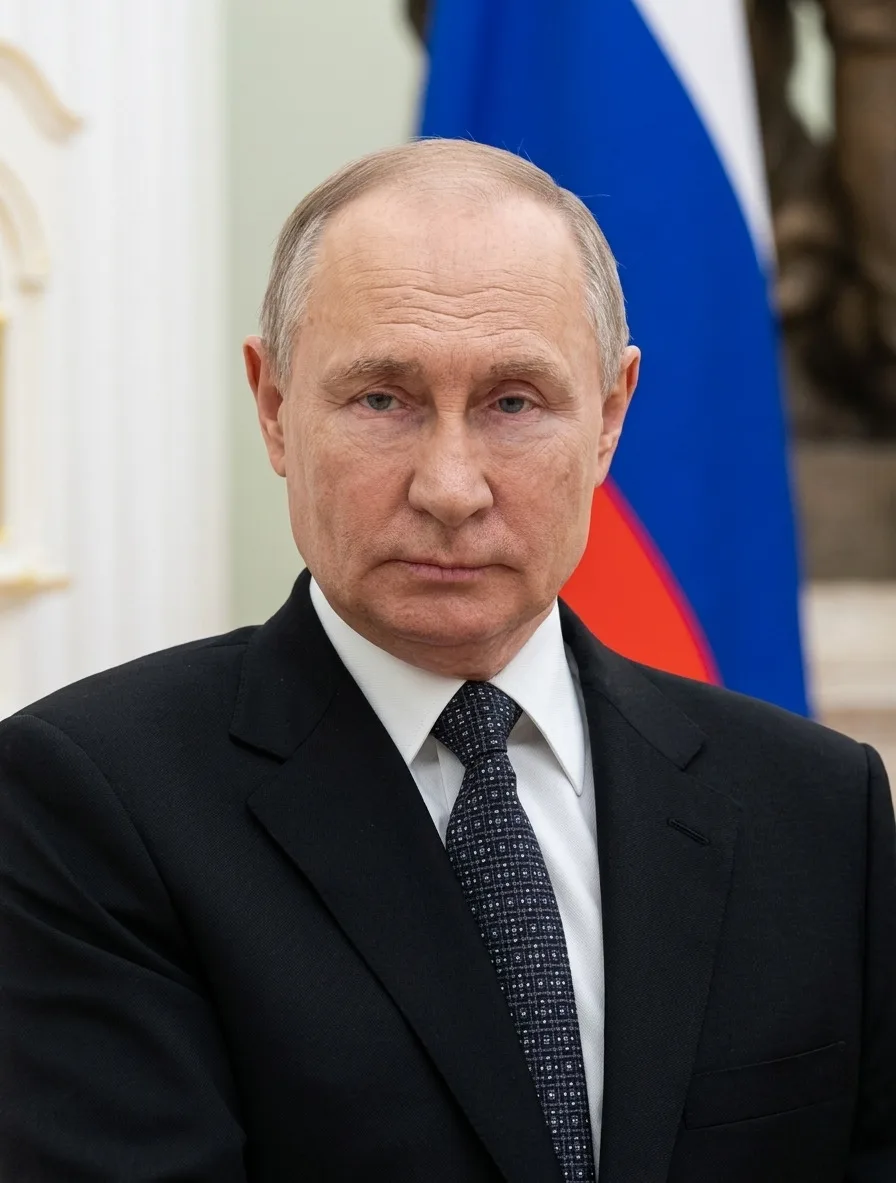 File photo
What happened
Key facts
- Vladimir Putin said talks should address security for Russia, Ukraine and Europe (per report.az, nacionale.com, Reuters).
- Putin said Russia was ready to resume trilateral contacts with Ukraine and the United States (per report.az, nacionale.com, Reuters).
- Putin said talks would address security for Russia and Ukraine after peace agreements are reached (per report.az, nacionale.com, Reuters).
- Putin said Russia’s security cannot be separated from the wider question of Europe’s security architecture (per report.az, nacionale.com, Reuters).
- Nacionale’s headline said talks should focus on security for Russia, Ukraine and Europe (per nacionale.com, report.az, Reuters).
- The headlines said talks must focus on security for Russia, Ukraine and Europe overall (per Reuters, The Straits Times, marketscreener.com).
The brief
Vladimir Putin said Russia was prepared to resume trilateral contacts with Ukraine and the United States, and argued that talks should address security for Russia, Ukraine and Europe. His remarks appeared in an interview with Vesti, according to Report.az.
Putin said Moscow had conveyed its readiness to restart the three-party discussions during negotiations with US representatives. The account does not identify when those negotiations took place or describe their participants beyond the US representatives and Putin’s reference to Kyiv.
Putin’s statement describes Russia’s position on restarting talks; it does not say that a new round has been scheduled. The proposed agenda, as Putin described it, includes security for Russia and Ukraine after peace agreements are reached. He also said that discussions of Russia’s security should not be separated from the broader question of Europe’s security architecture.
The remarks therefore connect a possible Russia-Ukraine peace process with a wider European security discussion, rather than treating the two subjects as unrelated. Report.az said a representative of the US administration characterized the negotiations with Putin as “constructive.” The outlet did not name the representative in its account.
The characterization is the administration representative’s assessment; Putin’s comments, separately, set out Moscow’s stated willingness to resume trilateral contacts and its view of the talks’ scope. The headlines from Nacionale, Reuters, The Straits Times and MarketScreener likewise describe Putin’s position as linking talks to security for Russia, Ukraine and Europe.
Their headline wording does not add details about the negotiations, the proposed format or a timetable. Report.az’s account also gives no date for when trilateral talks might resume.
The immediate point in Putin’s statement is that Russia is willing to return to a three-party format and wants the discussions to include both the security of Russia and Ukraine after peace agreements and Europe’s broader security architecture.
Whether Ukraine and the United States agree to resume that format, and whether the parties adopt the agenda Putin outlined, are not established in the account.
Why it matters
- Linking peace talks to Europe’s security architecture could broaden negotiations beyond ending the fighting to include NATO’s role and limits on military deployments—issues that have blocked agreement before. Ukraine’s security guarantees and freedom to choose its alliances could therefore become bargaining points, while European governments may face pressure to accept or reject terms negotiated principally by Moscow, Kyiv and Washington.
What to watch next
- Whether Russia, Ukraine and the United States resume the trilateral contacts Putin said Moscow was ready to restart.
- Whether any resumed discussions include security for Russia and Ukraine after peace agreements, as Putin said they should.
- Whether the parties address Europe’s security architecture alongside Russia-Ukraine security, as Putin argued they should.
How it's being covered
Coverage analysisShow details5 source articles · 5 unique outlets · 3 distinct reportsOutlet political mix: Center Only· 3 Center · 2 unratedWhere the outlets are based: Unknown 40% · Europe 20% · Other 40%
- Coverage is currently concentrated among Center-rated outlets (3 of 3 rated sources); comparatively few Left or Right-rated outlets have published on the event.
One source is from a wire service (AP, Reuters, AFP or Bloomberg), whose reporting other outlets often republish.
How outlets' accounts compare
Timeline
Developments from this story's sources, dated background we compiled and fact-checked, and our earlier coverage. Each row says which.- Russia, the United States and the United Kingdom signed the Budapest Memorandum, recording security assurances to Ukraine as it joined the Nuclear Non-Proliferation Treaty.Background · compiled and fact-checked by Updat3
- NATO and Russia signed the Founding Act, establishing a framework for consultation and affirming states’ right to choose their security arrangements.Background · compiled and fact-checked by Updat3
- At NATO’s Bucharest summit on April 3, 2008, members declared that Ukraine and Georgia “will become members,” without setting a timetable.Background · from our historical context
- In February 2014, Ukraine’s parliament removed President Viktor Yanukovych after months of protests and deadly violence in Kyiv.Background · from our historical context
- Vladimir Putin signed a treaty with Crimean leaders to incorporate Crimea into Russia; Ukraine rejected the annexation.Background · compiled and fact-checked by Updat3
- Moscow published draft security agreements seeking, among other terms, to bar further NATO enlargement.Background · compiled and fact-checked by Updat3
- Russia launched its full-scale invasion of Ukraine on February 24, 2022, describing its actions as a response to security threats; Ukraine and its allies rejected that justification.Background · from our historical context
- On March 29, 2022, Russian and Ukrainian delegations met in Istanbul, where Ukraine proposed neutrality in exchange for security guarantees and Russia discussed reducing military activity near Kyiv.Background · from our historical context
- Vladimir Putin set conditions for a ceasefire and negotiations, including Ukraine withdrawing from four regions Russia claimed to have annexed; Ukraine rejected the terms.Background · compiled and fact-checked by Updat3
- Vladimir Putin called for a security buffer zone to be created along Russia’s border with Ukraine.Background · compiled and fact-checked by Updat3
How we got here
On March 29, 2022, Russian and Ukrainian delegations met in Istanbul, where Ukraine proposed neutrality in exchange for security guarantees and Russia discussed reducing military activity near Kyiv.
In December 2021, Moscow had published draft security agreements seeking, among other terms, to bar further NATO enlargement; the United States and NATO rejected a veto over membership decisions in their January 2022 responses.
Original sources
2 of 5 articles · Unknown · Show allEvery story links to the reporting it was built from. How we choose sources
Spotted a factual error, a broken link or a misleading summary? Tell us.