
Putin proposes Ukraine talks with Trump and Xi in Shenzhen
Vladimir Putin proposed talks with Donald Trump and Xi Jinping on the war in Ukraine, with a possible meeting alongside the APEC summit in Shenzhen. The Kremlin said the meeting and its agenda were not settled, while a senior U.S. official said Trump had not formally agreed but might be open to it.
AI-assisted synthesis · Based on 5 outlets' reporting · Article text read from 3 of 5 outlets · 1 article captured only in partHow it's made
View timeline · 10 entries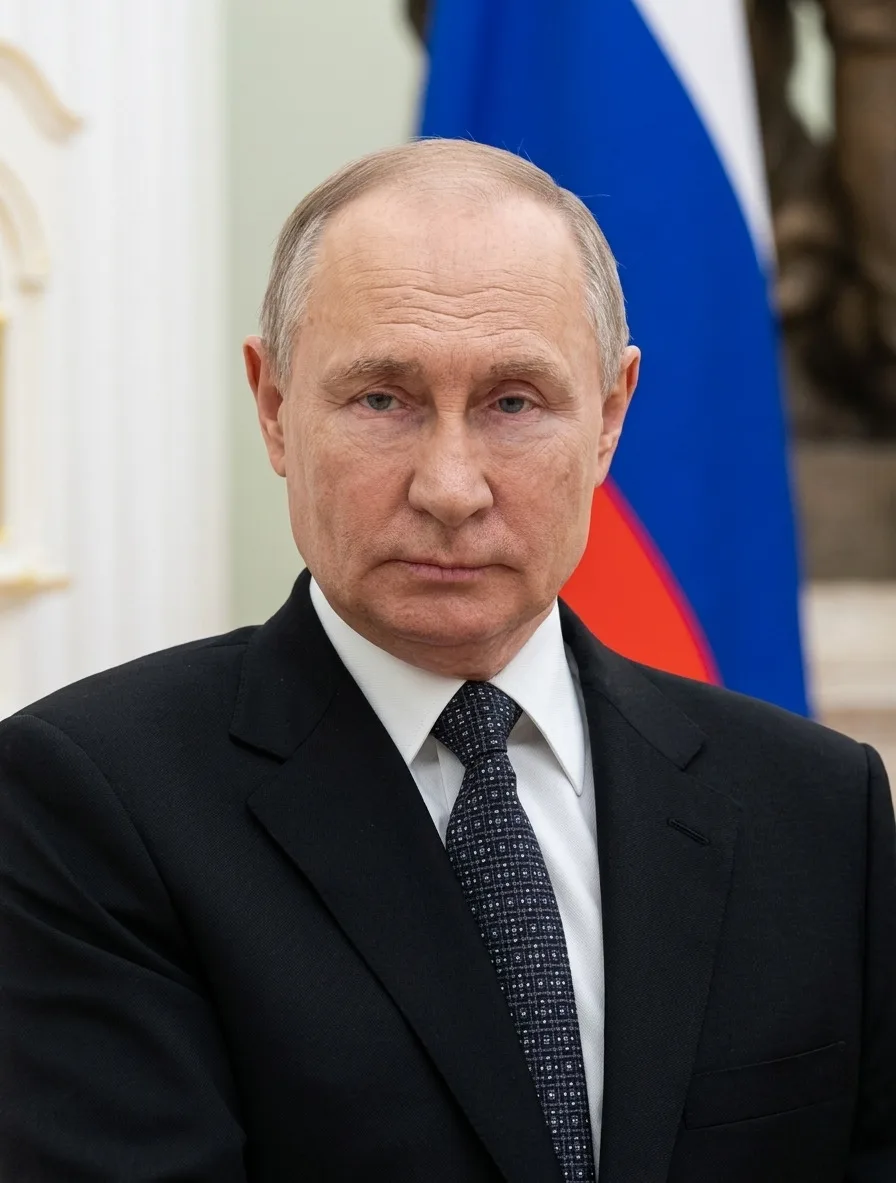 File photo
What happened
Key facts
- Vladimir Putin proposed a trilateral summit with Donald Trump and Xi Jinping next month to discuss the Ukraine conflict, according to The Wall Street Journal.
- A senior US official told The Wall Street Journal that Trump had not formally agreed to the summit but could be open to it.
- Putin accused Volodymyr Zelenskyy of failing to secure a better deal two years ago.
- The Kremlin confirmed discussions about a possible meeting but said the three sides had not agreed on the meeting or its agenda.
The brief
Vladimir Putin has proposed a meeting with Donald Trump and Xi Jinping to discuss the war in Ukraine, potentially alongside the Asia-Pacific Economic Cooperation summit in Shenzhen, China. The summit is scheduled for November 18 and 19. The proposal would bring the Russian, U.S. and Chinese leaders together, but a meeting and its agenda have not been agreed.
The Kremlin said there was no settled understanding about whether the meeting would happen or what it would cover. The Times of India reported that a senior U.S. official told The Wall Street Journal that Trump had not formally accepted the proposal, though he could be open to attending.
Russian diplomats presented the idea to Chinese officials, who indicated they would not object if Trump agreed to participate, according to The Times of India. The Wall Street Journal reported that Putin raised the proposal in an October 9 phone call with Trump.
The Times of India described the call as lasting 90 minutes and said Russian presidential aide Yury Ushakov characterized it as “very substantive” and friendly.
The Times of India and Hindustan Times attributed the account of the proposal to a former Russian intelligence officer cited by the Journal; the Anadolu Agency account also said the Journal relied on a former Russian intelligence officer briefed on the matter. Those accounts report the proposal and its possible venue, not an agreed summit.
The outlets describe the proposed meeting with different emphases. The Times of India and Anadolu Agency foreground that Moscow would seek an outcome on terms favourable to Russia; Hindustan Times presents Putin as seeking to capitalize on warming relations with Trump.
That latter characterization is the outlet’s framing, rather than a stated motive established by the proposal itself. The Jerusalem Post and Reuters headlines also report the proposed talks, with Reuters describing them as a summit about a Ukraine deal.
Trump said negotiations to end the Russia-Ukraine conflict were making “great progress” and defended his administration’s diplomatic approach toward Moscow. The Times of India also reported his statement that Russia would immediately supply more than 300,000 tonnes of diesel fuel to U.S. and global markets, with further shipments expected in coming months.
The report places that announcement after the phone call, but does not establish that the fuel shipment was part of the proposed leaders’ meeting. Putin has also accused Volodymyr Zelenskyy of failing to secure a better deal two years earlier, according to The Times of India.
That is Putin’s criticism of the Ukrainian president, not an independently established account of the negotiations. The proposal itself remains contingent on Trump’s participation and on agreement among the three governments.
Hindustan Times quoted Yun Sun, director of the China program at the Stimson Center, saying Beijing wants to be seen as a pivot among major powers and potentially as a mediator between the United States and Russia.
It also reported that the former Russian intelligence officer described Putin as viewing the proposed format as a possible modern equivalent of the 1945 Yalta conference. These are, respectively, Sun’s analysis and the officer’s reported characterization; neither establishes that the other leaders share that view.
Why it matters
- A meeting focused on the Ukraine war could put the Russian, U.S. and Chinese leaders in direct talks, but the Kremlin says neither attendance nor an agenda has been settled.
- Ukraine’s position is directly implicated by the proposed discussion of the war and Putin’s criticism of Volodymyr Zelenskyy; the accounts describe the proposal but do not state a Ukrainian response.
- China’s possible role is a stated point of interest: Yun Sun said Beijing wants to be viewed as a possible mediator between the United States and Russia.
- The Times of India reported Trump’s claim that Russia would supply more than 300,000 tonnes of diesel fuel to U.S. and global markets, a separate economic development following the phone call.
What to watch next
- Whether Trump accepts Putin’s proposed invitation to meet with Xi Jinping.
- Whether the Kremlin and the U.S. and Chinese governments agree to hold talks alongside the APEC summit in Shenzhen on November 18 and 19.
- Whether the three governments settle an agenda for the proposed meeting.
- Whether Russian diplomats’ proposal gains Chinese agreement, which the Times of India reported was conditional on Trump’s participation.
How it's being covered
Coverage analysisShow details6 source articles · 5 unique outletsOutlet political mix: Mostly Center· 3 Center · 1 Right · 1 unratedWhere the outlets are based: Middle East 40% · Asia 40% · Other 20%
- Coverage is currently concentrated among Center-rated outlets (3 of 4 rated sources); comparatively few Left-rated outlets have published on the event.
One source is from a wire service (AP, Reuters, AFP or Bloomberg), whose reporting other outlets often republish.
How outlets' accounts compare
2 framing differences · 6 uncorroborated claims · 3 information gaps- The Times of India and Anadolu Agency describe the proposed terms as favourable to Moscow; Hindustan Times frames Putin as seeking to capitalize on warming ties with Trump.
- Hindustan Times emphasizes China’s potential mediator role through Yun Sun’s analysis and reports the former intelligence officer’s Yalta comparison; The Times of India and Anadolu Agency focus more on the proposal’s venue and the lack of an agreed meeting.
- The Times of India reports the Kremlin’s position that a meeting and agenda are not agreed and gives a senior U.S. official’s view that Trump could be open to attending; the other excerpts do not include those accounts.
- The Times of India reports that Trump had not formally agreed but could be open to the summit; the other article excerpts do not provide Trump’s position on accepting it.
- Trump said negotiations were making “great progress,” as reported by The Times of India.
- Putin accused Volodymyr Zelenskyy of failing to secure a better deal two years earlier, according to The Times of India.
- Yun Sun said China wants to be seen as a possible mediator between the United States and Russia, as quoted by Hindustan Times.
- The former Russian intelligence officer cited by the Wall Street Journal reportedly compared the proposed format to a modern equivalent of the 1945 Yalta conference, according to Hindustan Times.
- The accounts do not give a Ukrainian government response to the proposed talks.
- The accounts do not provide details of the terms for ending the war that Putin would seek, or a proposed agenda for the meeting.
- The meeting and its agenda remain unsettled, according to the Kremlin account reported by The Times of India.
Timeline
Developments from this story's sources, dated background we compiled and fact-checked, and our earlier coverage. Each row says which.- At its April 2008 Bucharest summit, the alliance declared that Ukraine and Georgia “will become members,” without setting a timetable.Background · from our historical context
- In Ukraine, mass protests began in Kyiv in November 2013 after President Viktor Yanukovych suspended preparations for an association agreement with the European Union.Background · from our historical context
- Armed conflict began in Donbas in 2014 between Ukrainian forces and Russia-backed separatists.Background · from our historical context
- Yanukovych left office in February 2014; Russia subsequently annexed Crimea, a move rejected by Ukraine and most countries.Background · from our historical context
- Vladimir Putin signed a treaty with Crimean leaders to incorporate Crimea into Russia; Ukraine rejected the annexation.Background · compiled and fact-checked by Updat3
- On February 24, 2022, Russia launched a full-scale invasion of Ukraine.Background · from our historical context
- Russian and Ukrainian delegations held talks in Belarus and Istanbul, but did not reach a lasting ceasefire or agreement.Background · compiled and fact-checked by Updat3
- Switzerland hosted a summit on Ukraine attended by representatives of more than 90 countries and organizations; Russia was not invited, and China did not attend.Background · compiled and fact-checked by Updat3
- Donald Trump and Vladimir Putin discussed a proposed pause in attacks on energy infrastructure during a phone call.Background · compiled and fact-checked by Updat3
- ScheduledThe proposed talks could take place alongside the APEC summit in Shenzhen, China, scheduled for November 18 and 19.
How we got here
On June 15–16, 2024, Switzerland hosted a summit on Ukraine attended by representatives of more than 90 countries and organizations; Russia was not invited, and China did not attend. The summit’s communiqué addressed nuclear safety, food security and the return of prisoners and deported children, while leaving a negotiated settlement involving Moscow for later diplomacy.
Earlier, in March–April 2022, Russian and Ukrainian delegations held talks in Belarus and Istanbul; those negotiations did not produce a lasting ceasefire or agreement. The diplomatic framework around Ukraine’s security took shape after the Cold War.
Original sources
6 articles from 5 outletsEvery story links to the reporting it was built from. How we choose sources
Spotted a factual error, a broken link or a misleading summary? Tell us.