
Acton condemns Ramaswamy ad featuring her estranged mother as online promotion spreads
Vivek Ramaswamy’s campaign commissioned an Ohio ad featuring Donna Arthur criticizing her daughter, Democratic gubernatorial candidate Amy Acton. Acton condemned the ad, while a Los Angeles Times report described a separate video promoting it on a mystery Ohio news site.
AI-assisted synthesis · Based on 5 outlets' reporting · Article text read from 3 of 5 outletsHow it's made
View timeline · 10 entries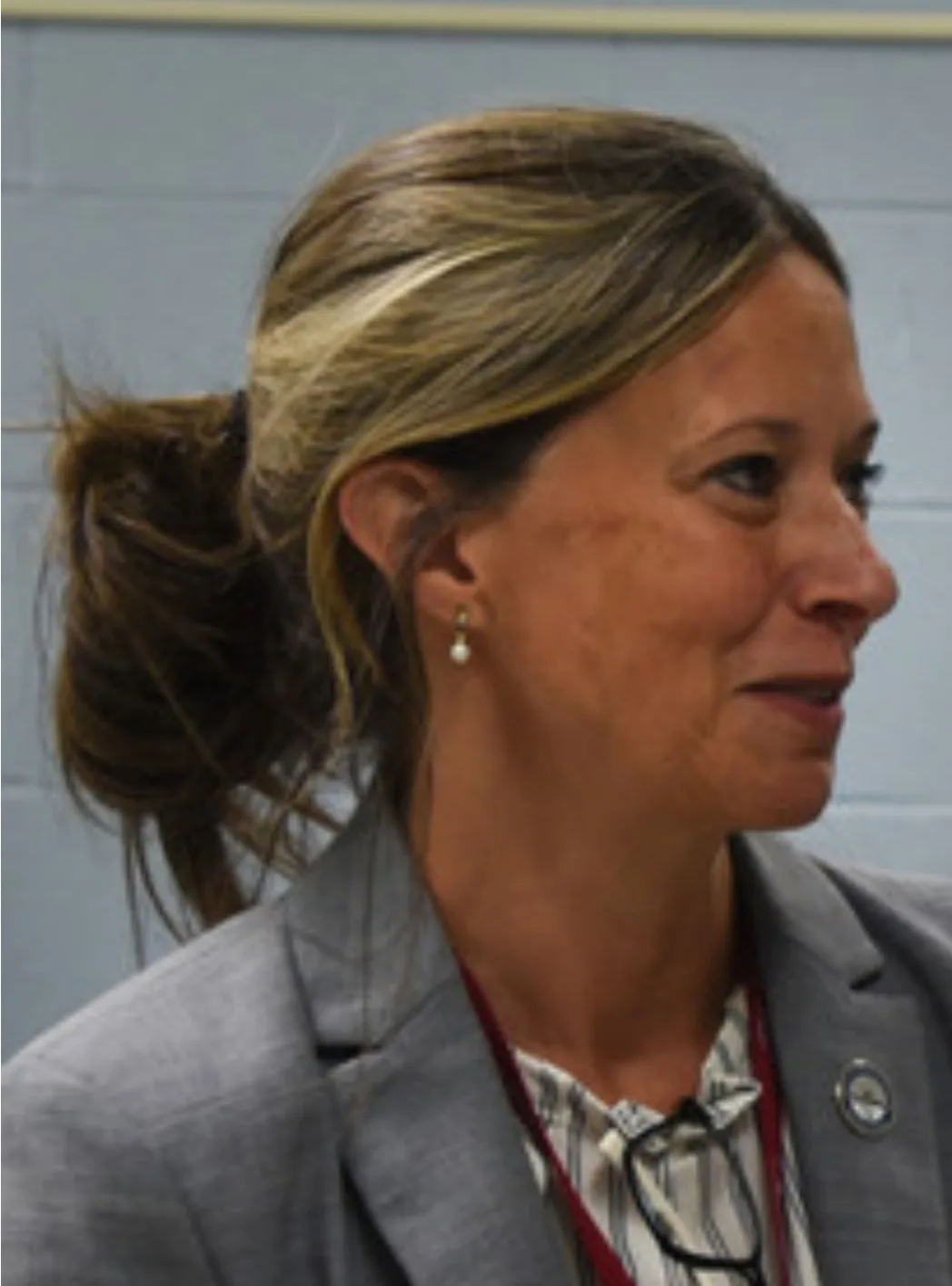 File photo
What happened
Key facts
- Acton and Arthur had not spoken for nearly five decades; The Sydney Morning Herald specifies that they had not seen or spoken to each other for 48 years.
- Acton and her brother were removed from Arthur’s custody in 1978 after authorities charged and indicted Arthur’s second husband over sexual abuse of Acton (per ms.now, The Sydney Morning Herald).
- Ramaswamy’s campaign team said Arthur was not paid for the ad (per The Sydney Morning Herald, ms.now).
- Acton said on Morning Joe that there was “no low” her opponent would not “sink to” and called the ad part of an “era of cruelty and distraction” in politics (per ms.now).
The brief
Vivek Ramaswamy’s campaign commissioned an Ohio campaign ad featuring Donna Arthur criticizing her daughter, Amy Acton, the Democratic candidate for governor. Acton publicly condemned the ad, which centers on Arthur disputing her daughter’s account of a childhood marked by poverty and periods of living in a tent. The campaign team said Arthur was not paid to appear.
The ad brings a long estrangement into the campaign. Acton said she has not spoken to her mother in nearly five decades; The Sydney Morning Herald specifies 48 years without seeing or speaking to each other. The Sydney Morning Herald also reports that Arthur’s comments do not disclose that estrangement.
The outlets describe Arthur’s criticism and the distance between mother and daughter, but their emphasis differs: MS NOW foregrounds Acton’s response and her account of childhood, while The Sydney Morning Herald highlights the family separation and the political reaction to the ad.
Acton and her brother were removed from Arthur’s custody in 1978 after authorities charged and indicted Arthur’s second husband over sexual abuse of Acton. MS NOW says Acton was 12 at the time; The Sydney Morning Herald reports an age range of nine to 12. Those descriptions differ on the age detail.
The Sydney Morning Herald says the couple left the state that year to avoid going to trial and remained on the run until the husband’s death in 2004. On Morning Joe, Acton said there was “no low” her opponent would not “sink to,” and described the ad as part of an “era of cruelty and distraction” in politics.
She also said, “Decency is on the ballot.” Those are Acton’s characterizations of the campaign ad and the race, not findings about Ramaswamy’s motives. The Sydney Morning Herald reported that Donald Trump praised the ad as “so good” and questioned why anyone would not use it; the outlet also described the episode as dividing Republicans.
The ad’s circulation extended beyond the campaign spot. The Los Angeles Times reported that a video posted on the Buckeye Bulletin with a label claiming Acton refused to debate and said her mother was lying received more than 4,800 likes, 1,500 comments and 500 shares. That label is the video’s claim, not an independently established account of Acton’s position.
The Los Angeles Times also reported that the Buckeye Bulletin was tied to a conservative California nonprofit. Its account places the ad within a broader online promotion effort, distinct from the campaign’s own commissioned spot.
The report describes the site as mysterious and quotes a person identified as Read comparing its approach and social-media presentation with tactics used in 2024; the excerpt does not provide further identification for Read.
The dispute therefore involves both the campaign’s use of Arthur’s criticism and its spread through an online site, while Acton frames the ad as a question of political decency.
The sources document the campaign’s commissioning of the ad, Acton’s condemnation, Trump’s praise and the online video’s engagement, but do not establish the effect of the promotion on voters or the election.
Why it matters
- Acton’s account of growing up in poverty and living in a tent is being challenged in a campaign ad by her estranged mother, making a personal family history part of the Ohio governor’s contest.
- The 1978 removal of Acton and her brother from their mother’s custody followed charges and an indictment involving Arthur’s second husband; the outlets differ on whether Acton was 12 or between nine and 12.
- A video promoting the ad on the Buckeye Bulletin drew more than 4,800 likes, 1,500 comments and 500 shares, giving the dispute reach beyond the campaign’s commissioned spot.
- Ramaswamy’s campaign commissioned the ad, while Acton condemned it and Donald Trump praised it; the Sydney Morning Herald described the episode as dividing Republicans.
What to watch next
- Whether Ramaswamy’s campaign releases further material featuring Donna Arthur.
- Whether Amy Acton makes additional public statements about the ad or her family history.
- Whether the Buckeye Bulletin posts more videos promoting the ad or its claims about Acton.
- Whether the divisions among Republicans described by The Sydney Morning Herald produce further public reactions to the ad.
How it's being covered
Coverage analysisShow details6 source articles · 5 unique outletsOutlet political mix: Mostly Center· 1 Left · 4 CenterWhere the outlets are based: US/Canada 80% · Asia 20%
- Coverage is currently concentrated among Center-rated outlets (4 of 5 rated sources); comparatively few Right-rated outlets have published on the event.
- Coverage is currently concentrated among outlets based in US/Canada (4 of 5 geographically-identified sources).
How outlets' accounts compare
2 framing differences · 4 uncorroborated claims · 2 information gaps- MS NOW centers Acton’s condemnation and her account of growing up in poverty and living in a tent; The Sydney Morning Herald emphasizes the 48-year estrangement and Republican division over the ad.
- The Los Angeles Times focuses on online promotion, reporting the Buckeye Bulletin’s connection to a conservative California nonprofit and engagement figures for a video.
- Acton characterizes the ad as an example of political cruelty and a test of decency; Donald Trump praised the ad, while The Sydney Morning Herald says the episode is dividing Republicans.
- Acton said there was “no low” her opponent would not “sink to” and called the ad part of an “era of cruelty and distraction” in politics.
- Donald Trump praised the ad as “so good” and questioned why anyone would not use it.
- The video label on the Buckeye Bulletin claimed Acton refused to debate and said her mother was lying.
- The sources do not provide the ad’s full wording or a response from Ramaswamy addressing Acton’s criticism.
- MS NOW says Acton was 12 when her stepfather was arrested and indicted; The Sydney Morning Herald gives an age range of nine to 12 and describes the charges and indictment as concerning sexual abuse.
Timeline
Developments from this story's sources, dated background we compiled and fact-checked, and our earlier coverage. Each row says which.- The legal framework for modern campaign spending was shaped by *Buckley v. Valeo*, decided by the U.S. Supreme Court on January 30, 1976, which treated independent political spending as protected expression.Background · from our historical context
- Acton and her brother were removed from Arthur’s custody in 1978 after authorities charged and indicted Arthur’s second husband over sexual abuse of Acton.
- On January 21, 2010, the Court’s decision in *Citizens United v. Federal Election Commission* barred restrictions on independent political expenditures by corporations and unions.Background · from our historical context
- A federal appeals court ruled in SpeechNow.org v. FEC that committees making only independent expenditures could accept unlimited contributions.Background · compiled and fact-checked by Updat3
- In 2019, Ohio Governor Mike DeWine appointed Acton, a physician and public-health administrator, director of the Ohio Department of Health.Background · from our historical context
- Amy Acton issued an Ohio stay-at-home order that took effect the next day.Background · compiled and fact-checked by Updat3
- Amy Acton resigned as Ohio’s state health director.Background · compiled and fact-checked by Updat3
- Vivek Ramaswamy announced his campaign for the Republican presidential nomination.Background · compiled and fact-checked by Updat3
- Vivek Ramaswamy ended his campaign for the Republican presidential nomination and endorsed Donald Trump.Background · compiled and fact-checked by Updat3
- Vivek Ramaswamy entered the Ohio governor’s race.Background · compiled and fact-checked by Updat3
How we got here
In 2019, Ohio Governor Mike DeWine appointed Acton, a physician and public-health administrator, director of the Ohio Department of Health. During the COVID-19 pandemic in 2020, she became a prominent public official as Ohio adopted public-health measures, and she resigned on June 11, 2020, after facing threats and intense political opposition.
Acton’s later political profile developed through that public-health role, while Vivek Ramaswamy became nationally known through his 2024 Republican presidential campaign. Ramaswamy, an Ohio entrepreneur, entered the presidential race in February 2023 and ended his campaign in January 2024 after the Iowa caucuses.
Original sources
5 of 6 articles · US/Canada · Show allEvery story links to the reporting it was built from. How we choose sources
Spotted a factual error, a broken link or a misleading summary? Tell us.