
Riley Moore claims H-1B and OPT displace American graduates
Riley Moore claimed that employers use H-1B and Optional Practical Training programs to replace American workers with lower-paid foreign workers. He cited about 650,000 computer science graduates and more than 500,000 H-1B visas, while also linking H-1B holders to family migration.
AI-assisted synthesis · Based on 5 outlets' reporting · Full text read from 3 of 5 outletsHow it's made
View timeline · 9 entries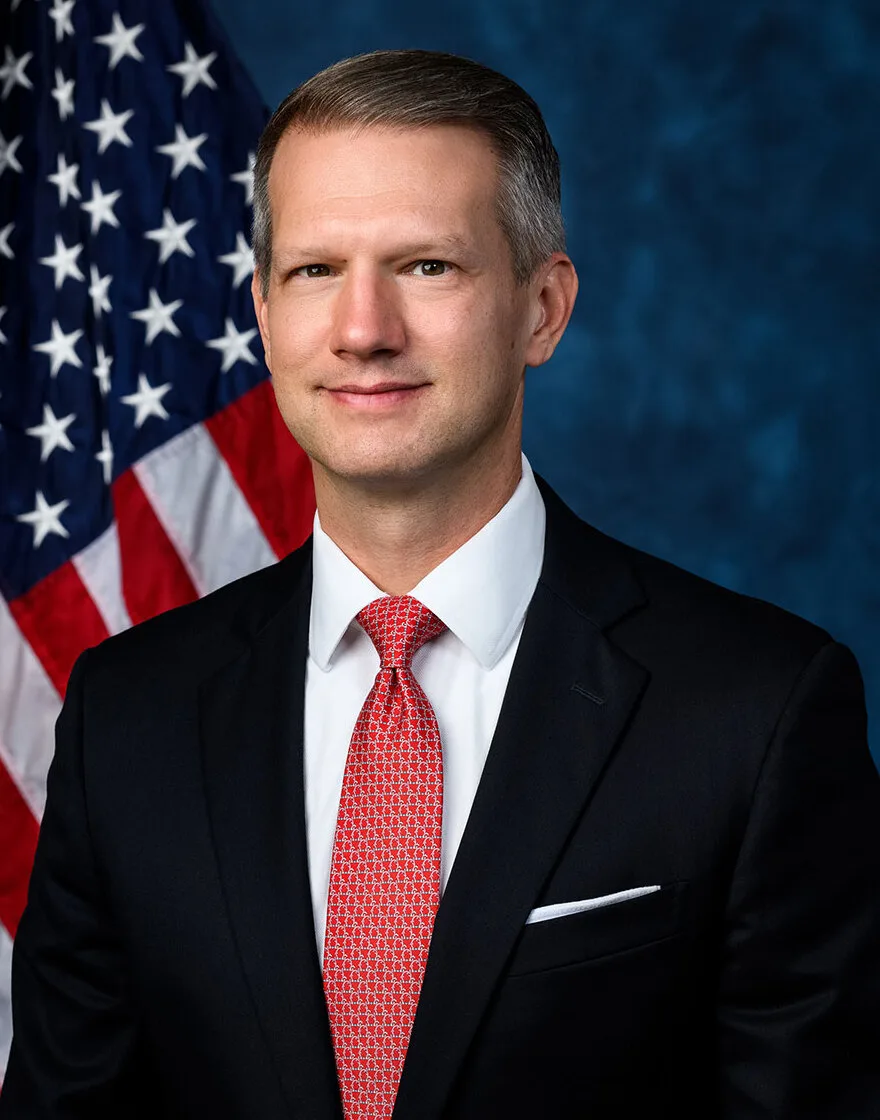 File photo
What happened
Key facts
- Moore claimed that employers use H-1B hiring to replace American computer science graduates with lower-paid foreign workers (per The Times of India, Hindustan Times, outlookindia.com).
- Moore said about 650,000 Americans graduated with computer science or computer programming degrees in the prior year (per The Times of India, Hindustan Times).
- Moore said more than 500,000 H-1B visas were issued (per The Times of India).
- Moore said the H-1B program is intended to help employers recruit skilled foreign workers for specialised jobs they cannot fill domestically (per The Times of India).
- Moore said a typical H-1B visa holder brings 10 family members to the United States and connected the claim to what he called chain migration (per The Times of India, outlookindia.com).
The brief
U.S. Congressman Riley Moore claimed that employers use H-1B and Optional Practical Training programs to replace American workers with lower-paid foreign workers. He described the programs as “SCAMS” in an X post, and repeated his criticism during an interview with Scott Jennings on The Scott Jennings Show, broadcast by the Salem News Channel.
Moore cited about 650,000 Americans who graduated with computer science or computer programming degrees in the prior year and more than 500,000 H-1B visas issued.
Those figures were presented by Moore as part of his argument about hiring and graduate employment; the reporting does not independently establish that the visa total represents workers hired in the same period or that employers used the programs to displace graduates. His criticism combines two separate programs.
H-1B visas allow employers to seek foreign workers for specialised occupations; Moore acknowledged that the stated purpose is to help employers fill jobs they cannot fill domestically. He also accused employers of using H-1B and OPT to obtain workers at lower wages. The reports present that as Moore’s allegation, rather than a verified finding about employer practices.
Moore also argued that H-1B holders bring family members to the United States, saying a typical holder brings 10 relatives and associating that claim with what he called “chain migration.” The Times of India and outlookindia.com reported, citing USCIS data, that Indian nationals accounted for about 70 per cent of H-1B beneficiaries in fiscal year 2025.
These details add an immigration dimension to Moore’s criticism, but do not establish how many relatives accompanied visa holders or independently verify his stated typical number. The outlets emphasize different parts of the account.
The Times of India and outlookindia.com foreground Moore’s claims about displacement, wages and family migration; Hindustan Times also includes a USCIS policy explanation concerning deference to earlier eligibility determinations in cases involving the same parties and underlying facts.
That policy passage does not itself establish whether H-1B or OPT hiring displaced American graduates. The Federal and News18 headlines likewise report Moore’s allegation, with News18 specifically describing his claim as concerning computer science graduates and cheaper labour.
The immediate issue is the gap between Moore’s broad accusation and the evidence described in the coverage: his comments and the figures he cited are documented, while the assertion that employers are replacing American graduates through these programs remains his claim.
The reporting also leaves the two cited totals as separate measures; it does not show that the number of visas issued corresponds directly to the number of recent graduates seeking or qualifying for those jobs.
Why it matters
- American computer science and programming graduates are the population at the center of Moore’s displacement claim; he compared about 650,000 graduates in the prior year with more than 500,000 H-1B visas issued.
- Foreign workers seeking specialised U.S. jobs are also implicated: Moore’s allegation concerns employers choosing lower-paid workers, while the stated program purpose he described is recruiting skilled workers for jobs employers cannot fill domestically.
- H-1B holders and their families are part of Moore’s argument about migration. He claimed a typical holder brings 10 relatives, but the reports do not independently verify that number.
- Indian nationals accounted for about 70 per cent of H-1B beneficiaries in fiscal year 2025, according to USCIS data cited by The Times of India and outlookindia.com.
What to watch next
- Whether Moore provides evidence for his claim that employers use H-1B or OPT to replace American graduates with lower-paid workers.
- Whether employers’ use of H-1B and OPT is shown to involve jobs they cannot fill domestically, the program purpose described by Moore.
- Whether USCIS data or policy information cited in coverage is used to substantiate Moore’s claims about visa holders’ families or graduate displacement.
How it's being covered
Coverage analysisShow details6 source articles · 5 unique outletsCoverage mix: Center Only· 4 CenterWhere the outlets are based: Asia 80% · Unknown 20%
- Coverage is currently concentrated among Center-rated outlets (4 of 4 rated sources); comparatively few Left or Right-rated outlets have published on the event.
- Coverage is currently concentrated among outlets based in Asia (4 of 5 geographically-identified sources).
How outlets' accounts compare
2 framing differences · 2 uncorroborated claims · 4 information gaps- The Times of India and outlookindia.com foreground Moore’s allegations about replacing American workers and his family-migration claim; Hindustan Times also includes a USCIS policy explanation about deference to earlier eligibility determinations.
- News18’s headline specifically frames Moore’s allegation around computer science graduates and cheaper labour; The Federal’s headline focuses on his characterization of H-1B and OPT programs as scams.
- Moore called H-1B and OPT programs “SCAMS” and claimed they undercut or replace American workers.
- Moore said a typical H-1B visa holder brings 10 family members and linked the claim to what he called “chain migration.”
- The reports do not provide independent evidence of employer wage comparisons or documented cases connecting H-1B or OPT hiring to the displacement of American graduates.
- The reports do not clarify whether the number of H-1B visas cited counts visas issued to workers in the same period as the graduates Moore referenced.
- Moore’s assertion that employers use H-1B and OPT to replace American graduates with lower-paid foreign workers is reported as his claim, not independently established.
- Moore’s claim that a typical H-1B holder brings 10 family members is not independently verified in the coverage.
Timeline
Developments from this story's sources, dated background we compiled and fact-checked, and our earlier coverage. Each row says which.- The modern employment-based immigration framework also reflects the Immigration and Nationality Act amendments signed on October 3, 1965.Background · from our historical context
- The statutory category and student-work rules thus developed through distinct legal paths: Congress established H-1B in 1990, while OPT rests on federal student-visa regulations.Background · from our historical context
- Congress enacted the Immigration Act of 1990, creating employment-based green-card categories and the H-1B classification.Background · compiled and fact-checked by Updat3
- President Bill Clinton signed the American Competitiveness in the Twenty-First Century Act, which raised the H-1B cap temporarily and exempted some employers.Background · compiled and fact-checked by Updat3
- President George W. Bush signed the H-1B Visa Reform Act, setting a 65,000 general cap and a 20,000 exemption for some U.S. graduate-degree holders.Background · compiled and fact-checked by Updat3
- The Department of Homeland Security extended Optional Practical Training by 17 months for qualifying STEM graduates.Background · compiled and fact-checked by Updat3
- The Department of Homeland Security issued a rule allowing employment authorization for some H-4 spouses of H-1B workers.Background · compiled and fact-checked by Updat3
- The Department of Homeland Security published a final rule extending STEM Optional Practical Training by 24 months.Background · compiled and fact-checked by Updat3
- On January 17, 2025, a U.S. Department of Homeland Security rule modernizing the H-1B program took effect.Background · from our historical context
How we got here
On January 17, 2025, a U.S. Department of Homeland Security rule modernizing the H-1B program took effect. Congress created the H-1B visa category in the Immigration Act of 1990, which President George H. W. Bush signed on November 29 that year.
Optional Practical Training (OPT) is a separate form of work authorization for international students in the United States on F-1 visas. In 2008, the Department of Homeland Security extended OPT by 17 months for qualifying science, technology, engineering and mathematics graduates; a 2016 final rule replaced that arrangement with a 24-month STEM extension.
Original sources
1 of 6 articles · Unknown · Show allEvery story links to the reporting it was built from. How we choose sources
Spotted a factual error, a broken link or a misleading summary? Tell us.