
Rodríguez promises elections under renewed authority in Venezuela
Acting President Delcy Rodríguez said Venezuela would hold elections under a renewed electoral authority but gave no date, leaving the timing of a vote unresolved after the disputed 2024 presidential election.
AI-assisted synthesis · Based on 4 outlets' reporting · Article text read from 2 of 4 outletsHow it's made
View timeline · 13 entries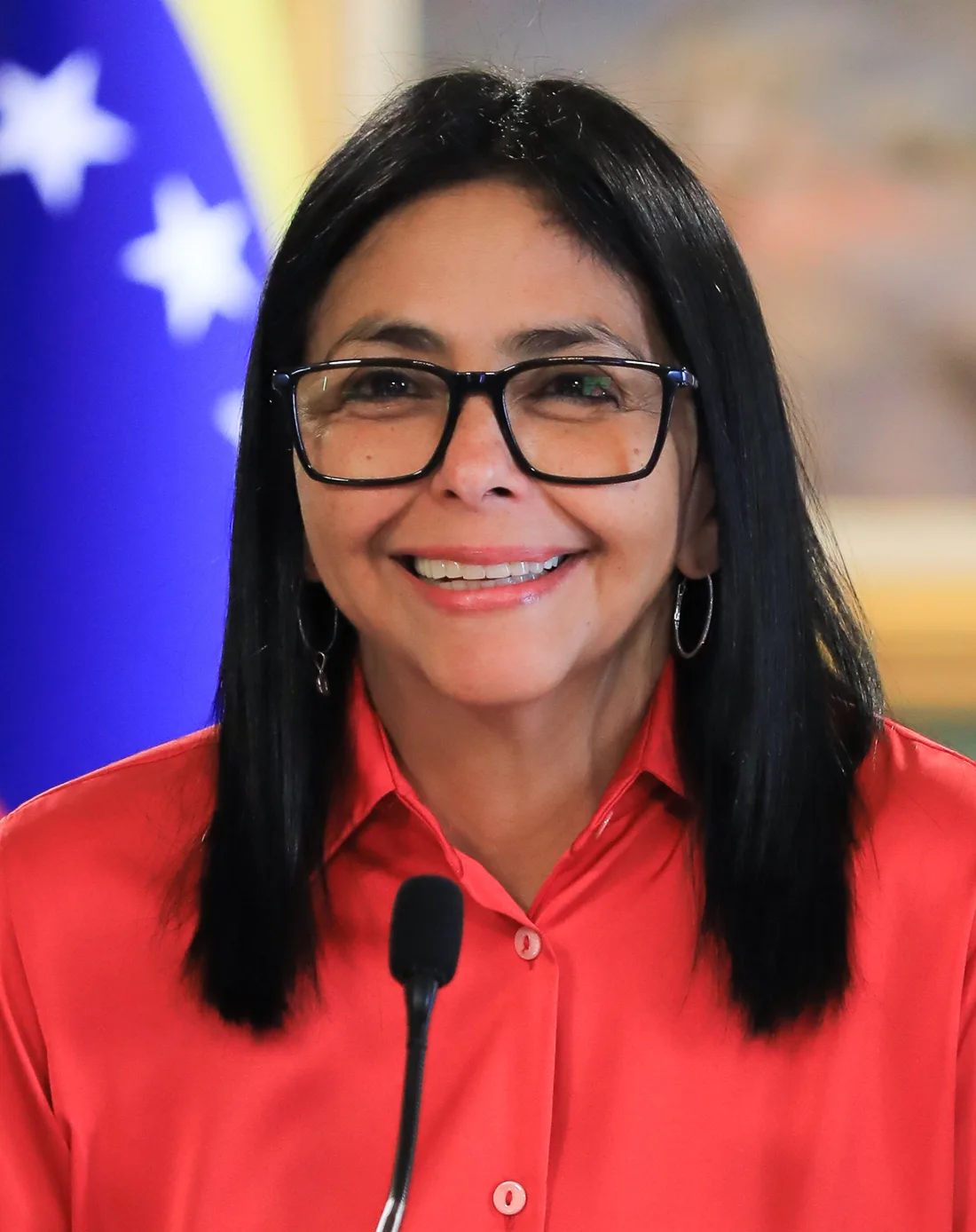 File photo
What happened
Key facts
- Delcy Rodríguez said elections would be organised by a renewed electoral authority and promised that the world would witness them.
- Machado rejects the proposed order of elections.
- Her government has negotiated with the opposition since August on a transition roadmap.
The brief
Venezuela’s acting President Delcy Rodríguez promised elections organized by a renewed electoral authority, but gave no date for a vote. She said the process should be led by someone with deep knowledge of the state and presented herself as qualified to carry it forward; she also said the world would witness the elections.
The promise comes as Rodríguez’s government and the opposition negotiate a transition roadmap. Those talks have been under way since August, according to the account of the negotiations. The U.S.
State Department has said the roadmap calls for Rodríguez to leave the presidency vacant in 2027, while opposition leader María Corina Machado described a U.S.-promoted plan as providing for presidential elections that year. Machado said Venezuela’s democratic transition was “irreversible.” She also said she had returned to complete a task and fulfill a mandate.
Her account links the renewed discussion of elections to Rodríguez’s remarks: Machado said the effect of her arrival was being felt because Rodríguez spoke about elections that day. Machado also said she would reactivate the network of volunteers and citizen organizations that had helped collect and defend records from the July 28, 2024 presidential election.
She said her team organized that network and recalled that its work had surprised its opponents. The announcement places civic mobilization around election records alongside the competing political plans for a future vote. The accounts emphasize different parts of the transition debate.
Rodríguez’s remarks center on the authority that would organize elections and her own role in the process. Machado highlights the 2027 presidential-election plan and the volunteer network associated with the 2024 election. The sources do not describe the renewed authority’s composition or the steps by which it would be reconstituted.
A separate dispute concerns Venezuela’s political status. President Donald Trump suggested that Venezuela become the “51st state” of the United States and elect a governor rather than a president. Rodríguez has rejected that idea in the past, according to the account of Trump’s proposal.
The suggestion contrasts with the election plans discussed by Rodríguez and Machado, both of which concern a Venezuelan electoral process. The immediate points at issue are whether the parties’ roadmap advances toward a presidential vote in 2027, what role the renewed electoral authority would have, and whether Machado’s volunteer network resumes its election-related work.
Rodríguez has not announced a voting date; Machado’s stated plan identifies 2027 as the intended year for the presidential election.
Why it matters
- Venezuelan voters’ access to an election depends on the renewed electoral authority Rodríguez promised, but its composition and the vote date remain unspecified.
- The roadmap carries a concrete institutional stake: the U.S. State Department says it calls for Rodríguez to leave the presidency vacant in 2027, while Machado says the U.S.-promoted plan envisages a presidential election that year.
- Machado’s proposed revival of volunteers and citizen organizations would renew a network that collected and defended records from the July 28, 2024 presidential election.
- The choice between a Venezuelan presidency and the governor role in Trump’s 51st-state proposal is a distinct political-status dispute; Rodríguez has rejected that proposal.
What to watch next
- Whether Rodríguez’s government and the opposition advance the transition roadmap they have negotiated since August.
- Whether Rodríguez announces a date for elections or details the renewed electoral authority’s composition.
- Whether the roadmap’s stated 2027 provisions—Rodríguez leaving the presidency vacant and a presidential election—move forward.
- Whether Machado reactivates the volunteer and citizen-organization network involved in the 2024 election-record effort.
How it's being covered
Coverage analysisShow details4 source articles · 4 unique outletsOutlet political mix: Right Only· 3 Right · 1 unratedWhere the outlets are based: Europe 50% · Latin America 25% · Other 25%
- Coverage is currently concentrated among Right-rated outlets (3 of 3 rated sources); comparatively few Left or Center-rated outlets have published on the event.
How outlets' accounts compare
3 framing differences · 2 uncorroborated claims · 2 information gaps- en.mercopress.com emphasizes Rodríguez’s promised renewed electoral authority and her claim that she is suited to lead the process; democrata.es foregrounds Machado’s view that a U.S.-promoted plan envisages a 2027 presidential election and her plans to reactivate the volunteer network.
- The U.S. State Department’s description of the roadmap’s provision for Rodríguez to leave the presidency vacant in 2027 is an attributed account of the plan, not a direct statement by Rodríguez.
- Rodríguez gave no election date, while Machado described a plan for a presidential election in 2027; the accounts do not establish an agreed schedule.
- Rodríguez said she knew the Venezuelan state and was the right person to carry the process forward.
- Machado called the democratic transition “irreversible” and said the effect of her arrival was being felt because Rodríguez spoke about elections.
- The accounts do not specify the renewed authority’s membership, appointment process, or institutional powers.
- The accounts do not explain how the roadmap was negotiated or provide the opposition’s detailed position on its terms.
Timeline
Developments from this story's sources, dated background we compiled and fact-checked, and our earlier coverage. Each row says which.- Hugo Chávez’s election as president on December 6, 1998, preceded the constitutional rewrite and the creation of that electoral structure.Background · from our historical context
- Venezuela adopted a new constitution under President Hugo Chávez.Background · compiled and fact-checked by Updat3
- The institutional framework dates to Venezuela’s 1999 Constitution, approved by referendum on December 15, 1999.Background · from our historical context
- The opposition won control of Venezuela's National Assembly in legislative elections.Background · compiled and fact-checked by Updat3
- Venezuela's Supreme Court issued rulings that curtailed the National Assembly's powers.Background · compiled and fact-checked by Updat3
- Maduro was declared the winner of the May 20, 2018, presidential election, which the European Union and several governments rejected as neither free nor fair.Background · from our historical context
- María Corina Machado won the opposition primary to select a presidential candidate.Background · compiled and fact-checked by Updat3
- The Barbados Agreement set out commitments on electoral rights and a competitive presidential election in 2024.Background · from our historical context
- Venezuela's Supreme Court upheld a ban preventing opposition leader María Corina Machado from holding public office.Background · compiled and fact-checked by Updat3
- Venezuela’s presidential election on July 28, 2024, became the immediate backdrop to later transition proposals.Background · from our historical context
- On August 1, 2024, the Carter Center, which had observed the vote, said it could not verify the CNE’s announced result and that the election did not meet international standards.Background · from our historical context
- U.S. forces captured Nicolás Maduro and Cilia Flores in Caracas and brought them to the United States.Background · compiled and fact-checked by Updat3
- The U.S. Treasury removed Delcy Rodríguez from its sanctions list.Background · compiled and fact-checked by Updat3
How we got here
Venezuela’s presidential election on July 28, 2024, became the immediate backdrop to later transition proposals. The National Electoral Council (CNE) declared Nicolás Maduro the winner on July 29 but did not publish polling-station results in full; opposition groups said their copies of the tally sheets showed Edmundo González Urrutia had won.
On August 1, 2024, the Carter Center, which had observed the vote, said it could not verify the CNE’s announced result and that the election did not meet international standards. The 2024 contest followed an agreement between the government and opposition signed in Barbados on October 17, 2023.
Original sources
1 of 4 articles · Unknown · Show allEvery story links to the reporting it was built from. How we choose sources
Spotted a factual error, a broken link or a misleading summary? Tell us.