
Rubio says U.S. aid helped Ukraine remain sovereign
Marco Rubio said Ukraine would not exist as a sovereign state without U.S. assistance, defending aid provided under the Trump administration. He said the U.S. neither knew of nor directed a reported Starlink slowdown and could not control decisions by a private company.
AI-assisted synthesis · Based on 4 independent reports from 5 outlets · Article text read from 1 of 4 reportsHow it's made
View timeline · 10 entries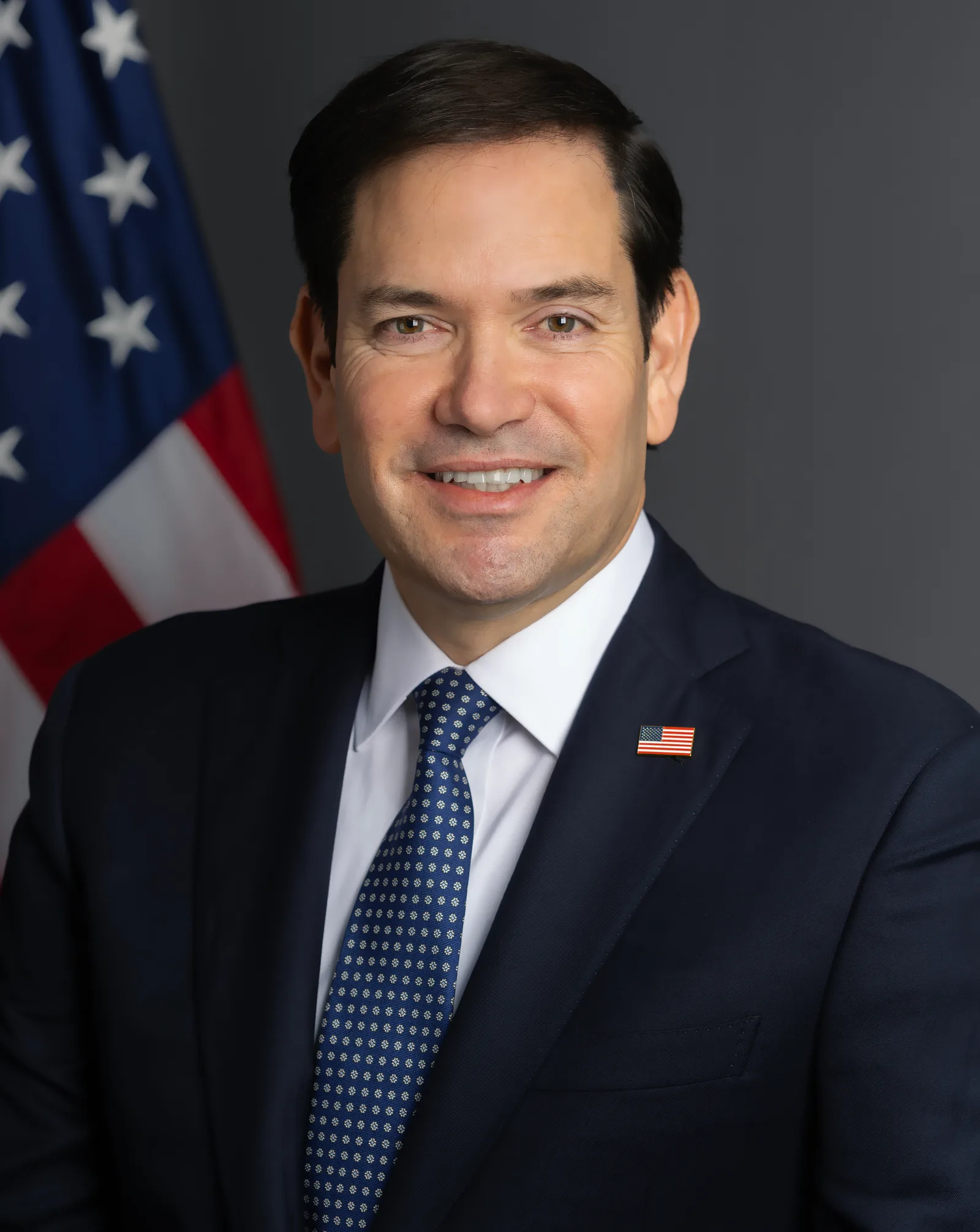 File photo
What happened
Key facts
- Marco Rubio said Ukraine would not exist as a sovereign state without U.S. support, including assistance under the Trump administration (per The Straits Times, business-standard.com, Bloomberg).
- Rubio said Ukrainian fighters had stood up to Russia bravely (per The Straits Times).
- The Wall Street Journal reported that Elon Musk ordered a slowdown of Starlink in Ukraine; the service helps Ukraine fend off Russian aerial attacks (per The Straits Times).
- Rubio said he did not know whether Trump had advance knowledge of the slowdown and that the U.S. had neither known of nor directed it (per The Straits Times).
- Rubio said the U.S. could not control decisions about a private company's product; Reuters's headline characterized Starlink access in Ukraine as a decision for Musk, not the White House (per Reuters, The Straits Times).
- Rubio said a very difficult negotiation was taking place to try to resolve the war, and The Moscow Times headline said he urged Russia and Ukraine to focus on peace talks (per themoscowtimes.com, The Straits Times).
The brief
U.S. Secretary of State Marco Rubio said Ukraine would not exist as a sovereign state without U.S. assistance, including aid provided under the Trump administration. The Straits Times reported that Rubio defended that support while describing Ukrainian fighters as having stood up to Russia bravely.
Business Standard and Bloomberg headlines also attributed the sovereignty claim to Rubio. Rubio said the United States could not control decisions by a private company about its product. He said the U.S. had neither known of nor directed a reported slowdown of Starlink, a service that helps Ukraine fend off Russian aerial attacks.
Reuters’s headline similarly presented access to Starlink in Ukraine as a decision for Elon Musk rather than the White House. The Straits Times reported that The Wall Street Journal said Musk ordered the slowdown.
The Wall Street Journal’s account, as described by The Straits Times, cited unnamed officials who said Musk had spoken with administration officials before the slowdown took effect and discussed the decision with Donald Trump after it became public. Rubio said he did not know whether Trump had advance knowledge.
The account does not resolve the difference between that reported contact and Rubio’s statement that the U.S. had not known of or directed the slowdown. The remarks place a public defense of U.S. assistance alongside questions about the role of private technology in Ukraine’s ability to counter Russian aerial attacks.
Rubio’s position was that the government could not control a private company’s product; the reported contacts described by The Wall Street Journal concern Musk’s communications with administration officials and Trump, not U.S. direction of the slowdown. Rubio also said a “very difficult negotiation” was under way to try to resolve the war.
The Moscow Times headline said Rubio called on Russia and Ukraine to focus on peace talks. The Straits Times did not provide further details of the negotiations in its account. The stated positions leave two distinct issues in view: Rubio’s defense of U.S. assistance as central to Ukraine’s sovereignty, and his assertion that Washington did not control the Starlink decision.
The reported Starlink slowdown and the negotiations are the specific matters raised alongside that defense; Rubio’s comments do not establish how either will develop.
Why it matters
- Ukraine’s ability to fend off Russian aerial attacks is linked in the account to Starlink, while the service’s reported slowdown was attributed to a decision by Elon Musk.
- Rubio tied Ukraine’s continued existence as a sovereign state to U.S. assistance, including support under the Trump administration.
- The account describes a potential tension in policy: the U.S. supports Ukraine, while Rubio says the government cannot control a private company’s product.
What to watch next
- Whether Rubio or the U.S. administration provides further detail about its knowledge of the reported Starlink slowdown.
- Whether Elon Musk changes Starlink access in Ukraine, the private-company decision identified by Rubio and Reuters’s headline.
- Whether Russia and Ukraine focus on peace talks, as The Moscow Times headline says Rubio urged.
How it's being covered
Coverage analysisShow details5 source articles · 5 unique outlets · 4 distinct reportsOutlet political mix: Center Only· 5 CenterWhere the outlets are based: Asia 40% · Global 40% · Other 20%
- Coverage is currently concentrated among Center-rated outlets (5 of 5 rated sources); comparatively few Left or Right-rated outlets have published on the event.
2 sources are from a wire service (AP, Reuters, AFP or Bloomberg), whose reporting other outlets often republish.
How outlets' accounts compare
Timeline
Developments from this story's sources, dated background we compiled and fact-checked, and our earlier coverage. Each row says which.- Ukraine's parliament adopted a declaration of independence from the Soviet Union.Background · compiled and fact-checked by Updat3
- Ukraine, Russia, the United States and the United Kingdom signed the Budapest Memorandum on security assurances.Background · compiled and fact-checked by Updat3
- In 2014, Russia annexed Crimea, which Ukraine and most United Nations members regard as Ukrainian territory; Russia claims Crimea as its own.Background · from our historical context
- The United States later provided security assistance under authorities including the Ukraine Security Assistance Initiative, established by Congress in 2016.Background · from our historical context
- SpaceX launched its first 60 operational Starlink satellites.Background · compiled and fact-checked by Updat3
- Congress enacted the Ukraine Democracy Defense Lend-Lease Act in 2022, alongside other assistance authorities.Background · from our historical context
- SpaceX activated Starlink service in Ukraine and terminals were supplied there.Background · compiled and fact-checked by Updat3
- On February 24, 2022, Russian forces launched a full-scale invasion.Background · from our historical context
- SpaceX president Gwynne Shotwell said the company had restricted Starlink use for offensive drone operations in Ukraine.Background · compiled and fact-checked by Updat3
- Donald Trump and Volodymyr Zelensky met at the White House; their planned minerals agreement was not signed.Background · compiled and fact-checked by Updat3
How we got here
Ukraine declared independence in 1991, and voters confirmed it in a referendum that December.
In the 1994 Budapest Memorandum, Ukraine gave up the nuclear weapons it inherited after the Soviet Union’s dissolution; Russia, the United States and the United Kingdom pledged to respect its independence and borders, but the memorandum did not require them to defend Ukraine militarily.
Original sources
2 of 5 articles · Asia · Show allEvery story links to the reporting it was built from. How we choose sources
Spotted a factual error, a broken link or a misleading summary? Tell us.