
Samsung reports record quarterly profit as AI chip demand surges
Samsung Electronics reported third-quarter operating profit of 107.44 trillion won, a record driven by demand for artificial-intelligence chips. Its net profit reached 75.13 trillion won, while Samsung said AI demand would outstrip industry supply in 2027.
AI-assisted synthesis · Based on 5 independent reports from 7 outlets · Article text read from 2 of 5 reportsHow it's made
View timeline · 7 entries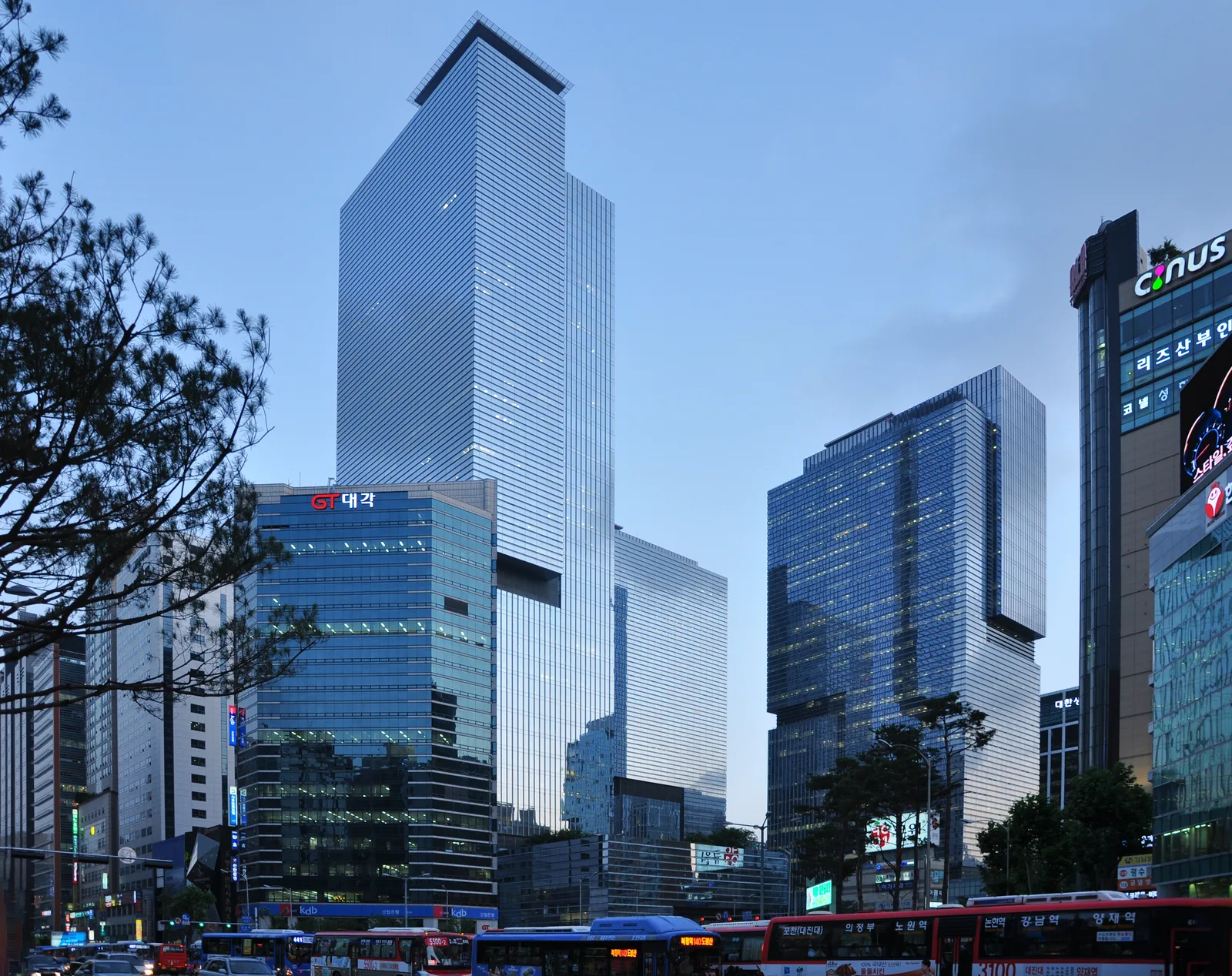 File photo
What happened
Key facts
- Samsung Electronics reported operating profit of 107.4 trillion won (US$80.04 billion) for July to September, up from 12.2 trillion won a year earlier.
- Samsung said AI infrastructure investment in 2027 could reach a historic level and AI-driven demand would exceed industry supply compared with 2026.
- Samsung said it expected the chip shortage to deepen next year.
- Samsung announced a third-quarter dividend of 30 trillion won, or 4,601 won per share.
- Samsung shares fell 4.6 percent in early trading, while SK Hynix shares rose 0.7 percent.
- The source says concerns about AI infrastructure financing and rising competition from China had weighed on chip stocks in recent months.
The brief
Samsung Electronics reported record third-quarter operating profit of 107.44 trillion won ($80.5 billion), as demand for artificial-intelligence chips lifted earnings. The company also reported net profit of 75.13 trillion won ($56.2 billion) for July through September, a 514.6 percent increase from 12.22 trillion won a year earlier.
The results point to the strength of demand for chips used in AI computing. Samsung, the world’s largest memory chipmaker, said it expanded sales of sixth-generation high-bandwidth memory, or HBM4, and adjusted to demand from AI server customers. The company described its quarterly performance as a record for a second consecutive quarter.
Samsung also said its quarterly operating profit made it the first global technology company to exceed 100 trillion won on that measure. The company approved a 30 trillion won cash dividend alongside its results. The earnings picture extended beyond semiconductors. Samsung said sales rose from a year earlier, supported by new premium smartphones including the Galaxy Z Fold8.
It also cited higher component costs and a challenging business environment, indicating that growth in phone sales occurred alongside cost pressures. Samsung’s outlook highlighted the supply-demand imbalance it expects in AI-related chips.
In a statement, the company said AI infrastructure spending would reach a historic level in 2027 as the AI ecosystem expands, and forecast that AI-driven demand would far exceed industry supply compared with 2026. That is the company’s projection, rather than a confirmed measure of future demand or supply.
Market reactions diverged in early trading: Samsung shares fell 4.6 percent, while SK Hynix shares rose 0.7 percent. SK Hynix had reported strong earnings on Wednesday and issued an upbeat outlook, a contrast that helped ease market concerns about whether AI-related chip earnings could maintain momentum, according to The Standard.
The immediate stakes include Samsung’s capacity to serve AI server demand and the investment outlook for the broader chip supply chain. The company’s results combine record profit with a forward-looking warning that expected AI demand could outstrip available industry supply in 2027.
Why it matters
- Samsung’s reported 107.44 trillion won in operating profit and 75.13 trillion won in net profit show how strongly demand for AI chips contributed to the company’s quarterly earnings.
- Samsung’s forecast that AI demand will far exceed industry supply compared with 2026 puts chip availability at the center of its 2027 outlook.
- Samsung approved a 30 trillion won cash dividend, a concrete allocation of capital alongside its record results.
- The 4.6 percent early-trading decline in Samsung shares contrasted with a 0.7 percent rise in SK Hynix shares, despite the broader strength in AI-chip earnings.
What to watch next
- Whether Samsung’s forecast that AI-driven demand will exceed industry supply in 2027 is reflected in its subsequent outlook.
- Whether Samsung continues expanding sales of HBM4 chips and serving AI server demand.
- Whether Samsung’s premium smartphone sales continue to grow amid the higher component costs it cited.
- How Samsung and SK Hynix shares move relative to each other after their contrasting early-trading performance.
How it's being covered
Coverage analysisShow details7 source articles · 7 unique outlets · 5 distinct reportsOutlet political mix: Center Only· 7 CenterWhere the outlets are based: Asia 43% · Global 43% · Other 14%
- Coverage is currently concentrated among Center-rated outlets (7 of 7 rated sources); comparatively few Left or Right-rated outlets have published on the event.
One source is from a wire service (AP, Reuters, AFP or Bloomberg), whose reporting other outlets often republish.
How outlets' accounts compare
1 framing difference · 1 uncorroborated claim- Korea Herald emphasizes Samsung’s net-profit jump, HBM4 sales, smartphone sales, and the 30 trillion won dividend; The Standard emphasizes the nearly ninefold rise in operating profit, Samsung’s chip-supply forecast, and the contrasting early share moves.
- Samsung said AI-driven demand would far exceed industry supply compared with 2026.
Timeline
Developments from this story's sources, dated background we compiled and fact-checked, and our earlier coverage. Each row says which.- Samsung Electronics was established.Background · compiled and fact-checked by Updat3
- Samsung Electronics acquired Korea Semiconductor.Background · compiled and fact-checked by Updat3
- The industry’s HBM standard was established by JEDEC in 2013, as chipmakers sought faster memory for graphics and high-performance computing.Background · from our historical context
- SK Hynix began mass production of HBM3.Background · compiled and fact-checked by Updat3
- The launch followed Samsung’s April 2023 announcement that it was developing HBM3, a memory technology designed to move data rapidly between processors and memory.Background · from our historical context
- Samsung unveiled a 12-layer version of its HBM3E memory.Background · compiled and fact-checked by Updat3
- SK Hynix began mass production of HBM3E.Background · compiled and fact-checked by Updat3
How we got here
Samsung’s February 2024 unveiling of its 12-layer HBM3E memory marked an earlier step in developing high-bandwidth chips for AI computing; the company said the design could deliver 50% more capacity than its previous 8-layer version.
The launch followed Samsung’s April 2023 announcement that it was developing HBM3, a memory technology designed to move data rapidly between processors and memory. The industry’s HBM standard was established by JEDEC in 2013, as chipmakers sought faster memory for graphics and high-performance computing.
Original sources
3 of 7 articles · Asia · Show allEvery story links to the reporting it was built from. How we choose sources
Spotted a factual error, a broken link or a misleading summary? Tell us.