
Samsung resumes Pyeongtaek fab work as chip demand rises
Samsung has restarted construction of a fifth semiconductor fab in Pyeongtaek after halting work during a 2024 decline in memory-chip demand. Three fabs at the complex operate around the clock, while a fourth is coming online.
AI-assisted synthesis · Based on 3 outlets' reporting · Article text read from 1 of 3 outlets · short excerpt from 1 moreHow it's made
View timeline · 9 entries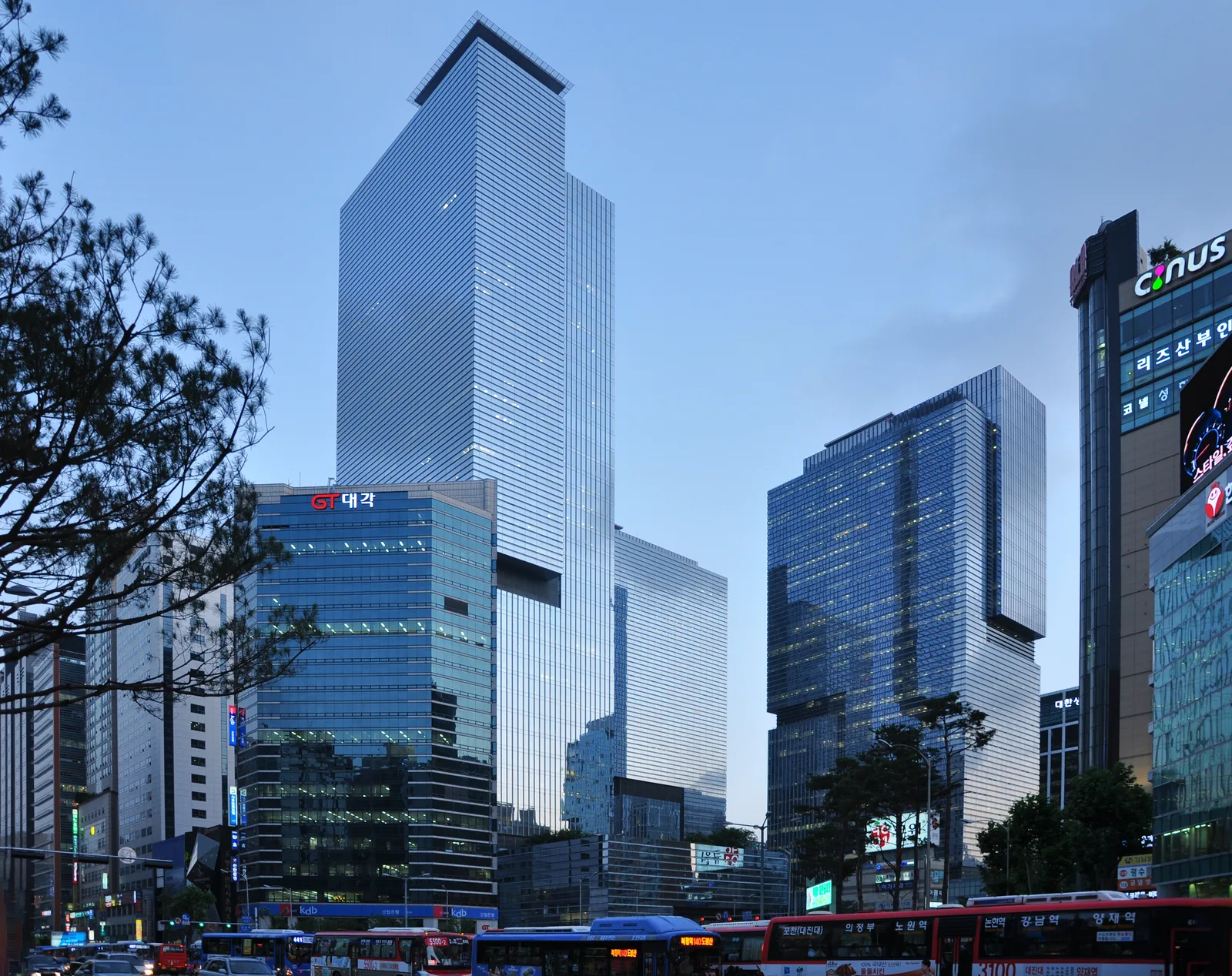 File photo
What happened
Key facts
- Samsung is expanding its semiconductor complex in Pyeongtaek, South Korea (per technologyreview.com).
- The expansion is linked to increasing demand for chips used in AI (per technologyreview.com, cryptobriefing.com).
- Fujifilm Electronic Materials USA president and Fujifilm vice president Brian O’Donnelly said AI is driving demand for materials used in processes at 2 nanometers and below (per thelec.net).
The brief
Samsung has restarted construction of a fifth semiconductor fab at its complex in Pyeongtaek, South Korea, after halting work during a 2024 decline in memory-chip demand. Technology Review reports that the renewed construction follows rising demand linked to the AI boom. Crypto Briefing’s headline also describes Samsung’s Pyeongtaek expansion as meeting AI demand.
The complex already has three fabs operating around the clock, while a fourth is coming online, according to Technology Review. The outlet describes the fifth fab as a construction project Samsung had paused and then resumed; its account connects that change in work to the shift from falling memory-chip demand in 2024 to increased AI-related demand.
The Lec’s excerpt offers a separate view of demand pressures in semiconductor manufacturing through materials supplier Fujifilm. Brian O’Donnelly, president of Fujifilm Electronic Materials USA and a Fujifilm vice president, said AI is increasing demand for materials used in manufacturing processes at 2 nanometers and below.
He also said the expansion of advanced manufacturing processes has increased demand for argon fluoride, or ArF, and extreme ultraviolet, or EUV, photoresists. The Lec states that Fujifilm holds more than 80% of the global market for the materials it discusses. It says production and inspection equipment for EUV photoresist at both locations began operating in October 2025.
The excerpt does not identify the locations by name, so it does not connect them to Samsung’s Pyeongtaek site. Fujifilm plans to raise production capacity by approximately 30%, with additional facilities scheduled to start operating in the first half of 2027, The Lec reports.
The excerpt says the company has 18 production sites worldwide and aims to work with customers on developing and manufacturing process materials while providing technical support. The Lec also says EUV lithography systems supplied exclusively by ASML, based in the Netherlands, cost approximately 250 billion to 500 billion won per unit.
Its account concerns materials and equipment across advanced chip manufacturing; it does not say Fujifilm’s capacity plans are part of Samsung’s Pyeongtaek project. Samsung’s fab restart and Fujifilm’s stated plans are therefore distinct developments in the coverage, with AI-related demand the link explicitly made between the subjects.
Why it matters
- Samsung’s Pyeongtaek complex has three fabs operating continuously, a fourth coming online, and a fifth under renewed construction, tying the expansion to a concrete increase in manufacturing capacity.
- The 2024 drop in memory-chip demand had led Samsung to halt fifth-fab construction; Technology Review links the restart to rising AI-related demand.
- Fujifilm says AI-related processes at 2 nanometers and below are driving demand for ArF and EUV photoresists, and the company says it holds more than 80% of the global market for the materials discussed.
- Fujifilm’s planned approximately 30% capacity increase and additional facilities scheduled for the first half of 2027 indicate a separate supplier-side expansion in response to demand for advanced manufacturing materials.
What to watch next
- Whether Samsung continues construction of the fifth fab at its Pyeongtaek complex.
- Whether the fourth Pyeongtaek fab comes online, as Technology Review says it is in the process of doing.
- Whether Fujifilm’s additional facilities begin operating in the first half of 2027, as scheduled.
- Whether Fujifilm carries out its stated plan to increase production capacity by approximately 30%.
How it's being covered
Coverage analysisShow details3 source articles · 3 unique outletsOutlet political mix: Too few rated· 1 Center · 2 unratedWhere the outlets are based: Unknown 67% · US/Canada 33%
How outlets' accounts compare
Timeline
Developments from this story's sources, dated background we compiled and fact-checked, and our earlier coverage. Each row says which.- Samsung Electronics was established.Background · compiled and fact-checked by Updat3
- The memory technologies used in AI computing have their own earlier history: JEDEC published its first High Bandwidth Memory standard in 2013, defining a way to move data quickly between memory and processors.Background · from our historical context
- Samsung Electronics began construction of its first semiconductor production line in Pyeongtaek.Background · compiled and fact-checked by Updat3
- Samsung Electronics began operating its Pyeongtaek semiconductor plant.Background · compiled and fact-checked by Updat3
- Google researchers first submitted the paper “Attention Is All You Need,” which introduced the transformer architecture.Background · compiled and fact-checked by Updat3
- Samsung began mass-producing chips at the third plant in its Pyeongtaek complex.Background · compiled and fact-checked by Updat3
- In May 2022, Samsung announced a five-year investment plan of 450 trillion won for semiconductors and other businesses.Background · from our historical context
- OpenAI released ChatGPT publicly in November 2022, bringing generative AI to a broad user base and adding to demand for the computing infrastructure used to train and run AI systems.Background · from our historical context
- Samsung halted construction of its fifth Pyeongtaek fab during a downturn in memory-chip demand.Background · compiled and fact-checked by Updat3
How we got here
Samsung began building its Pyeongtaek semiconductor campus in 2015, and its first production line there started operating in 2017; the company began mass-producing chips at the campus’s third plant in 2022. In May 2022, Samsung announced a five-year investment plan of 450 trillion won for semiconductors and other businesses.
The memory technologies used in AI computing have their own earlier history: JEDEC published its first High Bandwidth Memory standard in 2013, defining a way to move data quickly between memory and processors. Google researchers’ 2017 paper “Attention Is All You Need” introduced the transformer architecture, which later underpinned many large language models.
Original sources
2 of 3 articles · Unknown · Show allEvery story links to the reporting it was built from. How we choose sources
Spotted a factual error, a broken link or a misleading summary? Tell us.