
Sanwo-Olu unveils Lagos food security plan focused on productivity and access
Lagos Governor Babajide Sanwo-Olu unveiled a five-point food security strategy at a World Food Day event in Ikeja. The plan emphasizes more efficient food production, innovation and reaching households, according to THISDAY.
AI-assisted synthesis · Based on 3 independent reports from 5 outlets · Article text read from 1 of 3 reportsHow it's made
View timeline · 10 entries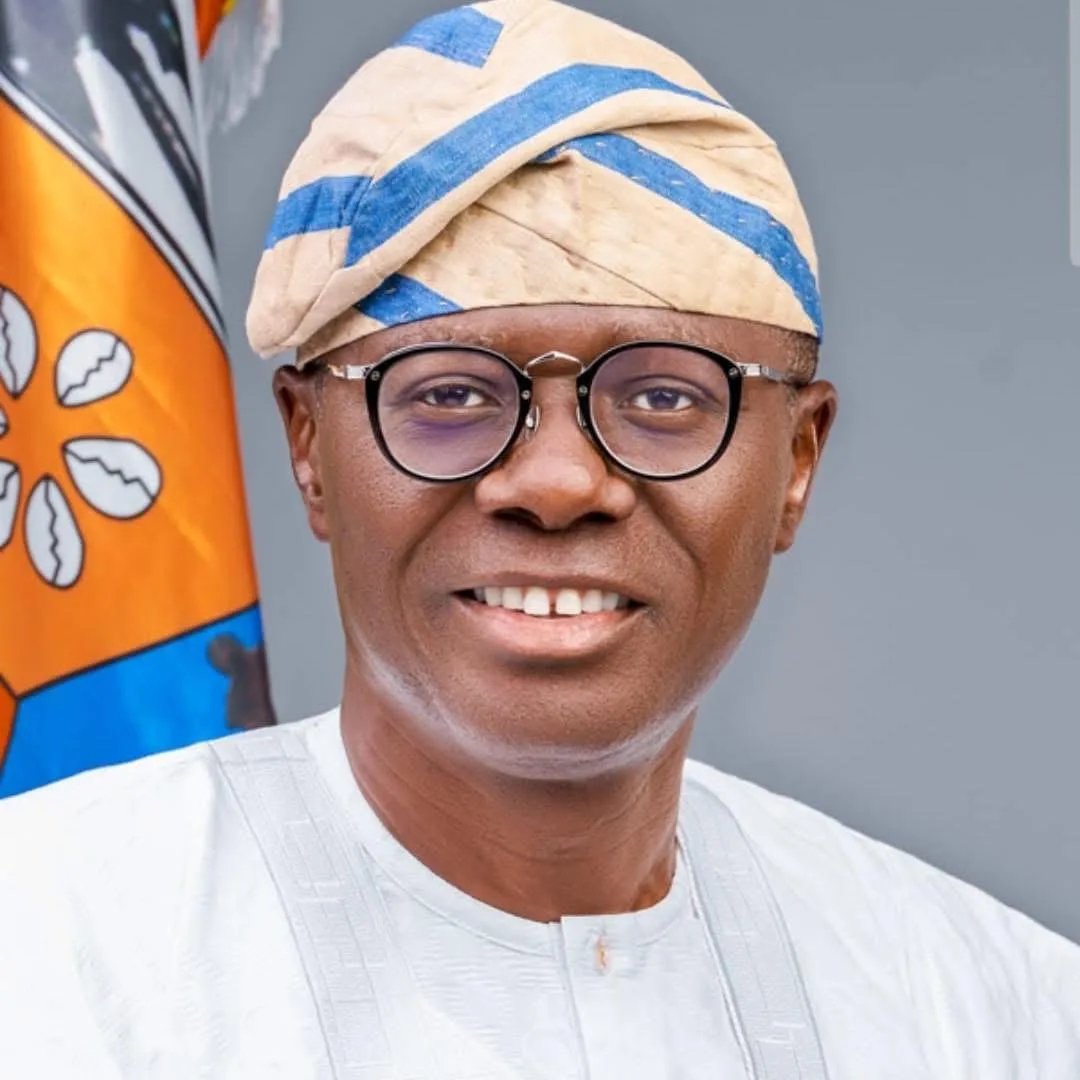 File photo
What happened
Key facts
- Sanwo-Olu announced the strategy at the World Food Day event’s grand finale at the Police College in Ikeja (per thisdaylive.com).
- Sanwo-Olu was represented at the event by his deputy, Dr. Kadiri Hamzat (per thisdaylive.com).
- Sanwo-Olu said food security in Lagos should rely on intensity and efficiency rather than expanding land use (per thisdaylive.com, newtelegraphng.com, thesun.ng).
- Sanwo-Olu said innovation should deliver practical results from farms and processing centres through markets and into households’ kitchens (per thisdaylive.com).
- Sanwo-Olu said October 16 is observed annually as World Food Day, marking the founding of the Food and Agriculture Organization of the United Nations in 1945 (per thisdaylive.com).
The brief
Lagos Governor Babajide Sanwo-Olu unveiled a five-point food security strategy at the grand finale of the World Food Day event at the Police College in Ikeja, according to THISDAY. The announcement set out a focus on strengthening agriculture and food security in the state. Sanwo-Olu’s deputy, Dr. Kadiri Hamzat, represented him at the event.
THISDAY reported that Sanwo-Olu described Lagos as Nigeria’s smallest state by landmass, with a population exceeding 22 million. In his remarks, he said the state’s approach to food security would emphasize intensity and efficiency rather than expansion of land use. The remarks present productivity and efficient use of available land as central to the strategy.
Sanwo-Olu said innovation should move beyond research and ideas to practical outcomes. He described a path spanning farms, processing centres, marketplaces and household kitchens, linking agricultural production and food handling to access by consumers. The account does not detail specific projects or measures under each of the plan’s five points.
The governor said the strategy was intended to galvanise growth in Lagos’s agricultural sector. His remarks connected that goal with making innovation practical across the food chain, rather than limiting it to research. The account presents this as the plan’s stated direction; it does not set out targets or quantify expected changes in production, prices or access.
Sanwo-Olu also referred to World Food Day, saying it is observed annually on October 16 to commemorate the founding of the Food and Agriculture Organization of the United Nations in 1945. The event’s grand finale took place at the Police College in Ikeja, where Hamzat delivered the governor’s remarks on his behalf.
The plan’s central stated approach is to pursue food security through intensity and efficiency, while translating innovation into practical results from production through household kitchens. The announcement did not specify how the five points would be implemented or when particular measures would begin.
Why it matters
- The strategy addresses food security in Lagos, a state THISDAY describes as having a population exceeding 22 million.
- Its stated mechanism is to emphasize intensity and efficiency rather than expanding land use.
- Sanwo-Olu’s remarks connect practical innovation across farms, processing centres and marketplaces with food reaching household kitchens.
- The governor said the strategy aims to galvanise growth in Lagos’s agricultural sector.
What to watch next
- Whether Lagos sets out the specific measures covered by the five-point strategy.
- Whether the state announces targets for agricultural production or food access.
- Whether officials identify how practical innovation will be applied across farms, processing centres, marketplaces and households.
How it's being covered
Coverage analysisShow details5 source articles · 5 unique outlets · 3 distinct reportsOutlet political mix: Too few rated· 1 Center · 4 unratedWhere the outlets are based: Africa 80% · Unknown 20%
- Coverage is currently concentrated among outlets based in Africa (4 of 5 geographically-identified sources).
One source is from a wire service (AP, Reuters, AFP or Bloomberg), whose reporting other outlets often republish.
How outlets' accounts compare
Timeline
Developments from this story's sources, dated background we compiled and fact-checked, and our earlier coverage. Each row says which.- At the international level, the Food and Agriculture Organization of the United Nations was founded on October 16, 1945.Background · from our historical context
- Nigeria established the Federal Ministry of Agriculture and Rural Development.Background · compiled and fact-checked by Updat3
- The FAO Conference established World Food Day.Background · compiled and fact-checked by Updat3
- The first World Food Day was observed.Background · compiled and fact-checked by Updat3
- Nigeria launched the Agricultural Transformation Agenda under President Goodluck Jonathan.Background · compiled and fact-checked by Updat3
- In 2015, the Central Bank of Nigeria introduced the Anchor Borrowers’ Programme to connect smallholder farmers with processors and provide agricultural financing.Background · from our historical context
- In 2019, Babajide Sanwo-Olu’s first-term THEMES agenda made food security part of Lagos State’s policy programme, alongside transport, health and education.Background · from our historical context
- The state’s investment in local rice production became a prominent example: the Lagos Rice Mill at Imota was built to process rice for the Lagos market, and the state introduced its Eko Rice brand in December 2019.Background · from our historical context
- The mill was commissioned in January 2023, extending that effort from farm production into processing and supply.Background · from our historical context
- Lagos State commissioned the rice mill at Imota.Background · compiled and fact-checked by Updat3
How we got here
In 2019, Babajide Sanwo-Olu’s first-term THEMES agenda made food security part of Lagos State’s policy programme, alongside transport, health and education. The state’s investment in local rice production became a prominent example: the Lagos Rice Mill at Imota was built to process rice for the Lagos market, and the state introduced its Eko Rice brand in December 2019.
The mill was commissioned in January 2023, extending that effort from farm production into processing and supply. The federal policy setting included the Agricultural Promotion Policy for 2016–2020, which followed Nigeria’s Agricultural Transformation Agenda, launched in 2011 under President Goodluck Jonathan.
Original sources
4 of 5 articles · Africa · Show allEvery story links to the reporting it was built from. How we choose sources
Spotted a factual error, a broken link or a misleading summary? Tell us.