
Source alleges Dutch government hacked Jared Kushner’s phone
The account does not identify which Dutch service acted, when or how it accessed the phone, or what it obtained, limiting conclusions about the operation’s purpose and the intelligence it yielded.
AI-assisted synthesis · Based on 5 outlets' reporting · Article text read from 4 of 5 outlets · 1 article captured only in partHow it's made
View timeline · 6 entries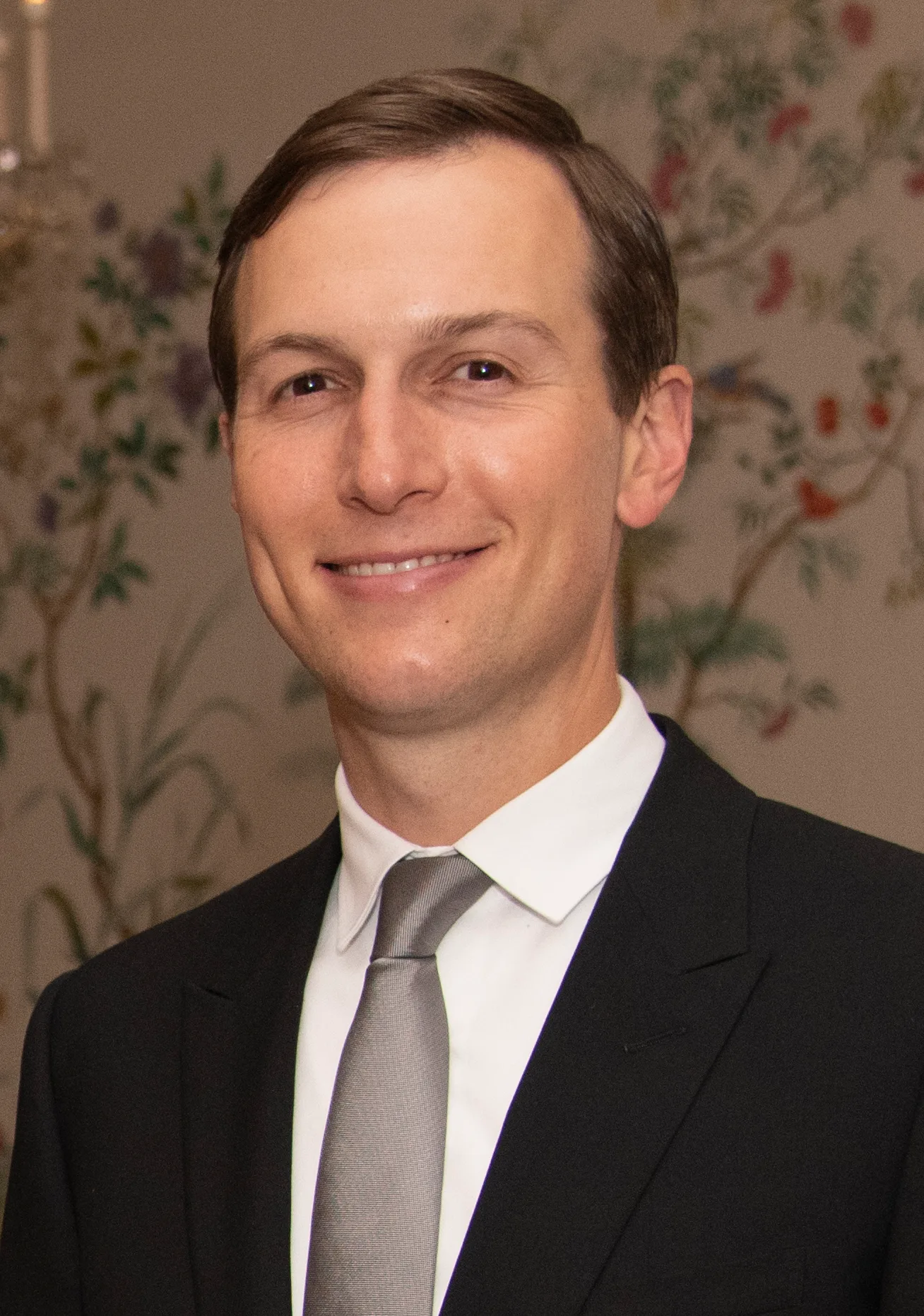 File photo
What happened
Key facts
- Matthew Cole wrote that a source contacted him in late spring 2020 with a claim that the Dutch government had hacked Jared Kushner’s phone and monitored him accessing a Dubai-based bank account.
- The source said the account held hundreds of millions of dollars originating from a bank in Azerbaijan.
- The source alleged Kushner transferred significant sums from the Dubai account to a warlord, a mercenary and a one-time hit man.
- Cole wrote that another acquaintance affirmed knowing about Kushner and transfers from a UAE account after he asked about them six months later.
The brief
Matthew Cole alleges that the Netherlands Defense Intelligence and Security Service accessed Jared Kushner’s iPhone after finding a vulnerability in the device. In an excerpt from his book, Cole says the MIVD had identified the vulnerability by early 2018, giving the Dutch intelligence service access to the phone.
Vanity Fair published the excerpt, while The Deep Dive summarized its account of the intelligence operation. Cole says a source he considered reliable contacted him in late spring 2020 with the story. His excerpt describes Kushner using an iPhone X and says the flaw enabled the MIVD to view and capture images displayed on the screen as he used the device.
The excerpt presents this as Cole’s account of what Dutch intelligence discovered and did; it does not offer a public statement from the MIVD. The Deep Dive supplies related operational context from Cole’s account: in late 2017, a GRU operative who handled stolen banking records was heading to the United Kingdom, where Dutch intelligence officers confronted him.
The same outlet says Cole placed the MIVD’s discovery of its own iPhone vulnerability by early 2018. This chronology places the reported phone access after that separate intelligence encounter, but it does not independently verify either account. Cole’s excerpt also links the phone story to Kushner’s financial relationships in the Gulf.
According to the source Cole recounts, an account based in Dubai held hundreds of millions of dollars originating from a bank in Azerbaijan. That source alleged Kushner moved significant sums from the account to a warlord, a mercenary and a former hit man. Cole adds that another acquaintance later said he knew about Kushner and transfers from a UAE account.
The excerpt describes Kushner Companies as facing a billion-dollar loan due on its Manhattan office building at 666 Fifth Avenue. It says discussions with Gulf royals initially involved more than $10 billion, while Mohamed bin Zayed alone put at least $2 billion into at least two Kushner accounts.
Cole identifies one account at First Abu Dhabi Bank and says it was overseen by Tahnoon bin Zayed, the bank’s chairman. Vanity Fair frames the excerpt as an examination of bank accounts connecting Kushner to Israel, the UAE and Saudi Arabia.
Kushner rejected the allegations in a statement reported by Gizmodo, calling them “completely insane and never happened” and “outrageous fabrications.” He also characterized the reporting as a mixture of fantasy, fiction and advocacy. Gizmodo reported that his counsel had threatened a lawsuit; that account does not establish that a case was filed.
The outlets emphasize different parts of Cole’s account: Daily Kos foregrounds the alleged account and transfers, The Deep Dive highlights the GRU operative and the Dutch officers’ encounter, and Vanity Fair presents the material through Kushner’s Gulf-linked finances. Gizmodo centers Kushner’s denial and the threatened legal action.
The reported operation and financial allegations therefore remain claims attributed to Cole and his sources, alongside Kushner’s denial.
Why it matters
- If verified, the reported access would mean Dutch intelligence may have obtained information from a phone used by Jared Kushner, a former senior U.S. official, potentially exposing material relevant to U.S. national security. The account could lead U.S. agencies and officials to review how they secure and use personal devices, and to investigate whether any sensitive information was accessible.
What to watch next
- Whether the MIVD publicly addresses Cole’s account of access to Kushner’s iPhone.
- Whether Kushner’s counsel files the lawsuit that Gizmodo reported had been threatened.
- Whether Cole or the people he describes provide further evidence for the alleged Dubai and UAE account transfers.
- Whether Kushner offers further public comment beyond the denial reported by Gizmodo.
How it's being covered
Coverage analysisShow details5 source articles · 5 unique outletsOutlet political mix: Mostly Left· 2 Left · 1 Center · 2 unratedWhere the outlets are based: US/Canada 40% · Unknown 40% · Other 20%
How outlets' accounts compare
2 framing differences · 3 uncorroborated claims · 3 information gaps- Daily Kos emphasizes Cole’s alleged phone access and the Dubai account transfers; The Deep Dive foregrounds the GRU operative and Dutch officers’ encounter; Vanity Fair frames the excerpt around Kushner’s Gulf-linked banking relationships; Gizmodo focuses on Kushner’s denial and the reported legal threat.
- Cole attributes the phone-access and account-transfer claims to sources he describes; Kushner denies the allegations in a statement reported by Gizmodo.
- Cole’s account alleges Dutch intelligence accessed Kushner’s phone, while Kushner said the allegations never happened.
- Kushner called the allegations “completely insane and never happened,” according to Gizmodo.
- Cole’s source alleged transfers from the Dubai account to a warlord, a mercenary and a former hit man.
- No source provides a statement from the MIVD responding to Cole’s account.
- No source reports a filed lawsuit or a court ruling on the allegations.
- The alleged bank-account transfers and their recipients are claims attributed to Cole’s source; the excerpts do not provide independent verification.
Timeline
Developments from this story's sources, dated background we compiled and fact-checked, and our earlier coverage. Each row says which.- The AIVD’s predecessor, the Binnenlandse Veiligheidsdienst (BVD), was established in 1949, in the early Cold War, to address threats to the Netherlands’ internal security.Background · from our historical context
- The Netherlands and the United States were among the 12 founding members that signed the North Atlantic Treaty on April 4, 1949.Background · from our historical context
- The AIVD took its current name in 2002, when a new intelligence-services law reorganized its statutory basis.Background · from our historical context
- The Netherlands established the AIVD under the Intelligence and Security Services Act.Background · compiled and fact-checked by Updat3
- Jared Kushner joined the Trump administration as a senior adviser.Background · compiled and fact-checked by Updat3
- The Dutch Senate passed the Intelligence and Security Services Act 2017.Background · compiled and fact-checked by Updat3
How we got here
Matthew Cole’s account concerns access to a phone belonging to Jared Kushner, who served as a senior adviser to President Donald Trump from January 2017 to January 2021. The report, as described, does not say when the access occurred, identify the Dutch service involved, explain how the phone was accessed, or state whether officers obtained messages, contacts, or other data.
The Netherlands has two principal intelligence and security services. The Review Committee on the Use of Powers (TIB) reviews certain authorizations before they take effect, while the Review Committee on the Intelligence and Security Services (CTIVD) oversees the services’ conduct. The services’ work also sits within a broader Dutch security system.
Original sources
5 articles from 5 outletsEvery story links to the reporting it was built from. How we choose sources
Spotted a factual error, a broken link or a misleading summary? Tell us.