
Ukraine says Starlink limits ended after disrupting military operations
Ukraine said Starlink and its military version, Starshield, had returned to full operation after more than a week of restrictions. Ukrainian officials said the limits hindered efforts to intercept Russian attack drones and led to some operations being cancelled.
AI-assisted synthesis · Based on 7 independent reports from 9 outlets · Article text read from 2 of 7 reportsHow it's made
View timeline · 11 entries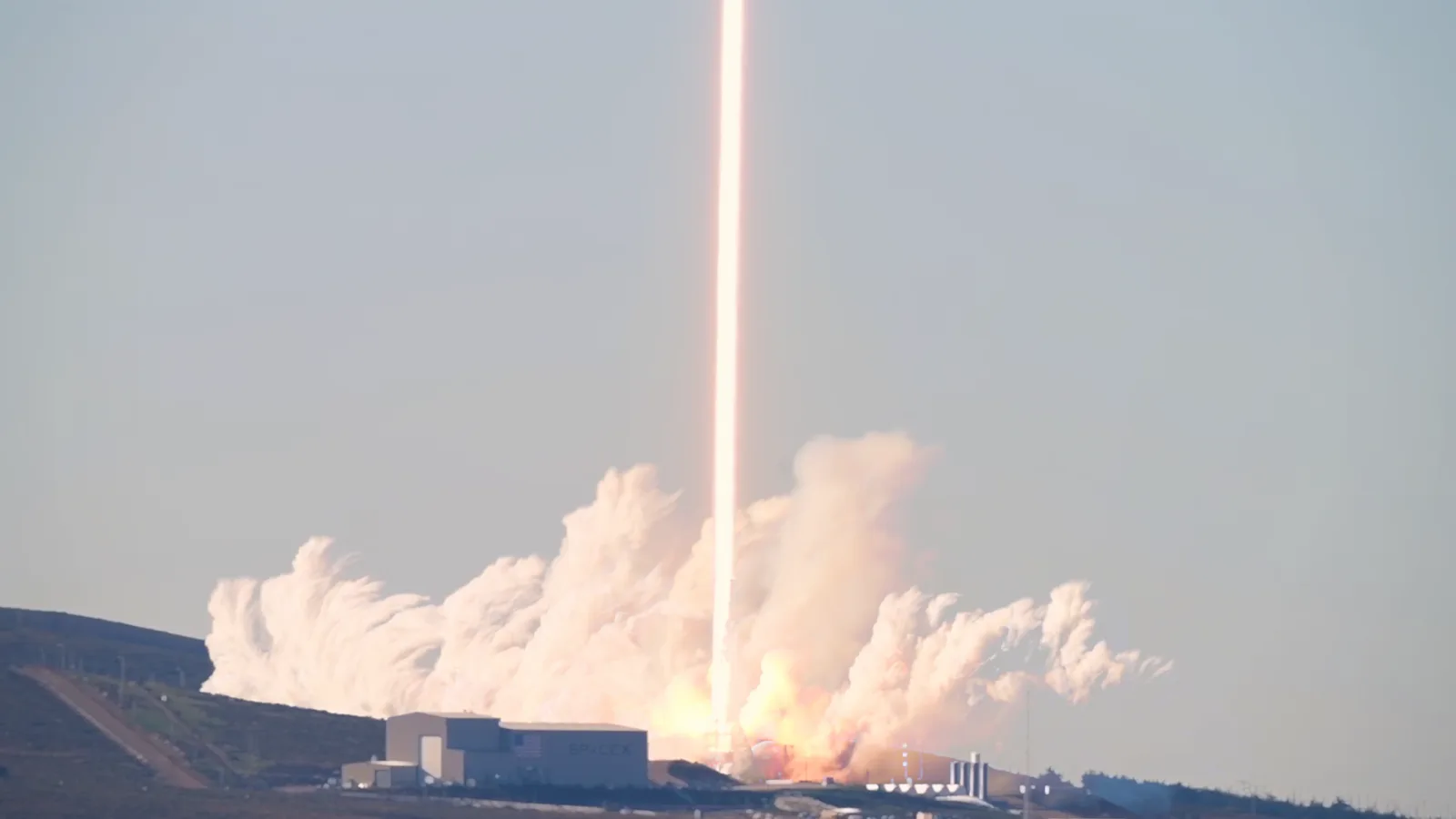 File photo
What happened
Key facts
- Ukraine said Starlink and Starshield were fully functional again after more than a week of restrictions or frontline disruption (per CNA, tribune.com.pk, Al Arabiya).
- Ukrainian officials said the restrictions capped operations at speeds of 160 kph; tribune.com.pk also gives the equivalent as 100 mph (per tribune.com.pk).
- Ukrainian officials said the restrictions hindered the military's ability to intercept Russian attack drones and forced the cancellation of some operations (per CNA, tribune.com.pk).
- Ukraine's defence ministry said the connection was stable at speeds above 400 kph (per CNA, tribune.com.pk, Al Arabiya).
- Elon Musk said Ukraine's military had violated Starlink's terms of service and used it for offensive drone strikes to kill people (per CNA, tribune.com.pk).
The brief
Ukraine said Starlink and its military version, Starshield, had returned to full operation after more than a week of restrictions that Ukrainian officials said disrupted military operations. Ukraine's defence ministry said the connection was stable at speeds above 400 kph. The restrictions had capped operations at 160 kph, according to Ukrainian officials.
Ukrainian officials said the speed limit hampered the military's ability to intercept Russian attack drones and forced the cancellation of some operations. The accounts do not detail how many operations were cancelled or how many drones the military could not intercept. The stated impact is on Ukraine's military operations; the sources give no civilian casualty figures.
Elon Musk said Ukraine's military had breached Starlink's terms of service and used the system for offensive drone strikes intended to kill people. He also said on X that a loophole had been closed the previous week.
His remarks provide his account of the restrictions and their enforcement; Ukrainian officials described the effect on their operations but did not address the alleged terms-of-service violation in the excerpts. A Ukrainian official, Beskrestnov, said the relevant operation runs at speeds no higher than 70-90 kph.
That account sits alongside the Ukrainian officials' statement that restrictions capped operations at 160 kph and the defence ministry's report of a stable connection above 400 kph. The figures refer to different stated speeds, and the accounts do not explain their technical relationship.
CNA and The Express Tribune both report that Ukraine said the systems were fully functional again after more than a week of restrictions. Their accounts also carry the Ukrainian officials' explanation that the cap hindered drone interception and prompted cancellations. The Express Tribune renders the cap as 160 kph, or 100 mph; CNA gives 160 kph.
South China Morning Post, The Washington Times, The Moscow Times and Arab News also describe speeds or service as restored after a week of disruption or throttling. NBC News frames the limits as having hobbled Ukraine's drones, while Al Arabiya and Reuters highlight the reported operating speed above 400 kph.
The immediate account is therefore a restoration announced by Ukraine, alongside an unresolved technical contrast among the cited speed figures and Musk's separate claim about use of the service. The sources do not identify who imposed the restrictions or explain the technical mechanism behind them.
Why it matters
- Starlink connectivity supports Ukrainian forces’ communications and drone operations, so restrictions can reduce their ability to detect and intercept Russian attack drones and may force missions to be cancelled. The reported restoration removes that immediate constraint, but the episode highlights Ukraine’s dependence on a privately controlled satellite network—and SpaceX’s terms and access decisions can directly affect military operations.
What to watch next
- Whether Ukraine's defence ministry continues to report a stable Starlink and Starshield connection above 400 kph.
- Whether Ukrainian officials provide further information about the cancelled operations and the impact on efforts to intercept Russian attack drones.
- Whether Elon Musk or Ukrainian officials give further details about the alleged terms-of-service violation and the loophole Musk said was closed.
How it's being covered
Coverage analysisShow details9 source articles · 9 unique outlets · 7 distinct reportsOutlet political mix: Mostly Center· 1 Left · 5 Center · 1 Right · 2 unratedWhere the outlets are based: Asia 33% · US/Canada 22% · Other 45%
One source is from a wire service (AP, Reuters, AFP or Bloomberg), whose reporting other outlets often republish.
How outlets' accounts compare
2 framing differences · 3 uncorroborated claims · 4 information gaps- NBC News describes the limits as having hobbled Ukraine's drones; Al Arabiya and Reuters emphasize the reported connection speed above 400 kph.
- Musk's account in CNA focuses on alleged misuse of Starlink, while Ukrainian officials focus on the restrictions' effects on military operations.
- Ukraine's officials attribute operational disruption to the speed restrictions; Musk attributes the restrictions to alleged misuse and closure of a loophole.
- Musk said, “That loophole was closed last week.”
- Ukraine's defence ministry said the connection was stable above 400 kph.
- The sources do not identify who imposed the restrictions or describe the technical mechanism behind them.
- The sources provide no civilian casualty figures or count of cancelled operations.
- Musk alleged that Ukraine's military violated Starlink's terms and used the service for offensive drone strikes; the Ukrainian officials quoted in the excerpts do not address that allegation.
- The accounts do not explain how the 70-90 kph operating speed cited by Beskrestnov relates to the 160 kph cap or the reported stable connection above 400 kph.
Timeline
Developments from this story's sources, dated background we compiled and fact-checked, and our earlier coverage. Each row says which.- Elon Musk founded SpaceX.Background · compiled and fact-checked by Updat3
- Russia annexed Crimea from Ukraine.Background · compiled and fact-checked by Updat3
- SpaceX launched its first 60 operational Starlink satellites.Background · compiled and fact-checked by Updat3
- SpaceX announced Starshield, a government-focused satellite service for defense customers.Background · compiled and fact-checked by Updat3
- SpaceX activated Starlink service in Ukraine and terminals were supplied there.Background · compiled and fact-checked by Updat3
- Russia’s February 24, 2022 invasion expanded the war across Ukraine.Background · from our historical context
- In September 2022, reports described Starlink connectivity failures during Ukrainian advances into Russian-occupied territory; Musk said that month the service had not been designed for warfare.Background · from our historical context
- Elon Musk publicly questioned whether SpaceX should continue paying for Starlink service in Ukraine.Background · compiled and fact-checked by Updat3
- SpaceX president Gwynne Shotwell said the company had restricted Starlink use for offensive drone operations in Ukraine.Background · compiled and fact-checked by Updat3
- The Pentagon confirmed it had contracted with SpaceX to provide Starlink services in Ukraine.Background · compiled and fact-checked by Updat3
- In September 2023, Musk said he had declined a Ukrainian request to extend Starlink coverage to Sevastopol, citing concern that the network could be used for an attack on Russia’s Black Sea Fleet.Background · from our historical context
How we got here
SpaceX began deploying Starlink terminals in Ukraine after Russia launched its full-scale invasion on February 24, 2022; Ukraine’s digital-transformation minister, Mykhailo Fedorov, asked Elon Musk for help on February 26, and Musk said service had been activated.
The terminals provided satellite internet where conventional communications were damaged or unavailable, and Ukrainian forces later used the network for battlefield communications and drone operations.
Original sources
9 articles from 9 outletsEvery story links to the reporting it was built from. How we choose sources
Spotted a factual error, a broken link or a misleading summary? Tell us.