
Student-led opposition defeats Vucic in Serbia parliamentary elections
The student-led opposition defeated Serbian President Aleksandar Vucic in parliamentary elections in Serbia, ending his 14-year period in power, according to the Washington Examiner. The result leaves Washington in an awkward position as Serbia balances ties with Russia, the EU, China and the United States.
AI-assisted synthesis · Based on 6 outlets' reporting · Article text read from 2 of 6 outlets · 1 article captured only in partHow it's made
View timeline · 11 entries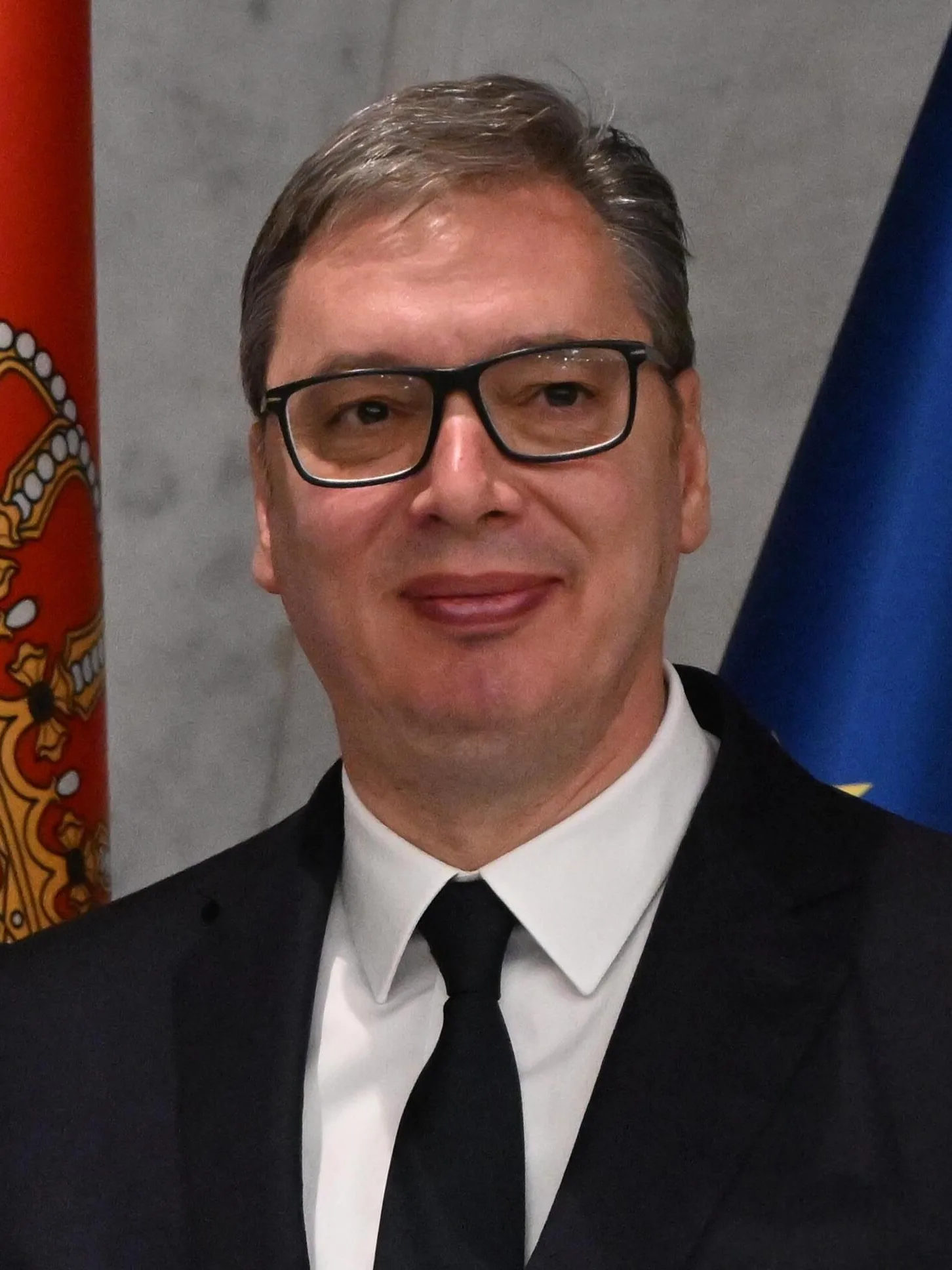 File photo
What happened
Key facts
- Vucic had served as prime minister or president since 2014 and frequently visited Moscow.
- The Washington Examiner reported that the student-led opposition won Serbia’s parliamentary elections and defeated President Aleksandar Vucic.
- The article said Serbia has balanced relations with Russia, the European Union, China and the United States under Vucic.
- The defeat came six months after Viktor Orban was ousted in an election in Hungary.
The brief
A student-led movement defeated Aleksandar Vucic in Serbia’s parliamentary election, ending his time in power, according to the Washington Examiner and The Japan Times. The outlets describe the victors as a student-led opposition or protest movement; headlines from DW, Meduza and Xinhua also reported a student-led movement’s victory or Vucic’s concession.
The accounts place the election on Sunday, but do not provide a calendar date for the vote. The result prompted celebrations across Serbia, The Japan Times reported, while DW’s headline described crowds celebrating in Belgrade. The Washington Examiner said Vucic’s 14-year period in power had ended.
The two accounts describe his tenure differently: The Japan Times said he had held the prime minister or president role since 2014, while the Washington Examiner traced his leadership of the Serbian Progressive Party to 2012, his appointment as prime minister to 2014, and his presidency to 2017. The coverage also situates the result in Serbia’s relationships with major powers.
The Washington Examiner said Serbia had balanced ties with Russia, the European Union, China and the United States under Vucic. The Japan Times emphasized his relationship with Moscow, describing him as a frequent visitor and saying Russia regarded Serbia as a crucial European ally. That account also characterized Serbia as a partner Russia had now lost.
The Japan Times placed the election in a wider sequence of electoral outcomes in Europe, saying Vucic’s defeat came six months after Viktor Orban was ousted in Hungary. It described the result as casting gloom over Moscow. The Washington Examiner, by contrast, centered its account on the student movement’s domestic political significance and Serbia’s foreign relationships.
Vuk Vuksanovic, whom the Washington Examiner identified as a lecturer in foreign policy and grand strategy education at King’s College London, said the student movement had disrupted a pattern of political apathy and cynicism. He linked that pattern to the traumas of the 1990s and disappointments after the transition following Slobodan Milosevic.
His comments were an assessment of the movement’s political significance, rather than an account of the election result’s practical consequences. The reports establish the election defeat, public celebrations and the competing emphasis on Serbia’s domestic politics and ties with Moscow.
They do not provide the vote totals, turnout, or details of the new leaders’ governing plans. The result therefore establishes a change in political leadership, while leaving the shape of the incoming government unclear.
Why it matters
- Serbia’s voters face a change in national leadership after the student-led movement defeated Vucic; the reports describe celebrations but provide no vote totals or turnout figures to measure the result’s scale.
- The change affects the political relationship described between Serbia and Russia: The Japan Times says Moscow viewed Serbia under Vucic as a crucial European ally.
- Serbia’s foreign relationships are also at stake in the coverage: the Washington Examiner says Vucic’s government balanced ties with Russia, the European Union, China and the United States.
- The Japan Times links the result to a sequence of election defeats for Moscow’s partners, placing it six months after Viktor Orban’s defeat in Hungary.
What to watch next
- How the student-backed movement forms Serbia’s incoming leadership after its parliamentary election victory.
- Whether the new leadership maintains or changes the balance of relations with Russia, the European Union, China and the United States described by the Washington Examiner.
- Whether Serbia’s relationship with Moscow changes, given the Japan Times’ account that Russia viewed Serbia under Vucic as a crucial ally.
How it's being covered
Coverage analysisShow details6 source articles · 6 unique outletsOutlet political mix: Mixed· 1 Left · 3 Center · 1 Right · 1 unratedWhere the outlets are based: US/Canada 33% · Asia 33% · Other 34%
One source is from a wire service (AP, Reuters, AFP or Bloomberg), whose reporting other outlets often republish.
How outlets' accounts compare
2 framing differences · 1 uncorroborated claim · 2 information gaps- The Washington Examiner emphasizes Vucic’s 14 years in power and the student movement’s domestic political significance; The Japan Times focuses on the result’s effect on Moscow and Serbia’s role as a Russian partner.
- The Japan Times presents the result as a loss for Moscow; the Washington Examiner instead describes Serbia’s balancing of relationships with Russia, the European Union, China and the United States.
- Vuk Vuksanovic told the Washington Examiner that the movement had broken a cycle of political apathy, cynicism and indifference.
- The reports do not give vote totals or turnout.
- The reports do not describe the incoming leaders’ governing plans or a transition timetable.
Timeline
Developments from this story's sources, dated background we compiled and fact-checked, and our earlier coverage. Each row says which.- NATO began bombing the Federal Republic of Yugoslavia during the Kosovo war.Background · compiled and fact-checked by Updat3
- The SNS was founded in 2008 by former members of the Serbian Radical Party, including Tomislav Nikolić and Vučić.Background · from our historical context
- Kosovo declared independence from Serbia.Background · compiled and fact-checked by Updat3
- The Serbian Progressive Party won Serbia’s parliamentary election.Background · compiled and fact-checked by Updat3
- Serbia received European Union candidate status in March 2012, but successive governments have also maintained close links with Moscow and Beijing.Background · from our historical context
- Serbia and Russia signed a strategic partnership agreement.Background · compiled and fact-checked by Updat3
- Aleksandar Vučić became Serbia’s prime minister.Background · compiled and fact-checked by Updat3
- Aleksandar Vučić was elected president of Serbia.Background · compiled and fact-checked by Updat3
- In the parliamentary election of December 17, 2023, Aleksandar Vučić’s Serbian Progressive Party (SNS) won a majority, but opposition parties and international observers challenged the conduct of the vote.Background · from our historical context
- The OSCE’s election-observation mission reported in February 2024 that the campaign had been dominated by Vučić’s involvement and that pressure on voters and misuse of public resources had affected the process.Background · from our historical context
- These events formed the immediate political backdrop to the student-led protests that emerged after the collapse of a railway-station canopy in Novi Sad on November 1, 2024.Background · from our historical context
How we got here
In the parliamentary election of December 17, 2023, Aleksandar Vučić’s Serbian Progressive Party (SNS) won a majority, but opposition parties and international observers challenged the conduct of the vote.
The OSCE’s election-observation mission reported in February 2024 that the campaign had been dominated by Vučić’s involvement and that pressure on voters and misuse of public resources had affected the process.
Original sources
1 of 6 articles · Unknown · Show allEvery story links to the reporting it was built from. How we choose sources
Spotted a factual error, a broken link or a misleading summary? Tell us.