
India Supreme court Affirms children’s Internet Right, Demands removal of abuse material
The Supreme Court of India said children have a fundamental right to access and use the internet under constitutional protections. The court called for stronger safeguards against online exploitation, including parental controls and child-mode features on social media platforms.
AI-assisted synthesis · Based on 5 outlets' reporting · Article text read from 2 of 5 outletsHow it's made
View timeline · 8 entries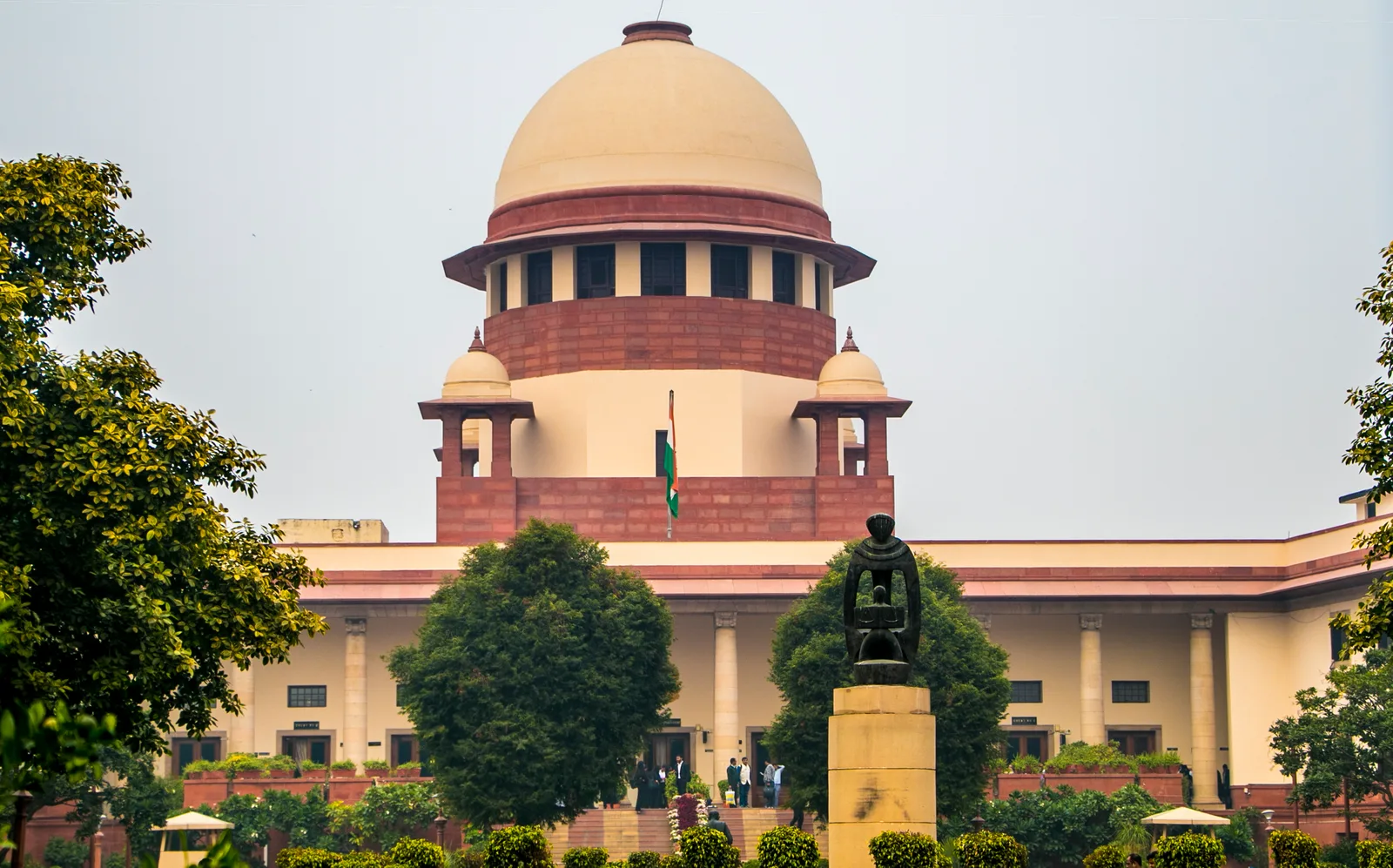 File photo
What happened
Key facts
- The Supreme Court said children have a fundamental right to access the internet (per nationpathindia.com, tribuneindia.com, The Indian Express).
- The court called for stricter parental controls and child-mode controls on social media platforms (per NDTV).
- The court called for removal of child sexual abuse material (per NDTV).
The brief
The Supreme Court of India said children have a fundamental right to access and use the internet, while calling for safeguards against online exploitation. Its observations place children’s online access and protection from abuse material together: the court’s position, as reported, rejects treating a broad restriction on access as the only protective approach.
Justices J B Pardiwala and K V Chandran made the observations while hearing applications concerning child sexual exploitation and abuse material. NationPath India describes the matter as involving platforms’ detection, reporting and removal of such material.
NDTV reports that the bench called for stricter parental controls, child-mode controls on social media platforms and removal of sex abuse material. The constitutional basis cited by the court was Article 21, which safeguards life and personal liberty, read with Article 19(1)(a), which protects freedom of speech and expression.
The two provisions frame the issue as both access to the internet and protection from exploitation, rather than access alone. The proceedings followed applications by the child rights NGO Just Rights for Children Alliance and another applicant, according to NDTV.
The applicants alleged that social media platforms were not meeting legal obligations to report child sexual exploitation and abuse material to Indian authorities. That is an allegation made in the applications, not a finding of non-compliance established in the reported account. The coverage emphasizes different parts of the court’s approach.
NationPath India foregrounds children’s fundamental right to use the internet and the need for systems to address exploitation; NDTV gives more attention to the practical safeguards, including parental and child-mode controls.
The Hindu, The Tribune and The Indian Express headlines also report the court’s recognition of children’s internet-access right, while The Indian Express headline additionally highlights a warning against a blanket ban.
The immediate question raised by the ruling is how the stated protections will be put into practice: platforms’ controls and handling of abuse material, and the government’s role in enforcing online rules. NDTV poses that enforcement question, but the reported material does not specify a particular enforcement mechanism or timetable.
Why it matters
- Children’s access to the internet is directly at stake: the court describes it as a fundamental right, linked to constitutional protections for personal liberty and expression.
- Children’s protection from online exploitation depends on mechanisms identified in the coverage: parental controls, child-mode settings, and platforms’ detection, reporting and removal of abuse material.
- The applications allege that social media platforms failed to report child sexual exploitation and abuse material to Indian authorities, putting platform compliance and public oversight at issue.
- The government’s enforcement role matters because NDTV raises how the online rules will be implemented; the coverage identifies no specific enforcement process.
What to watch next
- Whether the government sets out how it will enforce the online rules, a question raised by NDTV.
- Whether social media platforms introduce or strengthen parental controls and child-mode controls, the safeguards the court called for.
- How platforms handle detection, reporting and removal of child sexual exploitation and abuse material, the subject of the applications.
- Whether the allegations about reporting such material to Indian authorities are addressed in the proceedings.
How it's being covered
Coverage analysisShow details5 source articles · 5 unique outletsOutlet political mix: Center Only· 4 Center · 1 unratedWhere the outlets are based: Asia 80% · Unknown 20%
- Coverage is currently concentrated among Center-rated outlets (4 of 4 rated sources); comparatively few Left or Right-rated outlets have published on the event.
- Coverage is currently concentrated among outlets based in Asia (4 of 5 geographically-identified sources).
How outlets' accounts compare
2 framing differences · 1 uncorroborated claim · 2 information gaps- NationPath India leads with the constitutional right to internet access and platform systems for addressing exploitation; NDTV emphasizes parental controls, child-mode features and removal of abuse material.
- The Indian Express headline highlights the court’s warning against a blanket ban; The Tribune headline foregrounds the recognition of children’s internet-access right.
- NDTV quotes the court as saying that internet access is a fundamental right under Article 21 read with Article 19(1)(a).
- The coverage does not provide details of a specific government enforcement mechanism or implementation timetable.
- NDTV reports applicants’ allegations that platforms failed to meet reporting duties; the coverage does not present a court finding that platforms violated those duties.
Timeline
Developments from this story's sources, dated background we compiled and fact-checked, and our earlier coverage. Each row says which.- India ratified the United Nations Convention on the Rights of the Child on 11 December 1992.Background · from our historical context
- India enacted the Information Technology Act, which governs electronic records and online conduct.Background · compiled and fact-checked by Updat3
- India’s Information Technology (Amendment) Act added Section 67B, criminalizing specified electronic material depicting children in sexually explicit acts.Background · compiled and fact-checked by Updat3
- India enacted the Protection of Children from Sexual Offences Act, criminalizing a range of sexual offences against people under 18.Background · compiled and fact-checked by Updat3
- A significant early decision came on 19 September 2019, when the Kerala High Court ruled in *Faheema Shirin v. State of Kerala* that access to the internet was part of the right to education and the right to privacy.Background · from our historical context
- In January 2020, the Supreme Court’s judgment in *Anuradha Bhasin v. Union of India* addressed internet shutdowns in Jammu and Kashmir.Background · from our historical context
- In 2021, the Union government issued the Information Technology (Intermediary Guidelines and Digital Media Ethics Code) Rules.Background · from our historical context
- A direct recent precedent is the Supreme Court’s 23 September 2024 judgment in *Just Rights for Children Alliance v. S. Harish*.Background · from our historical context
How we got here
The ruling sits at the intersection of two legal developments: Indian courts’ recognition that internet access is essential to exercising existing rights, and Parliament’s expansion of protections against the sexual exploitation of children. The Constitution does not expressly name a right to internet access.
Instead, courts have considered how access relates to rights such as education, privacy and freedom of expression. A significant early decision came on 19 September 2019, when the Kerala High Court ruled in *Faheema Shirin v. State of Kerala* that access to the internet was part of the right to education and the right to privacy.
Original sources
1 of 5 articles · Unknown · Show allEvery story links to the reporting it was built from. How we choose sources
Spotted a factual error, a broken link or a misleading summary? Tell us.