
Supreme Court bars judges from urging custody in investigations
The Supreme Court held that courts should not tell investigating agencies to seek custodial interrogation of an accused or suspect. The bench said broad remarks about taking people into custody could jeopardise liberty, while granting anticipatory bail to a retired school principal and his wife in a Gujarat case.
AI-assisted synthesis · Based on 2 outlets' reporting · 1 article captured only in partHow it's made
View timeline · 5 entries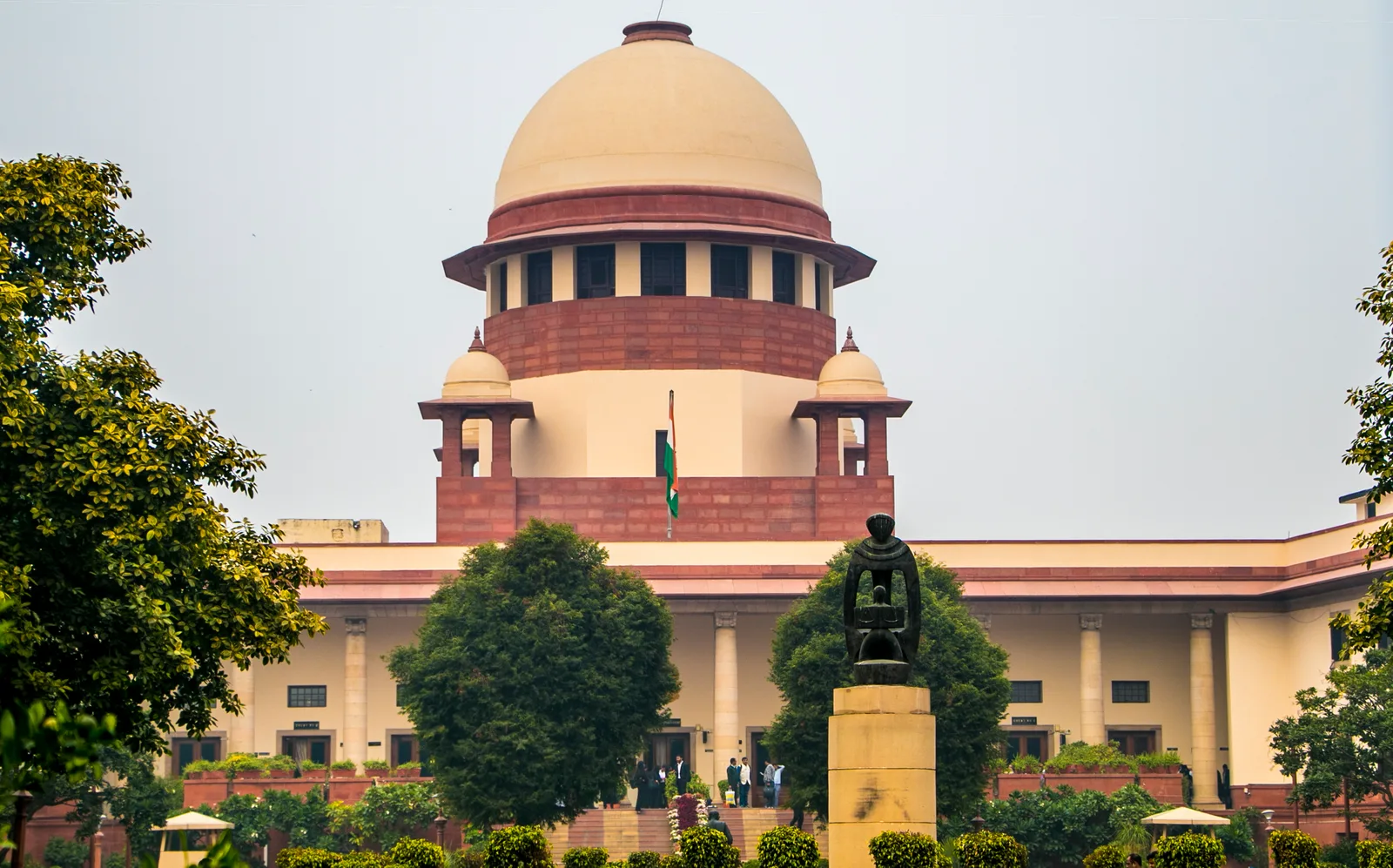 File photo
What happened
Key facts
- The Supreme Court held that courts should not advise investigating agencies to subject an accused or suspect to custodial interrogation (per Hindustan Times, India Today).
- The bench cautioned that sweeping judicial remarks about taking other accused or suspects into custody could jeopardise their liberty (per Hindustan Times).
- The Supreme Court granted anticipatory bail to retired school principal Vijayan and his wife, Veena.
The brief
The Supreme Court held that courts should not direct investigating agencies to seek custodial interrogation of an accused or suspect, warning that sweeping judicial comments about custody can jeopardise liberty.
The bench said decisions about whether to seek custody should remain with the investigating agency and cautioned judges against making broad remarks about other people accused or suspected in a case. The court made the observation while granting anticipatory bail to a retired school principal and his wife in a Gujarat case.
The prosecution alleged that the principal manipulated service records to extend his employment by a year and obtain more than ₹10.75 lakh in salary and service benefits. The allegations concern his recorded birth date and retirement date; they are not findings of guilt.
According to the prosecution, Goswami initially recorded his birth date as June 19, 1964, which would have meant retirement on June 30, 2022. Prosecutors alleged that he later changed records to state a birth date of June 19, 1965, enabling another year in service.
The Supreme Court’s custody guidance arose in that bail ruling, but the court’s stated principle concerns judicial comments that could influence investigating agencies’ decisions about custody. A separate Supreme Court matter involving appeals to the Kerala High Court also appears in the coverage, but it concerns a different procedural issue.
On October 15, a division bench of the Kerala High Court rejected applications by Vijayan, Veena and Riyas for permission to appeal against an October 9 order. Justices Joymalya Bagchi and V Mohana later allowed them to approach the division bench against that order. India Today’s account focuses on the political response to that Kerala appeal development.
Sunny Joseph defended the preliminary inquiry, said the ruling would ease Congress criticism and urged party leaders to raise criticism through internal forums. He told reporters, “Justice hurried is justice buried,” and described internal party channels as the disciplined way to handle criticism.
The two matters should not be conflated: the Gujarat ruling addresses judicial guidance on custodial interrogation and anticipatory bail, while the Kerala account describes a route for challenging an earlier High Court order and a party leader’s reaction. The coverage does not establish that the Supreme Court’s custody guidance governed the Kerala appeal proceedings.
Why it matters
- The ruling limits judges’ ability to steer investigations toward arrest or custodial questioning, a measure that can pressure agencies to detain people before their guilt is established. Suspects and accused people gain protection from broad judicial remarks that could undermine their liberty, while investigators retain responsibility for deciding whether custody is necessary and must justify that choice under the law.
What to watch next
- Over the next few weeks, watch whether investigating agencies make their own, evidence-based requests for custodial interrogation in comparable cases, rather than relying on judges to prompt them.
- Review subsequent High Court and lower-court orders in active investigations for whether judges avoid broad directions about taking accused people or suspects into custody.
- Watch whether prosecutors seek to challenge or modify the anticipatory-bail protection granted to the retired principal and his wife.
How it's being covered
Coverage analysisShow details2 source articles · 2 unique outletsOutlet political mix: Too few rated· 2 CenterWhere the outlets are based: Asia 100%
- Coverage is currently limited to 2 outlets.
How outlets' accounts compare
2 framing differences · 2 uncorroborated claims · 2 information gaps- Hindustan Times centres the Supreme Court’s rule on judicial comments about custodial interrogation and liberty; India Today focuses on the separate Kerala appeal development and Sunny Joseph’s party-related comments.
- The alleged alteration of Goswami’s birth date and the claimed salary and service benefits are presented as prosecution allegations, not established findings.
- The Supreme Court said decisions about custodial interrogation should be left to investigating agencies and cautioned against sweeping observations about taking other accused or suspects into custody.
- Sunny Joseph said, “Justice hurried is justice buried.”
- The coverage does not identify the specific investigating agency or describe any later decision about seeking custodial interrogation in the Gujarat case.
- The service-record manipulation and salary-benefit allegations are attributed to the prosecution; the coverage does not report a finding of guilt.
Timeline
Developments from this story's sources, dated background we compiled and fact-checked, and our earlier coverage. Each row says which.- India’s Constitution took effect, establishing the Supreme Court and giving it power under Article 129 to punish contempt of itself.Background · compiled and fact-checked by Updat3
- The Supreme Court ruled in Gurbaksh Singh Sibbia v. State of Punjab that anticipatory-bail applications should be assessed on their circumstances.Background · compiled and fact-checked by Updat3
- Basu v. State of West Bengal*, decided on December 18, 1996.Background · from our historical context
- The Supreme Court ruled in Arnesh Kumar v. State of Bihar against routine arrests in offences punishable by up to seven years.Background · compiled and fact-checked by Updat3
- The Bharatiya Nagarik Suraksha Sanhita replaced the Code of Criminal Procedure and retained anticipatory bail in Section 482.Background · compiled and fact-checked by Updat3
How we got here
The immediate dispute arose from a Gujarat criminal investigation in which a retired school principal and his wife sought protection from arrest. The Supreme Court granted them anticipatory bail and addressed how courts should speak about investigators’ use of custody.
Its concern was not limited to the couple’s applications: remarks urging investigators to take other accused or suspects into custody could affect people who were not before the court and expose them to pressure on their liberty.
Original sources
2 articles from 2 outletsEvery story links to the reporting it was built from. How we choose sources
Spotted a factual error, a broken link or a misleading summary? Tell us.