
Supreme Court defers Kerala journalist Siddique Kappan's plea for release of passport to November 2
The Supreme Court deferred journalist Siddique Kappan’s request to have his passport released until November 2. Kappan had deposited the passport as a bail condition in the Hathras conspiracy case.
AI-assisted synthesis · Based on 4 outlets' reporting · Article text read from 3 of 4 outletsHow it's made
View timeline · 8 entries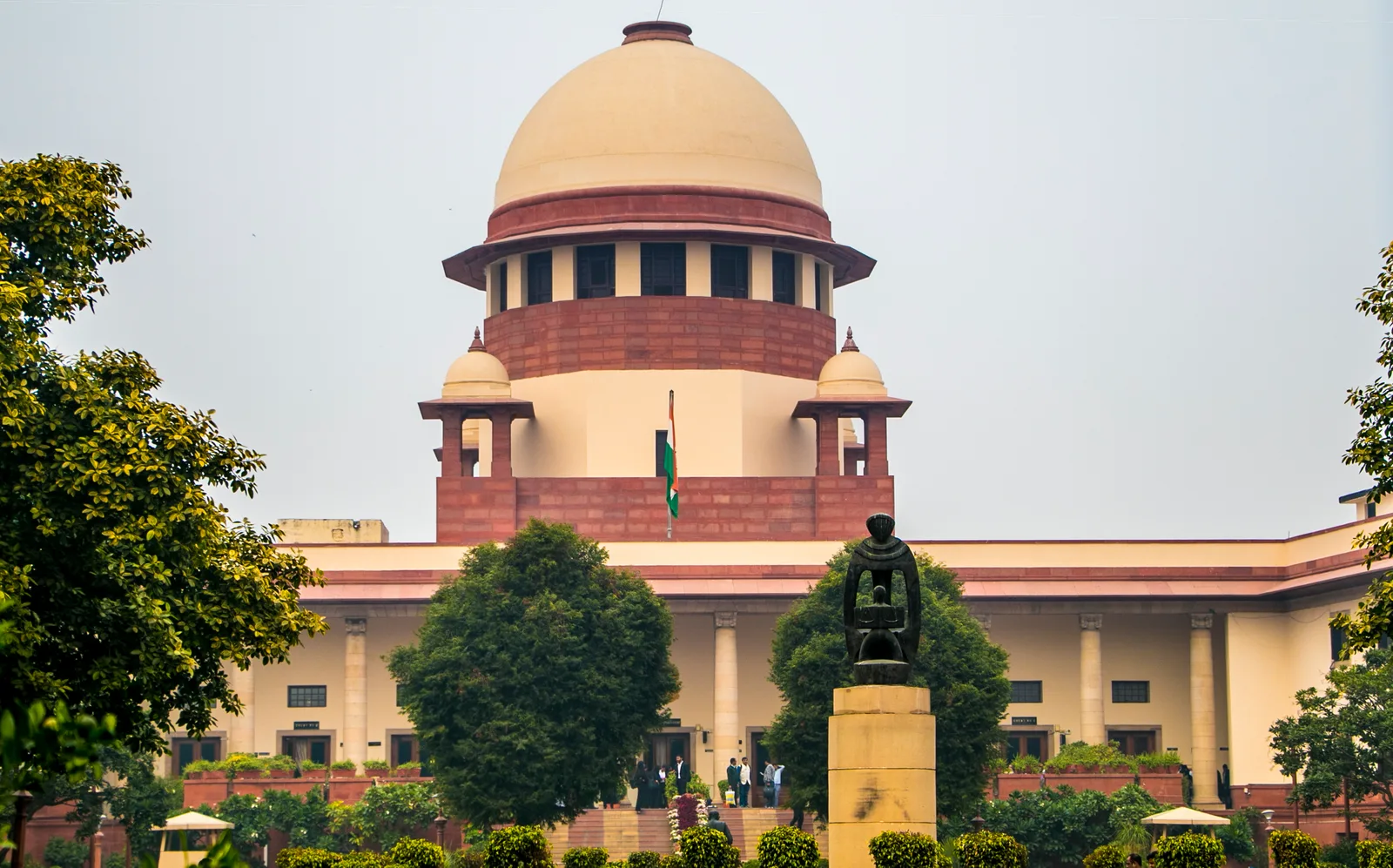 File photo
What happened
Key facts
- Kappan is a Kerala-based journalist (per India Today, Hindustan Times).
- Kappan sought the release of his passport, which he had deposited as a bail condition in the Hathras conspiracy case (per India Today, Hindustan Times, deccanherald.com).
- The Supreme Court bench accepted the request to defer the hearing and said it would take up the matter on November 2 (per India Today, Hindustan Times, The Hindu).
- Authorities arrested Kappan in Hathras, Uttar Pradesh, on October 6, 2020, while he was travelling there to report on the case involving the alleged rape and murder of a Dalit girl (per India Today, Hindustan Times, deccanherald.com).
- The Allahabad High Court had dismissed Kappan’s bail plea in 2022 (per Hindustan Times, India Today).
The brief
The Supreme Court deferred Kerala-based journalist Siddique Kappan’s plea to have his passport released until November 2. The bench agreed to a request to postpone the hearing and said it would take up the matter on that date. Kappan had deposited his passport under the bail conditions in the Hathras conspiracy case, and his plea seeks its return.
The hearing concerns a condition attached to Kappan’s bail. The court’s decision to defer the matter did not resolve his request; the next stated step is for the bench to consider it on November 2. The reports describe the passport’s deposit as part of the bail conditions but do not specify what Kappan intends to do with it.
Authorities arrested Kappan in Hathras, Uttar Pradesh, on October 6, 2020, while he was travelling there to report on the case of a Dalit girl. The accounts describe the case as involving her alleged rape and murder. The arrest and the passport application are distinct events: the current plea concerns the return of a document held under bail conditions.
The Supreme Court granted Kappan bail on September 9, 2022. The Hindustan Times also reports that the Allahabad High Court had dismissed his bail plea in 2022. The Supreme Court’s bail decision followed that earlier court action, while the present hearing addresses the separate question of the passport condition.
The case’s background includes allegations against four men from the girl’s village. The reports say she was allegedly raped on September 14, 2020, and died at a Delhi hospital a fortnight later. Those allegations concern the underlying case; they do not establish Kappan’s guilt or resolve his current request.
The November 2 hearing is therefore the immediate procedural milestone: the Supreme Court is due to consider whether to release Kappan’s passport. The reports do not state what submissions either party made on the passport plea or what order the bench will issue.
Why it matters
- Kappan bears the direct procedural cost: his passport remains deposited under the bail conditions while the Supreme Court postpones consideration of his request.
- The Supreme Court’s November 2 hearing will address the specific mechanism at issue—the passport condition in the Hathras conspiracy case.
- The case involves a Dalit girl who, according to the reports, was allegedly raped by four men from her village and died at a Delhi hospital; the reports provide no casualty totals beyond her death.
What to watch next
- Whether the Supreme Court considers Kappan’s request to release his passport on November 2.
- Whether the bench orders the passport returned or leaves the bail condition in place.
How it's being covered
Coverage analysisShow details4 source articles · 4 unique outletsOutlet political mix: Center Only· 4 CenterWhere the outlets are based: Asia 100%
- Coverage is currently concentrated among Center-rated outlets (4 of 4 rated sources); comparatively few Left or Right-rated outlets have published on the event.
- Coverage is currently concentrated among outlets based in Asia (4 of 4 geographically-identified sources).
How outlets' accounts compare
2 framing differences · 1 uncorroborated claim · 1 information gap- India Today and Hindustan Times identify the passport deposit as a bail condition; Deccan Herald’s excerpt gives arrest background but does not discuss the passport plea.
- Hindustan Times adds that the Allahabad High Court dismissed Kappan’s earlier bail plea in 2022; India Today does not include that detail.
- The reports state that the Supreme Court bench accepted the request to defer the hearing and set it for November 2.
- The reports do not state what submissions the parties made about releasing the passport or the reasons for the requested deferral.
Timeline
Developments from this story's sources, dated background we compiled and fact-checked, and our earlier coverage. Each row says which.- British India introduced Section 124A, the sedition provision later invoked in Kappan’s case.Background · compiled and fact-checked by Updat3
- The UAPA, enacted in 1967, provides for prosecution of unlawful and terrorist activities.Background · from our historical context
- The underlying Hathras investigation followed the assault and death in September 2020.Background · from our historical context
- A Dalit woman was assaulted in Hathras, Uttar Pradesh.Background · compiled and fact-checked by Updat3
- The woman died in hospital after the assault.Background · compiled and fact-checked by Updat3
- AllegedAuthorities arrested Kappan in Hathras, Uttar Pradesh, on October 6, 2020, while he was travelling there to report on the case involving the alleged rape and murder of a Dalit girl.
- India’s Supreme Court put the use of the sedition law on hold while the government reconsidered it.Background · compiled and fact-checked by Updat3
- On September 9, 2022, India’s Supreme Court granted journalist Siddique Kappan bail in the case arising from his arrest in Hathras, Uttar Pradesh.Background · from our historical context
How we got here
On September 9, 2022, India’s Supreme Court granted journalist Siddique Kappan bail in the case arising from his arrest in Hathras, Uttar Pradesh. In 2022, the Allahabad High Court had dismissed his bail plea; the Supreme Court’s later order allowed him to leave custody while the case continued.
Kappan was arrested on October 6, 2020, while travelling to Hathras to report on the case of a Dalit woman who had been assaulted on September 14 and died in hospital on September 29. Police cremated her body during the night of September 29–30, 2020, and the handling of her death became a focus of public scrutiny.
Original sources
4 articles from 4 outletsEvery story links to the reporting it was built from. How we choose sources
Spotted a factual error, a broken link or a misleading summary? Tell us.