
Supreme Court permits private complaints over election affidavits in India
India's Supreme Court ruled that private citizens may file criminal complaints alleging offences over election affidavits, finding that Section 195 of the Code of Criminal Procedure does not bar complaints under Section 125A of the Representation of the People Act. The court said magistrates can make appropriate orders when allegations are frivolous or complaints are intended to harass elected candidates.
AI-assisted synthesis · Based on 4 independent reports from 5 outlets · Full text read from 3 of 4 reportsHow it's made
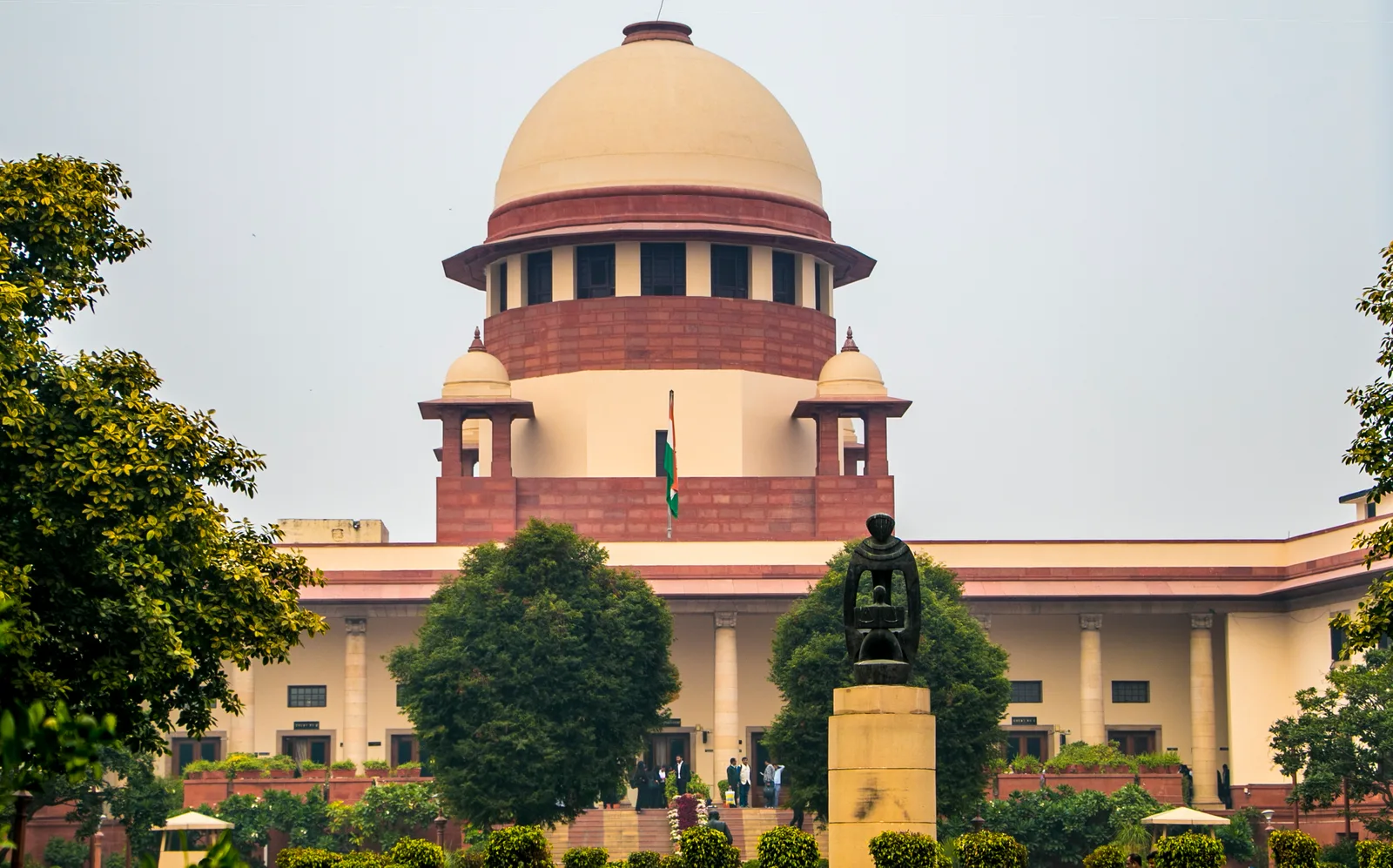 File photo
What happened
Key facts
- The court said Section 195 of the Code of Criminal Procedure does not bar complaints alleging an offence under Section 125A of the Representation of the People Act.
- The court said competent magistrates can make appropriate orders if complaints are intended to harass elected candidates or contain frivolous allegations.
The brief
India’s Supreme Court ruled that private citizens may file criminal complaints alleging offences over election affidavits, holding that Section 195 of the Code of Criminal Procedure does not bar complaints under Section 125A of the Representation of the People Act.
The decision addresses allegations that elected candidates supplied false information or concealed material facts in affidavits; it does not establish that any particular candidate committed an offence. The court issued the ruling while disposing of an appeal by Rajkumar Madki against a Karnataka High Court order dated March 7, 2025.
The Supreme Court bench comprised Justices Dipankar Datta and Sheel Nagu. The judgment therefore resolved the legal question about access to a private complaint, rather than deciding the truth of an allegation against a specific candidate. The Karnataka High Court had said voters could pursue an election petition instead of bringing a private criminal complaint.
The Supreme Court disagreed with that approach on the Section 195 issue, holding that a complaint alleging an offence under Section 125A need not meet Section 195’s restrictions. Its ruling leaves private citizens able to bring such complaints without that restriction blocking the filing.
Section 195 limits criminal courts’ direct cognisance of certain specified offences unless an authorised public servant or relevant court files a written complaint. The Economic Times describes that general restriction and reports the Supreme Court’s conclusion that Section 125A is not covered by it.
The decision turns on the statute’s omission of Section 125A from Section 195’s restrictions, not on a finding that affidavit allegations are true. The Supreme Court said lawmakers should be presumed aware that Section 125A had been added to the Representation of the People Act four years earlier. It treated the provision’s absence from Section 195 as deliberate.
India Today, The Economic Times and Telangana Today each report this statutory reasoning, while Telangana Today also sets out the High Court’s election-petition alternative. The ruling does not make every complaint sufficient to establish wrongdoing.
The Economic Times reports that magistrates can make appropriate orders when a complaint is frivolous or intended to harass an elected candidate. That safeguard is part of the account of how the complaint route may operate; the sources do not report a particular magistrate’s decision under it.
The immediate legal consequence is that Section 195 cannot, by itself, prevent a private complaint alleging a Section 125A offence over an election affidavit. The next steps in any individual matter would depend on the complaint and proceedings before the competent court. The reports do not describe a specific complaint or candidate whose liability the Supreme Court decided.
Why it matters
- Voters may bring private criminal complaints alleging Section 125A offences over election affidavits without Section 195 blocking the filing.
- Elected candidates could face complaints alleging false information or concealed facts in their affidavits, though the ruling itself makes no finding against a particular candidate.
- Magistrates may make appropriate orders when complaints are frivolous or intended to harass elected candidates, according to The Economic Times.
- The decision changes the procedural route described in the Karnataka High Court order, which had pointed voters toward election petitions instead of private criminal complaints.
What to watch next
- Whether voters bring private complaints alleging Section 125A offences over election affidavits.
- How competent magistrates handle complaints that candidates say are frivolous or intended to harass them.
- Whether the Karnataka High Court’s election-petition alternative arises in further proceedings concerning private complaints.
- How courts apply the Supreme Court’s reading of Section 195 to complaints alleging Section 125A offences.
How it's being covered
Coverage analysisShow details5 source articles · 5 unique outlets · 4 distinct reportsCoverage mix: Center Only· 5 CenterWhere the outlets are based: Asia 80% · US/Canada 20%
- Coverage is currently concentrated among Center-rated outlets (5 of 5 rated sources); comparatively few Left or Right-rated outlets have published on the event.
- Coverage is currently concentrated among outlets based in Asia (4 of 5 geographically-identified sources).
One source is from a wire service (AP, Reuters, AFP or Bloomberg), whose reporting other outlets often republish.
How outlets' accounts compare
2 framing differences · 2 uncorroborated claims · 2 information gaps- Telangana Today specifically says the Karnataka High Court had pointed voters to election petitions instead of private criminal complaints; the other excerpts do not include that procedural alternative.
- The Economic Times uniquely highlights magistrates’ ability to address frivolous complaints or harassment; the other excerpts do not mention that safeguard.
- The Supreme Court said the omission of Section 125A from Section 195 should be treated as deliberate.
- The Economic Times reports that magistrates can make appropriate orders when complaints are frivolous or intended to harass elected candidates.
- The sources do not report whether any individual candidate faced a complaint or provide a finding about the truth of any affidavit allegation.
- The sources do not give details of the underlying election-affidavit dispute in Rajkumar Madki’s appeal beyond the challenged High Court order and the legal issue.
How we got here
The immediate backdrop was a Karnataka High Court decision that directed a voter seeking to challenge alleged false or incomplete election-affidavit disclosures toward an election petition rather than a private criminal complaint.
The dispute turned on how Section 125A of the Representation of the People Act, 1951, which makes specified failures or false statements in a candidate’s affidavit punishable, interacts with Section 195 of the Code of Criminal Procedure, 1973.
Original sources
4 of 5 articles · Asia · Show allEvery story links to the reporting it was built from. How we choose sources
Spotted a factual error, a broken link or a misleading summary? Tell us.