
Supreme Court orders ECI to investigate bulk Form 7 applications in Uttar Pradesh
The Supreme Court directed the Election Commission of India to examine allegations that Form 7 applications were submitted in bulk during electoral-roll revision in Uttar Pradesh. The court also ordered the ECI to take any necessary corrective steps and file a compliance report.
AI-assisted synthesis · Based on 5 outlets' reporting · Article text read from 2 of 5 outletsHow it's made
View timeline · 5 entries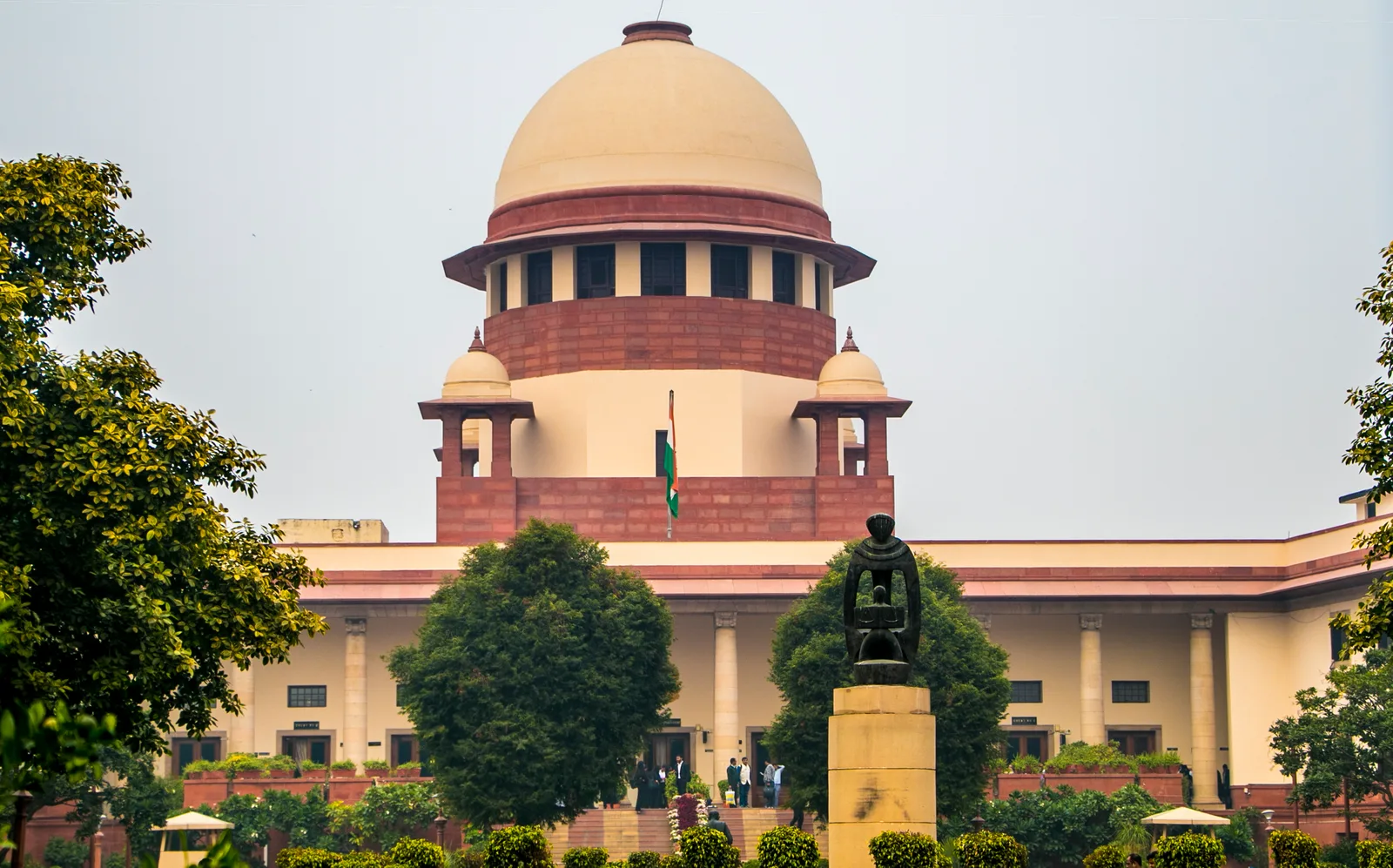 File photo
What happened
Key facts
- Form 7 is used to request removal of a voter's name from the electoral roll (per The New Indian Express).
- Election Commission counsel DS Naidu acknowledged that bulk Form 7 applications had been submitted and said officials checked them and had not acted on them (per The New Indian Express).
- DS Naidu told the court that officials found the applications false and that the Commission had not acted on them (per The New Indian Express, deccanherald.com).
The brief
The Supreme Court has directed the Election Commission of India (ECI) to examine allegations that bulk Form 7 applications were submitted during electoral-roll revision in Uttar Pradesh, and to take necessary corrective steps before filing a compliance report. Form 7 is the application used to seek deletion of a voter’s name from the electoral roll.
The court’s direction calls for an examination of the facts behind the complaints, followed by any necessary action and a report on compliance. The ECI’s counsel, senior advocate DS Naidu, acknowledged that bulk applications had been submitted. He told the bench that election officials checked and cross-checked them, found them false and had not acted on them.
That is the Commission’s account of the applications and its handling of them. A petitioner’s counsel alleged that 32 forms were submitted in one constituency to target members of a particular community.
The allegation concerns both the volume of applications and the community the petitioner’s counsel says they were directed at; Naidu’s statement focused on the officials’ assessment and the Commission’s decision not to act on the applications. The Chief Justice of India said correction of the electoral rolls remains an ongoing process.
The court noted that people left off the rolls by mistake could still approach the Commission through representations, offering a route to seek correction beyond the complaints about bulk applications.
The case therefore puts the ECI’s screening of deletion requests under judicial examination while the Commission continues to receive representations from voters who say they were omitted in error. The court has asked the Commission to examine the factual basis of the allegations, take any corrective action it considers necessary and report its compliance.
Why it matters
- Voters in the Uttar Pradesh constituency cited by the petitioner’s counsel face the direct stakes: Form 7 applications can seek deletion of names from the electoral roll, and the allegation concerns 32 applications.
- The ECI says its officials checked the bulk applications, found them false and did not act on them; the court has directed the Commission to examine the complaints and take necessary corrective steps.
- Voters who say they were mistakenly left off the rolls can submit representations to the Commission, according to the Chief Justice of India.
What to watch next
- Whether the Election Commission examines the factual basis of the bulk Form 7 allegations.
- Whether the Commission takes corrective steps after its examination.
- Whether the Election Commission files the compliance report directed by the Supreme Court.
- Whether voters omitted in error submit representations to the Commission and seek correction.
How it's being covered
Coverage analysisShow details5 source articles · 5 unique outletsOutlet political mix: Mostly Center· 1 Left · 3 Center · 1 unratedWhere the outlets are based: Asia 100%
- Coverage is currently concentrated among Center-rated outlets (3 of 4 rated sources); comparatively few Right-rated outlets have published on the event.
- Coverage is currently concentrated among outlets based in Asia (5 of 5 geographically-identified sources).
How outlets' accounts compare
2 framing differences · 2 uncorroborated claims · 2 information gaps- The New Indian Express reports the court’s direction alongside the ECI counsel’s account and the petitioner’s allegation about 32 forms; the Deccan Herald excerpt adds the Chief Justice of India’s point that omitted voters can seek correction through representations.
- The claim that 32 forms targeted members of a particular community is attributed to a petitioner’s counsel; the claim that the forms were false and not acted upon is attributed to ECI counsel DS Naidu.
- DS Naidu said officials found the applications false and that the ECI had not acted on them.
- The petitioner’s counsel alleged that 32 forms were submitted in one constituency to target members of a particular community.
- The sources do not identify the constituency or the community mentioned in the petitioner’s allegation.
- The petitioner’s counsel alleged that 32 applications in one constituency targeted members of a particular community; DS Naidu said officials found the bulk applications false and that the ECI had not acted on them.
Timeline
Developments from this story's sources, dated background we compiled and fact-checked, and our earlier coverage. Each row says which.- The Election Commission was constituted on January 25, 1950.Background · from our historical context
- India issued the Registration of Electors Rules, which prescribed Form 7 for objections to inclusion in an electoral roll.Background · compiled and fact-checked by Updat3
- The Supreme Court decided Lakshmi Charan Sen v. A.K.M. Hassan Uzzaman, addressing electoral rolls and election timing.Background · compiled and fact-checked by Updat3
- The Election Commission introduced photo identity cards for voters.Background · compiled and fact-checked by Updat3
- The Election Commission ordered a Special Intensive Revision of electoral rolls in Bihar.Background · compiled and fact-checked by Updat3
How we got here
The immediate legal backdrop to disputes over Form 7 is the system of electoral-roll revision established under India’s Representation of the People Act, 1950, and the Registration of Electors Rules, 1960. Rule 13 of the 1960 rules prescribes Form 7 for an objection to a person’s inclusion in a roll or a request to delete a name.
The 1950 Act created the statutory basis for preparing and revising electoral rolls, including provisions for correcting or deleting entries. Section 22 covers correction of entries and deletion of names in specified circumstances; section 23 provides for adding names. Section 31 makes knowingly false statements in connection with electoral registration punishable.
Original sources
5 articles from 5 outlets · Asia · Show allEvery story links to the reporting it was built from. How we choose sources
Spotted a factual error, a broken link or a misleading summary? Tell us.