
Supreme Court issues notice on plea challenging Delhi Police order de‑notifying Jantar Mantar as protest site
A lawyer filed a writ petition in the Supreme Court challenging the Delhi Police standing order dated October 11 that removed Jantar Mantar as a designated protest site. The Supreme Court issued notice on the petition and the Delhi High Court has set a related hearing for November 17.
AI-assisted synthesis · Based on 5 outlets' reporting · Full text read from 3 of 5 outletsHow it's made
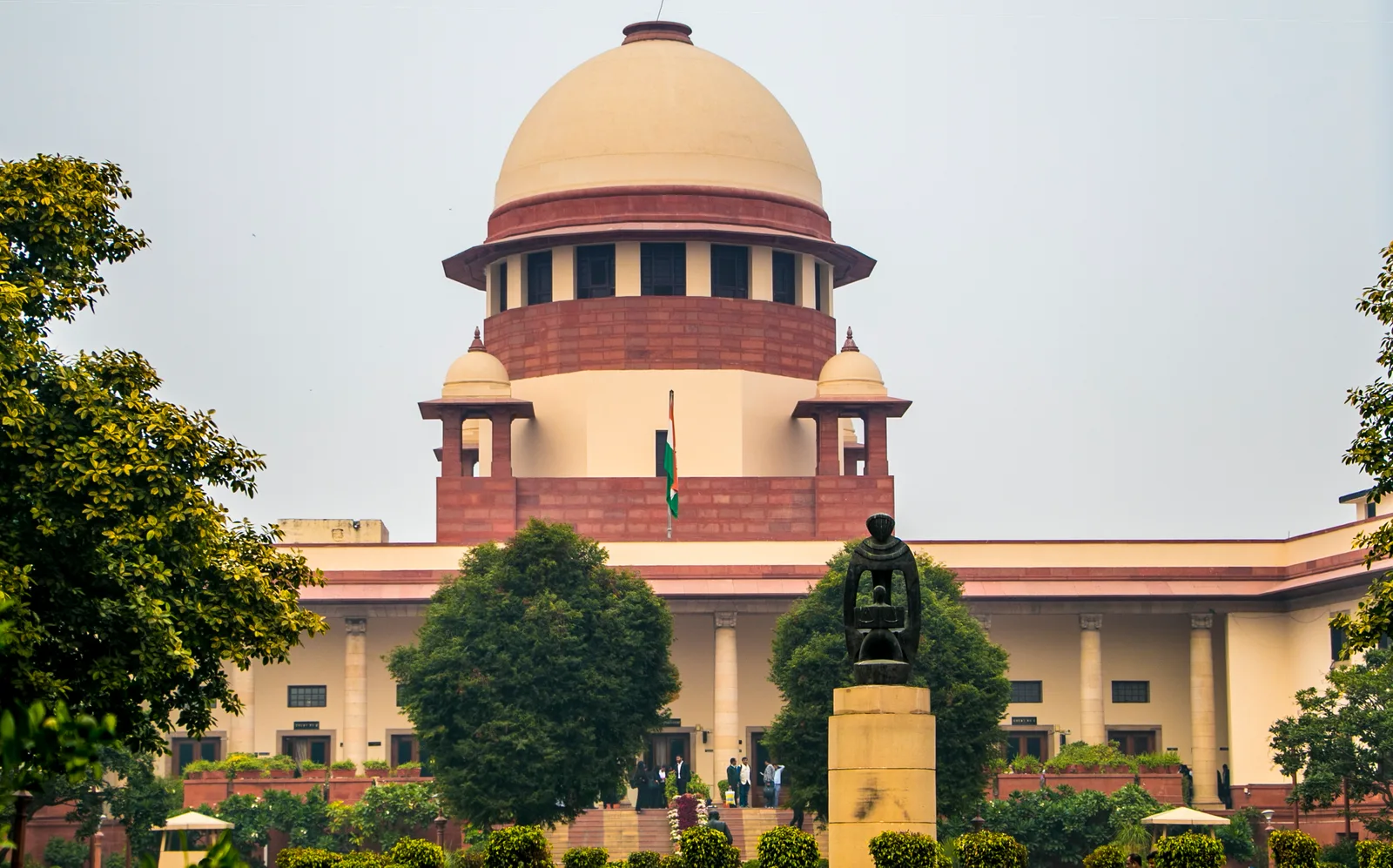 File photo
What happened
Key facts
- A writ petition has been filed in the Supreme Court challenging a Standing Order dated October 11 that de-notified Jantar Mantar as a designated protest site (per courtbook.in, livelaw.in).
- The petition argues relocating protests to distant or outlying venues may render the rights to peaceful assembly and freedom of expression ineffective and relies on Mazdoor Kisan Shakti Sangathan v. Union of India (2018) (per courtbook.in, livelaw.in).
- Delhi Police said the de-notification followed suggestions from a committee set up by the Union Home Ministry (per courtbook.in).
The brief
A petition challenging Delhi Police’s October 11 standing order that removed Jantar Mantar from the list of designated protest sites has prompted the Supreme Court to issue notice.
The petition, filed as a writ, contends that shifting demonstrations away from Jantar Mantar to more distant venues will undermine the constitutional rights to freedom of speech and peaceful assembly and cites the Supreme Court’s 2018 decision in Mazdoor Kisan Shakti Sangathan v. Union of India.
The standing order was signed by Police Commissioner Anurag Kumar and, according to the petition, also designates three alternative protest locations but lacks accompanying revised standard operating procedures for those sites.
Delhi Police told the Delhi High Court that the de-notification followed a Supreme Court order dated October 9 and said it acted after suggestions from a committee constituted by the Union Home Ministry.
The petitioners and their counsel, including advocate Swaty Singh as named in filings, argue the administrative decision is arbitrary and procedurally deficient, stressing that the regulatory framework for exercising the right to protest at the newly notified venues remains incomplete.
Sources reporting the petition note reliance on the 2018 Mazdoor Kisan Shakti Sangathan ruling to argue that a wholesale denial of Jantar Mantar as a protest site is not permissible.
The Supreme Court’s issuance of notice brings the dispute to the apex court, while a related matter was listed before a single-judge bench of the Delhi High Court led by Justice Amit Mahajan; that bench issued notice on a reconsideration request and scheduled a hearing for November 17.
Delhi Police described the denotification as a step taken after the Union Home Ministry committee's suggestions and linked it to a Supreme Court direction dated October 9, according to reporting that cites the police statement in the High Court.
Petitioners argue practical barriers will follow from relocating protests to outlying locations and that without clear, published standard operating procedures the exercise of assembly rights will be uncertain.
Delhi Police and the Home Ministry committee position the change as part of a reconsideration of where protests may be held so they do not hinder public safety, a rationale the police communicated in court filings reported by one outlet. The petition therefore seeks judicial scrutiny of both the legality and the procedural regularity of the October 11 standing order.
The case now pending on notice in the Supreme Court will determine whether the police order stands while the High Court proceeds with a separate reconsideration hearing on November 17.
How the courts balance the petitioners’ reliance on precedent protecting protest sites against the police and Home Ministry committee’s stated public-safety rationale will decide the regulatory regime for public demonstrations at Jantar Mantar and the alternative venues named in the standing order.
Why it matters
- Residents near central Delhi who previously used Jantar Mantar bear the concrete cost: relocating protests to distant venues could reduce the visibility and immediate reach of demonstrations, diminishing demonstrators’ ability to address authorities in the Capital (petitioners’ argument and the standing order's designation of alternate sites).
- Protest organisers face a specific procedural hurdle: the revised standard operating procedures for the three newly notified venues have not been issued, creating legal and operational uncertainty for those planning demonstrations (petitioners’ challenge in filings).
- Delhi Police and the Union Home Ministry have a documented administrative interest in changing protest locations via the committee’s suggestions and the Police Commissioner’s standing order, which the police say follows a Supreme Court direction dated October 9; that institutional pathway is the mechanism by which the change was implemented.
What to watch next
- Whether the Supreme Court proceeds beyond issuing notice to hear substantive arguments in the writ petition challenging the October 11 standing order.
- Whether the Delhi High Court bench of Justice Amit Mahajan completes its scheduled hearing on November 17 concerning the reconsideration request related to protest permission denials.
- Whether the Home Ministry committee or Delhi Police publish the revised standard operating procedures for the three newly notified venues.
How it's being covered
Coverage analysisShow details6 source articles · 5 unique outletsCoverage mix: Center Only· 5 CenterWhere the outlets are based: Asia 100%
- Coverage is currently concentrated among Center-rated outlets (5 of 5 rated sources); comparatively few Left or Right-rated outlets have published on the event.
- Coverage is currently concentrated among outlets based in Asia (5 of 5 geographically-identified sources).
How outlets' accounts compare
2 factual disagreements · 2 framing differences · 2 uncorroborated claims · 3 information gaps- Hindustan Times attributes the denotification to a Supreme Court order dated October 9 and to suggestions from a Union Home Ministry committee; courtbook.in and livelaw.in document an October 11 standing order by the Police Commissioner that effectuated the denotification and mention the committee, creating differing emphasis on whether the provocation was primarily a Supreme Court direction or administrative committee advice.
- Whether the denotification was directly ordered by the Supreme Court: Hindustan Times reports Delhi Police told the High Court they denotified after a Supreme Court order dated October 9, while courtbook.in and livelaw.in attribute the change to the Police Commissioner’s October 11 standing order acting on committee suggestions; the causal linkage between the October 9 Supreme Court direction and the October 11 standing order is asserted by the police but not documented in the petition excerpts.
- courtbook.in and livelaw.in emphasize the petitioners’ argument that denotifying Jantar Mantar undermines rights and stress reliance on the 2018 Mazdoor Kisan Shakti Sangathan judgment; Hindustan Times frames the police action as taken after a Supreme Court order and Home Ministry committee suggestions, highlighting public-safety rationale.
- Hindustan Times attributes the claim that the denotification followed a Supreme Court order to Delhi Police in Delhi High Court filings; courtbook.in and livelaw.in attribute the standing order and the denotification to Police Commissioner Anurag Kumar and to the Home Ministry committee's suggestions.
- S2: Delhi Police told the Delhi High Court 'We denotified Jantar Mantar after Supreme Court’s order dated October 9.'
- courtbook.in and livelaw.in: The petition asserts 'the location of a protest is...not an inconsequential administrative consideration' and cites Mazdoor Kisan Shakti Sangathan v. Union of India (2018).
- No report Updat3 read provides the full text of the October 9 Supreme Court order that Delhi Police cites, so the precise directives or scope of that order are not available in this pack.
- No source supplies the full text of the October 11 standing order or the notified standard operating procedures for the three alternative venues.
- No source reports data on how frequently Jantar Mantar was used for protests in recent years or on any specific past instances where protests at that site were restricted, which would contextualize the petitioners’ claims about access and visibility.
How we got here
Immediate backdrop: on October 11, the Delhi Police issued a standing order that de-notified Jantar Mantar as a designated protest site, a document the police statement says was signed by Police Commissioner Anurag Kumar.
The same standing order also notified three alternative venues to replace Jantar Mantar, and the petition filed in the Supreme Court contends that revised standard operating procedures for those venues have not yet been issued. Structural roots: the petition invokes the Supreme Court’s judgment in Mazdoor Kisan Shakti Sangathan v.
Original sources
6 articles from 5 outlets · Asia · Show allEvery story links to the reporting it was built from. How we choose sources
Spotted a factual error, a broken link or a misleading summary? Tell us.