
Tafoya ad says Peggy Flanagan let hundreds of millions be stolen; Flanagan says she lacked authority
Michele Tafoya's campaign released an attack ad accusing Minnesota Lieutenant Governor Peggy Flanagan of allowing fraudsters to steal "hundreds of millions" from taxpayers. Flanagan says she did not control the agencies that ran the programs and that Gov. Tim Walz led the administration's fraud response.
AI-assisted synthesis · Based on 3 outlets' reporting · Full text read from 2 of 3 outletsHow it's made
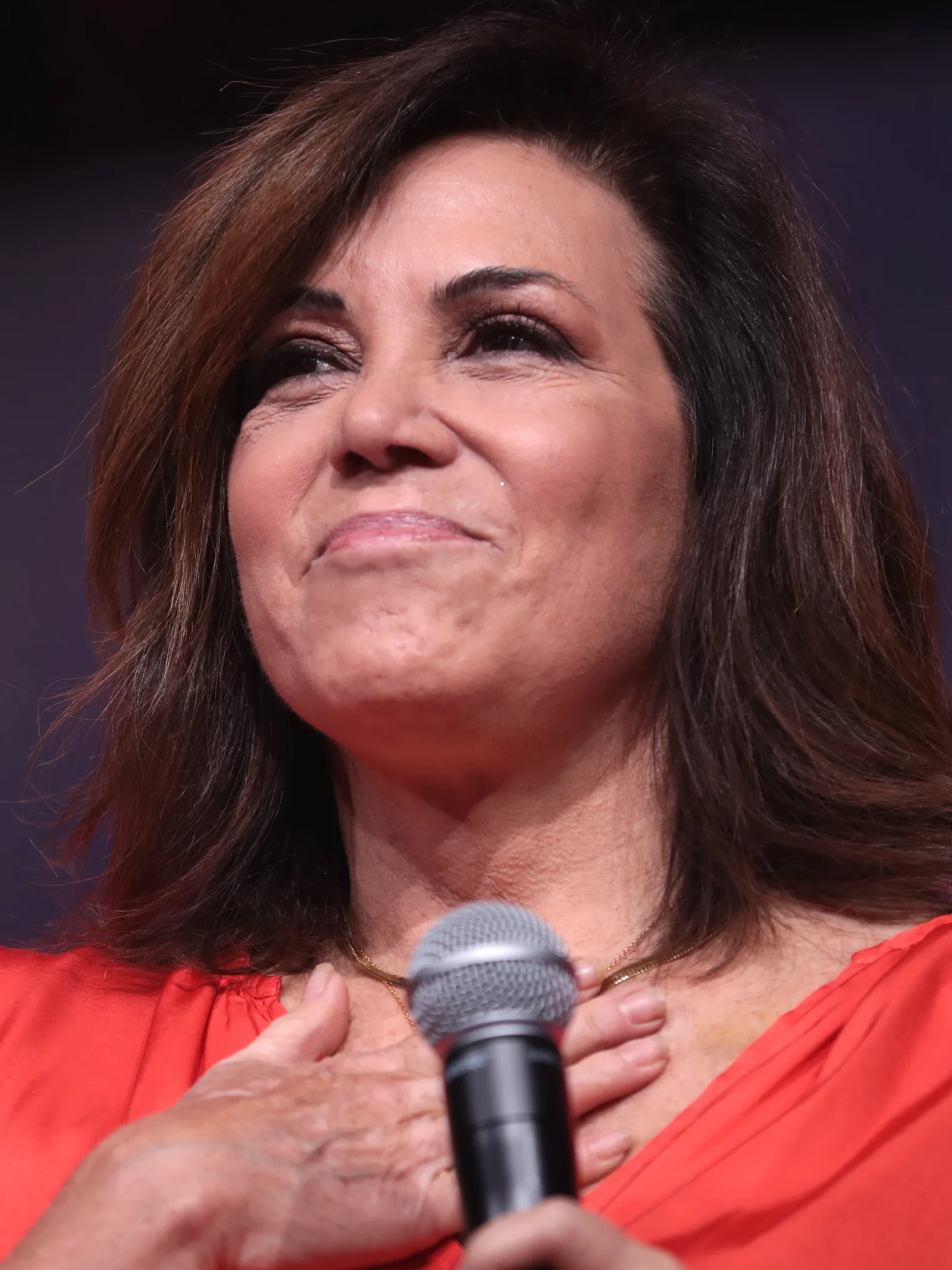 File photo
What happened
Key facts
- Michele Tafoya's campaign released an attack ad stating: "Peggy Flanagan let fraudsters steal hundreds of millions from you."
- Critics allege Peggy Flanagan, as lieutenant governor, failed to take proper action when she was first made aware of widespread billing schemes that drained taxpayer-funded public assistance programs.
- Flanagan says she was not in charge of the state agencies responsible for administering the affected services and was not the administration's point person directing the state's fraud response.
- Flanagan told the Minnesota Star Tribune that "the governor was the one who took the lead on fraud."
- The fraud issue hurt Governor Tim Walz's reelection chances, and the question of Flanagan's culpability is affecting her bid for Minnesota's open Senate seat.
- Flanagan has repeatedly deflected responsibility on debate stages and in local media interviews, and has made her nearly eight-year tenure as Walz's second-in-command a central part of her Senate campaign.
The brief
Michele Tafoya's Senate campaign is running an attack advertisement accusing Minnesota Lieutenant Governor Peggy Flanagan of allowing fraudsters to take "hundreds of millions" from taxpayers, and the claim has become a central line of attack in the race.
The ad's allegation is explicit: it says Flanagan "let fraudsters steal hundreds of millions from you," a line Tafoya's campaign released to frame Flanagan's record in state government. Tafoya has folded the issue into a broader campaign message that emphasizes crime and fraud, and she has publicly welcomed presidential endorsement as part of her electoral strategy.
Flanagan rejects the accusation by pointing to the limits of her formal responsibilities in state government. She has told the Minnesota Star Tribune that "the governor was the one who took the lead on fraud," and she says she was not the official in charge of the state agencies that administered the programs targeted in the billing schemes.
Sources in the coverage characterise the dispute as tied to wider political costs: reporting says the fraud issue damaged Governor Tim Walz's reelection effort and that questions about Flanagan's role are affecting her run for the open U.S. Senate seat.
The coverage shows competing campaign frames rather than new documentary evidence presented in public: Tafoya's campaign uses the scale of the alleged losses—phrased in the ad as "hundreds of millions"—to argue Flanagan was negligent, while Flanagan responds that she lacked operational authority and that the governor led the state's fraud response.
Reporting notes that Flanagan has repeatedly defended her record in debates and local interviews by emphasising her tenure as the governor's second-in-command while also denying responsibility for agency decisions.
Tafoya has tied the fraud accusations to broader themes in her messaging, including crime, and she has publicly referenced President Donald Trump's endorsement to underline political momentum; a campaign news conference mentioned that endorsement.
The available accounts do not present court findings, official adjudications, or a named independent investigation in the public record cited here that establish Flanagan's legal or administrative liability for the fraud described in the ad.
Readers should note the coverage in this package is campaign-driven: one side's allegation appears in an attack ad, and Flanagan's rebuttal is framed around the formal division of authority in state government and the governor's role.
The factual record publicised in these pieces centres on the allegation in the ad and Flanagan's statement that she lacked authority; the sources do not provide a separate, independently verified accounting of the total monetary loss or a formal determination of responsibility.
Why it matters
- Taxpayers in Minnesota bear the fiscal consequence alleged in the campaign ad: the ad claims "hundreds of millions" were taken from taxpayer-funded public assistance programs, a figure used to argue tangible financial harm to state budgets and recipients of those programs.
- Peggy Flanagan's political prospects are directly affected: questions about her role in the fraud matter are reported to be influencing her campaign for Minnesota's open U.S. Senate seat and are linked in reporting to damage to Governor Tim Walz's reelection effort.
- Michele Tafoya and allied backers have a documented electoral interest in emphasising fraud and crime: Tafoya's campaign messaging and a publicised endorsement from President Donald Trump are mechanisms to convert the allegation into political support, per the sources.
- Accountability mechanisms are not documented in these sources: the reporting does not cite a named independent investigation, court ruling, or official finding that assigns legal responsibility for the alleged losses, leaving the claim operating as a campaign allegation rather than a confirmed administrative or legal determination.
What to watch next
- Whether Michele Tafoya's campaign releases further documentary evidence substantiating the "hundreds of millions" claim in the attack ad.
- Whether Peggy Flanagan or the Walz administration discloses records showing who led or implemented the state's fraud response and which officials had operational control of the affected agencies.
- Whether any state or federal investigative body opens a formal inquiry or releases a report assigning responsibility for the billing schemes mentioned in the ad.
- Whether endorsements and campaign events, including those tied to President Donald Trump's support, materially change fundraising or polling for the Tafoya and Flanagan campaigns ahead of November 3rd.
How it's being covered
Coverage analysisShow details3 source articles · 3 unique outletsCoverage mix: Too few rated· 1 Center · 1 RightWhere the outlets are based: US/Canada 33% · Europe 33% · Other 34%
How outlets' accounts compare
2 framing differences · 4 uncorroborated claims · 4 information gaps- The Washington Examiner frames the story around the attack ad's accusation and political consequences for Flanagan and Governor Walz; news.ssbcrack.com frames Tafoya's campaign messaging around endorsements and broader crime rhetoric.
- Only the ad phrase "hundreds of millions" appears; no outlet in the pack provides a precise, independently confirmed dollar figure.
- Tafoya's campaign presents the ad as causal to electoral critique (using the allegation to undermine Flanagan), while Flanagan attributes operational responsibility to the governor and agencies; the sources do not settle whether Flanagan's actions or inaction caused the fraud.
- The attack ad attributes the alleged losses to Flanagan's inaction; Flanagan attributes responsibility for the fraud response to Governor Tim Walz and to the agencies themselves.
- "Peggy Flanagan let fraudsters steal hundreds of millions from you." (text of Tafoya campaign ad)
- "the governor was the one who took the lead on fraud." (Peggy Flanagan, to the Minnesota Star Tribune)
- No report Updat3 read provides an independent accounting, audit, court ruling, or named government report verifying the monetary total alleged in the ad.
- No source documents which specific agencies, contractors, vendors, or programs were responsible for the billing schemes named in the ad.
- No source cites a formal investigative timeline, subpoena, or prosecutorial action that would clarify legal responsibility for the alleged fraud.
- The scale and factual basis of the alleged "hundreds of millions" are not independently verified in any source in this pack and are presented as an ad claim rather than a documented audit or legal finding.
How we got here
The immediate backdrop is that Peggy Flanagan has served as Minnesota’s lieutenant governor since she and Gov. Tim Walz took office on January 7, 2019, and questions about oversight of state-administered public assistance programs first surfaced in the public record during Walz’s administration prior to the 2022 gubernatorial election.
The structural roots of the dispute rest on Minnesota’s executive-branch responsibilities for social services, chiefly the Minnesota Department of Human Services (established under state law and charged with administering Medicaid and other assistance programs), and on statutory lines of authority that vest cabinet agencies, not the lieutenant governor, with operational control over program administration.
Original sources
3 articles from 3 outletsEvery story links to the reporting it was built from. How we choose sources
Spotted a factual error, a broken link or a misleading summary? Tell us.