
China publishes Taipei landmark imagery as Taiwan says it rejects Beijing’s history framing
China released satellite images of locations in Taipei, including the central railway station and National Palace Museum, while its Eastern Theatre Command published a poster featuring Taiwan. Taiwan rejected Beijing’s interpretation of the history being commemorated, and officials in Taipei accused it of using the anniversary to advance political messaging and exert pressure.
AI-assisted synthesis · Based on 4 outlets' reporting · Article text read from 1 of 4 outletsHow it's made
View timeline · 12 entries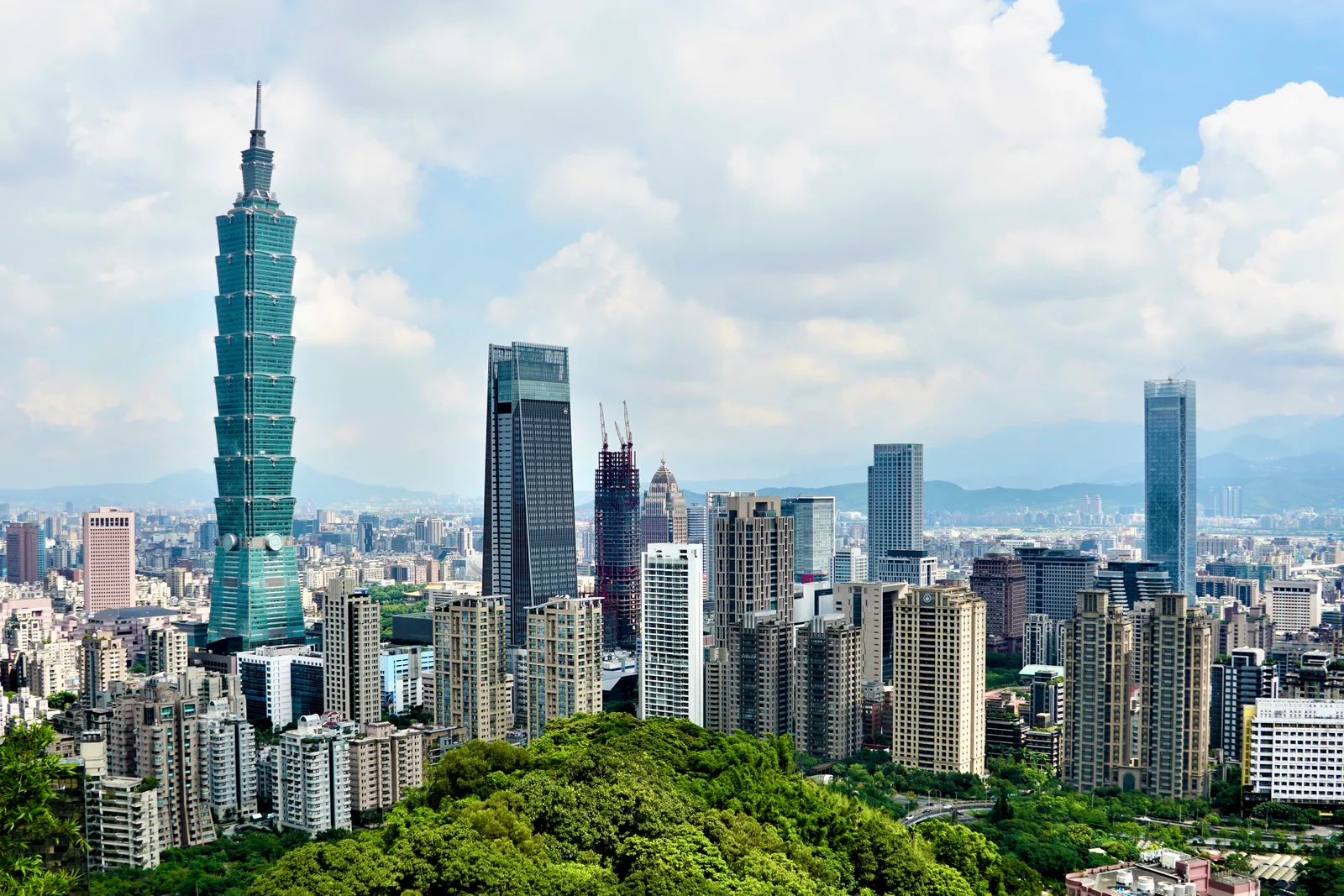 File photo
What happened
Key facts
- China released high-resolution satellite images of locations in Taipei, including the central railway station and the National Palace Museum (per asianetnews.com).
- Taiwan vowed vigilance as Beijing released detailed satellite imagery of island landmarks (per South China Morning Post, asianetnews.com).
- Taiwan officials accused Beijing of using a wartime anniversary to advance political messaging and exert pressure across the Taiwan Strait (per asianetnews.com).
- Koo said Taiwan rejects Beijing's interpretation of the history being commemorated (per asianetnews.com, South China Morning Post).
The brief
China released high-resolution satellite images of locations in Taipei, including the city’s central railway station and the National Palace Museum, according to newsable.asianetnews.com. The outlet said China’s Eastern Theatre Command also published a commemorative poster showing a map of Taiwan alongside fighter aircraft and naval vessels. The poster carried the slogan “Remember the history of the restoration.”
The release coincided with an anniversary tied to Taiwan’s past. Newsable.asianetnews.com said Sunday marked 81 years since Japan transferred control of Taiwan to the Republic of China government in 1945, following World War Two. The outlet described the imagery and poster as appearing alongside that anniversary, but did not specify a calendar date for the Sunday it referenced. Taiwan rejected Beijing’s interpretation of the historical events being commemorated, the outlet reported. It said officials in Taipei accused Beijing of using the anniversary to advance political messaging and exert pressure across the Taiwan Strait. Koo said Taiwan rejects Beijing’s account of the history, according to newsable.asianetnews.com. The South China Morning Post headline said Taiwan vowed vigilance as Beijing released detailed satellite imagery of island landmarks. Vietnam.vn’s headline characterized the images as showing “every street in detail.” Those descriptions indicate how the outlets presented the imagery, but the headline text does not provide further details about the images or Taiwan’s stated vigilance. Hindustan Times framed its headline as a question—“A warning before war?”—while describing the images as detailing Taiwan. That wording is the outlet’s framing; newsable.asianetnews.com reported the release and Taiwan’s objections without stating that the imagery signaled a specific future action. The documented actions in newsable.asianetnews.com’s account are China’s release of the satellite images and the Eastern Theatre Command’s publication of the poster. The account records Taiwan’s rejection of Beijing’s historical interpretation and officials’ accusation about political messaging and pressure; it does not report a further action by Taiwan beyond the vigilance described in the South China Morning Post headline.
Why it matters
- The imagery puts sensitive Taipei landmarks in a military context, underscoring Taiwan’s concern that routine public sites could also be targets for surveillance or operational planning; the reports do not establish that the images signal an imminent attack. For Taiwan’s government and residents, the dispute also reinforces that Beijing’s account of the 1945 handover is being used to support its sovereignty claim, which Taiwan rejects, keeping historical interpretation tied to current cross-strait tensions.
What to watch next
- Whether Taiwan takes any action beyond the vigilance described in the South China Morning Post headline.
- Whether China or the Eastern Theatre Command makes further statements or publications about the historical events; none is specified in the account.
How it's being covered
Coverage analysisShow details4 source articles · 4 unique outletsOutlet political mix: Mostly Center· 3 Center · 1 RightWhere the outlets are based: Asia 100%
- Coverage is currently concentrated among Center-rated outlets (3 of 4 rated sources); comparatively few Left-rated outlets have published on the event.
- Coverage is currently concentrated among outlets based in Asia (4 of 4 geographically-identified sources).
How outlets' accounts compare
Timeline
Developments from this story's sources, dated background we compiled and fact-checked, and our earlier coverage. Each row says which.- Japan had acquired Taiwan under the Treaty of Shimonoseki, signed on April 17, 1895, after the First Sino-Japanese War.Background · from our historical context
- The Cairo Declaration stated that Taiwan should be returned to the Republic of China.Background · compiled and fact-checked by Updat3
- The Potsdam Declaration called for the terms of the Cairo Declaration to be carried out.Background · compiled and fact-checked by Updat3
- Japan formally signed the instrument of surrender, ending its role in the Second World War.Background · compiled and fact-checked by Updat3
- The Republic of China accepted Japan’s surrender in Taiwan and began administering the island.Background · compiled and fact-checked by Updat3
- The People’s Republic of China was founded.Background · compiled and fact-checked by Updat3
- Japan signed the San Francisco Peace Treaty, which renounced its claims to Taiwan and the Penghu Islands without naming a recipient.Background · compiled and fact-checked by Updat3
- The ROC and Japan signed a separate peace treaty on April 28, 1952, but that agreement did not resolve the dispute between the ROC and the People’s Republic of China (PRC) over which government represented China.Background · from our historical context
- The treaty took effect on April 28, 1952.Background · from our historical context
- The United States and the People’s Republic of China established diplomatic relations; Washington said it acknowledged the Chinese position that Taiwan was part of China.Background · compiled and fact-checked by Updat3
- Taiwan ended martial law.Background · compiled and fact-checked by Updat3
- Taiwan held its first direct presidential election.Background · compiled and fact-checked by Updat3
How we got here
The annual dispute over October 25 rests on competing accounts of what the date established.
On October 25, 1945, the Republic of China (ROC) accepted Japan’s surrender in Taiwan and began administering the island; Beijing later described the event as Taiwan’s “recovery” by China, while Taiwan’s government rejects Beijing’s claim that the handover settled the island’s present-day status.
Original sources
4 articles from 4 outlets · Asia · Show allEvery story links to the reporting it was built from. How we choose sources
Spotted a factual error, a broken link or a misleading summary? Tell us.