
Tanker attack in Strait of Hormuz sharpens oil supply concerns as prices climb
An attack on a tanker in the Strait of Hormuz raised concerns about oil supply as crude prices climbed. Brent and WTI were on course for monthly gains of 13% and 15%, respectively.
AI-assisted synthesis · Based on 3 independent reports from 5 outlets · Article text read from 2 of 3 reportsHow it's made
View timeline · 13 entries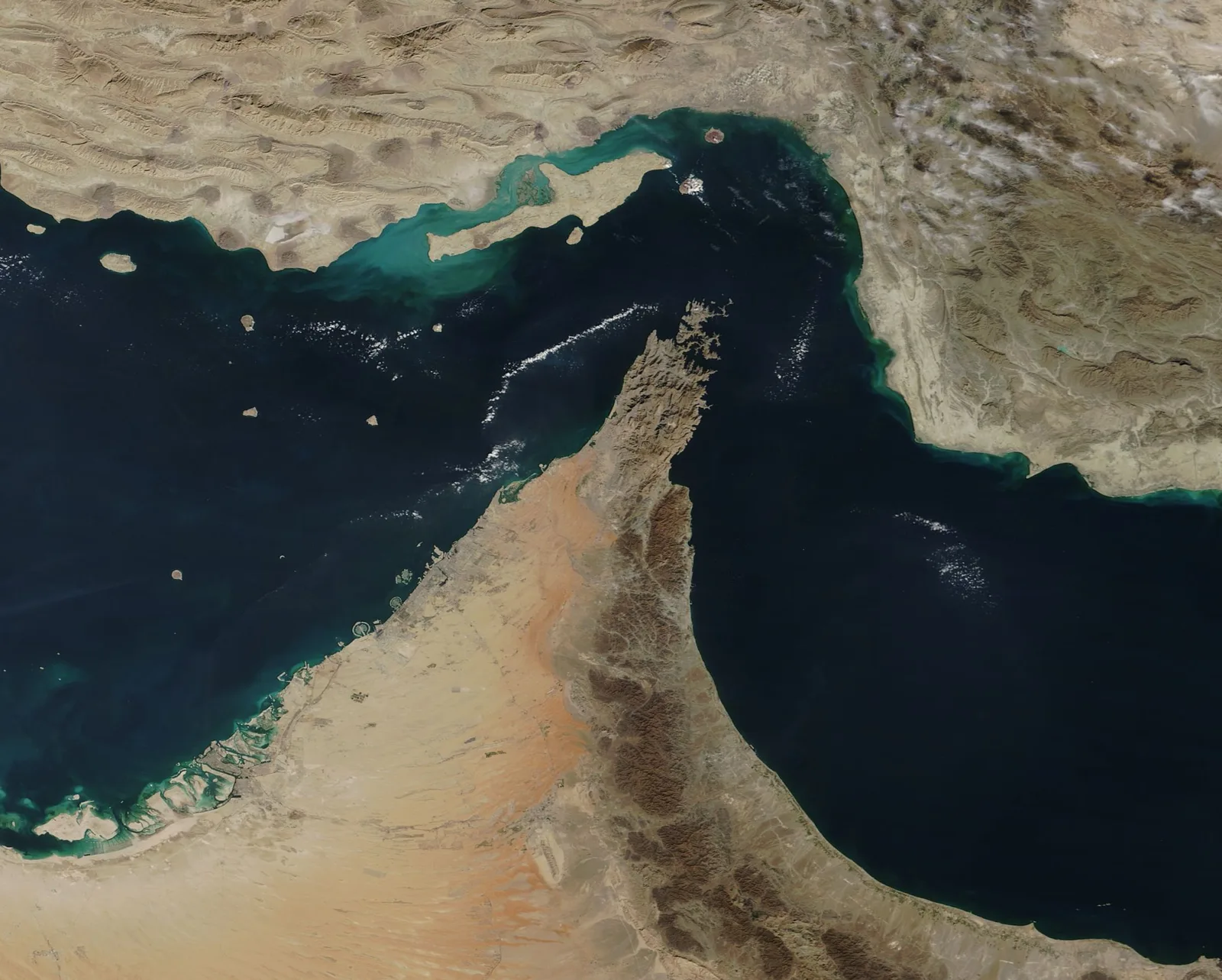 File photo
What happened
Key facts
- Oil prices rose on Friday as crude benchmarks headed for a fourth consecutive monthly gain (per CNA, energyupdate.com.pk, Yahoo).
- It was not immediately clear who carried out the tanker attack (per CNA, energyupdate.com.pk).
The brief
An attack on a tanker in the Strait of Hormuz pushed oil supply concerns into focus as crude prices rose and benchmarks headed for a fourth consecutive monthly gain. The account of the attack did not identify who carried it out, leaving responsibility unconfirmed while traders watched oil flows from the Middle East.
CNA reported that Brent was on course to end the month 13% higher and West Texas Intermediate 15% higher. It put Brent’s December futures at $117.75 a barrel after they touched $118, while the December contract was due to expire on Friday.
Energyupdate.com.pk gave a different snapshot of prices: it reported the December Brent contract at $116.08, up $1.20 or 1.04%, and the more actively traded January contract at $112.19, up $1.39. The figures refer to different contracts and reporting times, rather than conflicting prices for the same contract.
The tanker attack matters to oil markets because the Strait of Hormuz is a route for oil shipments, and a threat to flows can heighten concern about supply. CNA quoted Dennis Kissler, BOK Financial’s senior vice president of trading, saying traders would focus on Middle East oil flows and the possibility of escalation by U.S. and allied forces.
Neither report attributed the attack to a particular government or armed group. The two reports placed the market move in the context of the ongoing U.S.-Israeli war on Iran. Energyupdate.com.pk described the tanker incident as intensifying concern about potential supply disruption amid that war.
CNA emphasized traders’ concern about a possible escalation after the U.S. midterm elections. These are the outlets’ stated contexts; neither report established a connection between the tanker attack and a specific party to the war. Energyupdate.com.pk also reported that a Saudi-led coalition said it intercepted a cruise missile launched toward Saudi Arabia’s western region.
The report did not identify who launched the missile or give details about its effects. This separate security report adds to the account of regional risks, but it does not establish that the missile incident affected tanker traffic or oil supply. On diplomacy, Energyupdate.com.pk said U.S.
President Donald Trump reported that Vice President JD Vance had contacted Iran about providing medical supplies. It also referred to reports that Vance had written to Iran’s top security official in an effort to revive peace negotiations.
CNA separately reported that Qatari mediators had returned to Tehran as part of coordinated efforts toward a U.S.-Iran deal, citing an official briefed on the talks. These accounts describe diplomatic activity alongside the market concerns, without establishing that negotiations changed oil flows or prices.
The immediate market indicators to follow are the monthly benchmark gains and oil flows from the Middle East, the focus Kissler identified. The reports do not establish the tanker attacker’s identity, the vessel’s damage, or any effect on its crew.
Why it matters
- Oil buyers and traders face a supply-risk mechanism centered on tanker movement through the Strait of Hormuz; CNA said Brent was headed for a 13% monthly gain and WTI for 15%.
- Traders’ exposure is reflected in the price snapshots: CNA reported Brent reaching $118 a barrel, while Energyupdate.com.pk reported the January contract at $112.19.
- CNA quoted BOK Financial’s Dennis Kissler identifying Middle East oil flows and the possibility of escalation by U.S. and allied forces as traders’ focus.
- The reports also describe diplomatic contacts involving the United States, Iran, and Qatari mediators, alongside a Saudi-led coalition’s report of a missile interception; neither account ties those developments to a change in oil supply.
What to watch next
- Whether traders see any change in oil flows from the Middle East, the focus identified by BOK Financial’s Dennis Kissler.
- Whether Brent and West Texas Intermediate finish the month near the 13% and 15% gains CNA reported they were on course to post.
- Whether the U.S.-Iran diplomatic efforts described by Energyupdate.com.pk and CNA produce further reported contact or progress toward a deal.
- Whether the Saudi-led coalition provides further details about the cruise missile it said it intercepted.
How it's being covered
Coverage analysisShow details5 source articles · 5 unique outlets · 3 distinct reportsOutlet political mix: Center Only· 3 Center · 2 unratedWhere the outlets are based: Asia 40% · Unknown 40% · Other 20%
- Coverage is currently concentrated among Center-rated outlets (3 of 3 rated sources); comparatively few Left or Right-rated outlets have published on the event.
How outlets' accounts compare
1 factual disagreement · 3 framing differences · 2 uncorroborated claims · 3 information gaps- CNA reported Brent at $117.75 a barrel after a high of $118; Energyupdate.com.pk reported the December Brent contract at $116.08 and the January contract at $112.19. These are different contract and reporting-time snapshots, not comparable figures for the same contract.
- CNA emphasized the tanker attack as a supply-risk concern and highlighted traders’ focus on Middle East oil flows and possible escalation by U.S. and allied forces.
- Energyupdate.com.pk placed the tanker attack amid the U.S.-Israeli war on Iran and added the Saudi-led coalition’s reported missile interception and U.S.-Iran diplomatic contacts.
- Energyupdate.com.pk attributed the missile-interception report to a Saudi-led coalition but did not identify who launched the missile.
- Dennis Kissler of BOK Financial said traders would focus on oil flows from the Middle East and the possibility of escalation by U.S. and allied forces.
- U.S. President Donald Trump said JD Vance had contacted Iran to facilitate medical supplies; Energyupdate.com.pk also referred to reports that Vance had written to Iran’s top security official to revive peace negotiations.
- The reports do not provide the tanker’s name, damage, crew impact, or a confirmed account of the attack’s perpetrator.
- The reports do not give the amount of oil transported through the Strait of Hormuz or quantify any actual supply interruption.
- Neither CNA nor Energyupdate.com.pk identified who carried out the tanker attack.
Timeline
Developments from this story's sources, dated background we compiled and fact-checked, and our earlier coverage. Each row says which.- In 1953, a CIA- and MI6-backed coup overthrew Iranian Prime Minister Mohammad Mosaddegh and strengthened Shah Mohammad Reza Pahlavi’s rule.Background · from our historical context
- Iran and Iraq began attacking commercial shipping in the Persian Gulf during the Tanker War.Background · compiled and fact-checked by Updat3
- The United States began Operation Earnest Will in July 1987, escorting reflagged Kuwaiti tankers through the Gulf.Background · from our historical context
- Two tankers were damaged in the Gulf of Oman; the United States blamed Iran, which denied involvement.Background · compiled and fact-checked by Updat3
- In July 2019, Iran seized the British-flagged tanker *Stena Impero* in the Strait of Hormuz, after British forces had detained an Iranian tanker off Gibraltar.Background · from our historical context
- In July 2021, an attack on the *Mercer Street* off Oman killed two crew members; the United States, United Kingdom and Israel attributed it to Iran, which denied involvement.Background · from our historical context
- On February 28, 2026, the United States and Israel launched coordinated strikes on Iranian power plants, air defenses and military infrastructure, beginning an ongoing war.Background · from our historical context
- Iran announced that vessels passing through the Strait of Hormuz would need prior authorization from the IRGC Navy.Background · compiled and fact-checked by Updat3
- The United States and Iran signed a memorandum of understanding concerning freedom of navigation in the Strait of Hormuz; implementation later stalled over security disagreements.Background · compiled and fact-checked by Updat3
- Maritime security sources recorded at least 12 attacks on oil tankers and cargo ships.Background · compiled and fact-checked by Updat3
- Maritime security sources recorded at least 10 vessels targeted, including oil and liquefied natural gas tankers off Fujairah and Sohar.Background · compiled and fact-checked by Updat3
- Iran presented a proposal to reopen the Strait of Hormuz after an interim ceasefire collapsed.Background · compiled and fact-checked by Updat3
- Oil prices rose on Friday as crude benchmarks headed for a fourth consecutive monthly gain.
How we got here
On February 28, 2026, the United States and Israel launched coordinated strikes on Iranian power plants, air defenses and military infrastructure, beginning an ongoing war.
The attacks came after decades of disputes over Iran’s nuclear program and regional security; the strikes’ relevance to any particular maritime incident must not be assumed without evidence identifying the attacker or establishing a connection. The Strait of Hormuz has been a strategic oil-shipping chokepoint for decades.
Original sources
2 of 5 articles · Asia · Show allEvery story links to the reporting it was built from. How we choose sources
Spotted a factual error, a broken link or a misleading summary? Tell us.