
Kalshi gives Democrats a 68% chance of winning Senate control
Kalshi’s Senate forecast puts Democrats’ chance of winning control at 68%, while the 2026 map includes 35 seats up for election. The outlet says several races remain close enough to change the outcome.
AI-assisted synthesis · Based on 4 outlets' reporting · Article text read from 1 of 4 outletsHow it's made
View timeline · 6 entries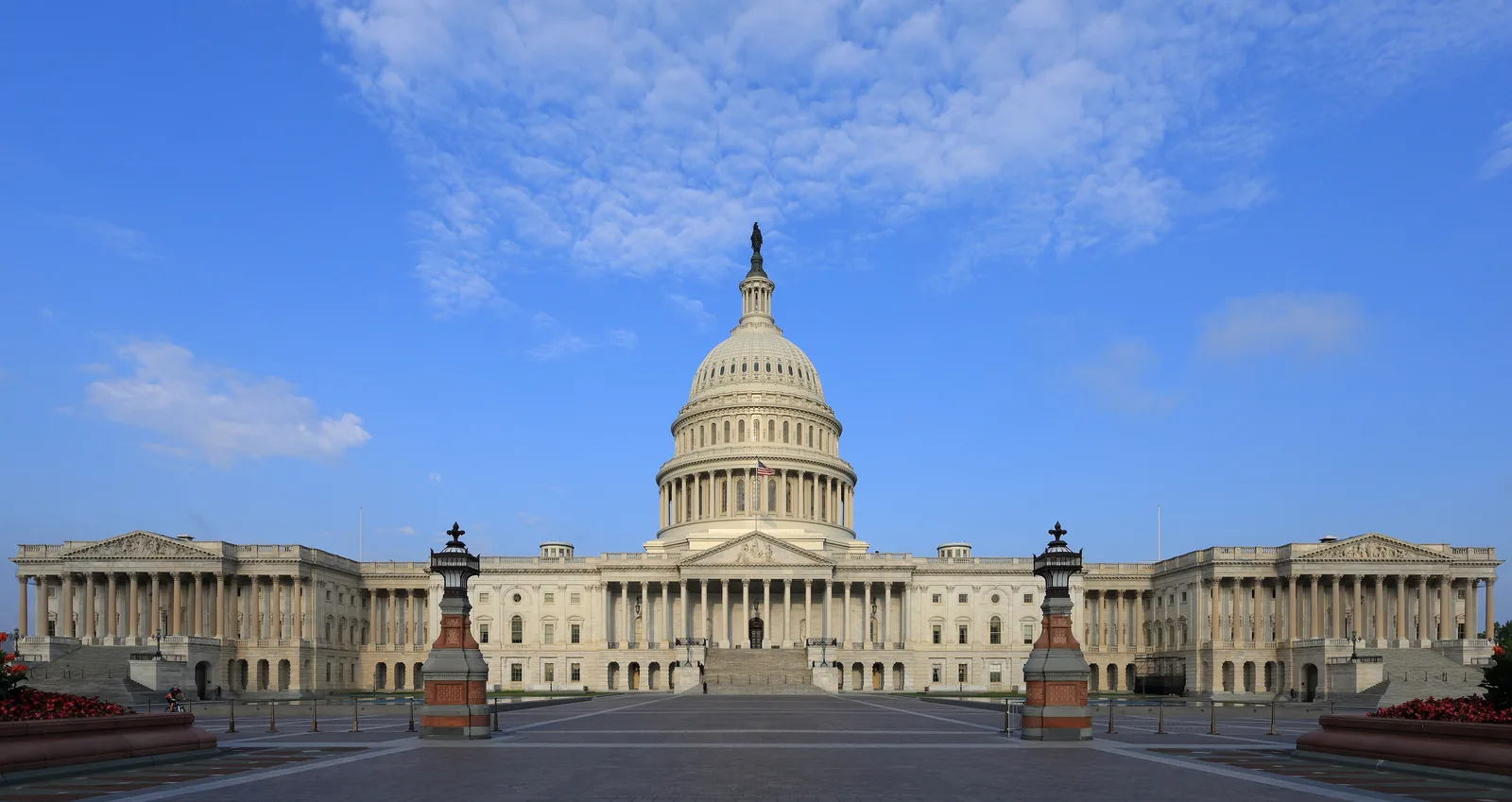 File photo
What happened
Key facts
- Thirty-five Senate seats are up for election in the 2026 midterms (per kalshi.com).
- The article says Republicans hold the Senate 53-47 and Democrats need a net gain of four seats for a majority (per kalshi.com).
- Kalshi classifies a race as a tossup when neither party’s odds exceed 70%, and as leaning toward a party when that party’s odds are above 70% (per kalshi.com).
- The article says the 2026 Senate map initially favored Republicans (per kalshi.com).
- The article says several races remain close enough to swing control of the Senate (per kalshi.com).
- The article says Cook Political Report rates some races differently from Kalshi (per kalshi.com).
- Kalshi’s article says its individual race markets and Senate-control market can be followed through November 3 and as results come in (per kalshi.com).
The brief
Kalshi’s Senate forecast assigns Democrats a 68% chance of winning control, while the 2026 election map includes 35 seats up for election. The article says several contests remain close enough to shift the chamber’s control, despite an initial map that it describes as favoring Republicans.
The article says Republicans hold the Senate 53-47 and Democrats need a net gain of four seats to win a majority. Those figures frame the stakes of the races highlighted in its guide: the balance depends not simply on the overall forecast but on outcomes in individual contests. Kalshi groups races according to its odds.
It calls a contest a tossup when neither party’s chance is above 70%, and describes a race as leaning toward a party when that party’s odds exceed that level. The article says these categories are based on Kalshi’s odds as of October 22, 2026. The guide also presents ratings from Cook Political Report, which the article says rates some races differently.
Those contrasting assessments mean the guide does not treat Kalshi’s categories as the only way to characterize the contests; it shows readers a separate forecaster’s rating alongside the market-based grouping. Kalshi says its Senate-control and individual-race markets can be followed through November 3 and as election results arrive.
The article’s central focus is the set of competitive seats and how their outcomes could shape which party controls the Senate. It does not name the races in the excerpted account, so the forecast and race classifications are the concrete details it provides about the contest.
The Guardian’s headline presents its coverage as a video explainer about key 2026 midterm races that will decide Senate control. KHOU’s headline likewise points to key races as determining control.
Yahoo’s headline singles out Nebraska independent Dan Osborn and says he could decide which party controls the Senate; the headline does not provide further details about his candidacy or the race. The forecast remains a snapshot tied to the stated odds date, while Kalshi’s guide points readers to its markets for changes through Election Day and as results come in.
Its account places the competitive races, rather than the 68% chamber-wide figure alone, at the center of the control question.
Why it matters
- The Senate’s 53-47 division and the four-seat net gain Democrats need make the outcomes of individual races consequential to chamber control.
- Kalshi says 35 seats are up for election, and several contests are close enough to swing control.
- Kalshi’s 68% forecast for Democrats is paired with race-by-race odds, which the article classifies using a 70% threshold.
- Cook Political Report rates some contests differently from Kalshi, giving readers another stated assessment of certain races.
What to watch next
- Whether the individual race odds change as Kalshi tracks them through November 3.
- How the 35 Senate races turn out as election results come in.
- Which races Kalshi classifies as tossups or as leaning toward a party under its 70% threshold.
- How Cook Political Report’s ratings compare with Kalshi’s classifications in races it assesses differently.
How it's being covered
Coverage analysisShow details4 source articles · 4 unique outletsOutlet political mix: Mostly Center· 1 Left · 2 Center · 1 unratedWhere the outlets are based: Unknown 50% · US/Canada 25% · Other 25%
How outlets' accounts compare
Timeline
Developments from this story's sources, dated background we compiled and fact-checked, and our earlier coverage. Each row says which.- The Constitutional Convention signed the U.S. Constitution, which established six-year Senate terms.Background · compiled and fact-checked by Updat3
- The Seventeenth Amendment, ratified April 8, 1913, established direct election of senators by voters; before its ratification, state legislatures chose them.Background · from our historical context
- In 2018, Republicans expanded their majority by flipping seats in states including Florida, Indiana and Missouri, while Democrats gained seats in Arizona and Nevada.Background · from our historical context
- In 2022, Democrats’ wins in Pennsylvania and Georgia helped them reach 51 seats, including the independents who caucused with them.Background · from our historical context
- Democrats retained the Senate in the midterm elections.Background · compiled and fact-checked by Updat3
- Donald Trump won the presidency, and Republicans gained control of the Senate.Background · compiled and fact-checked by Updat3
How we got here
The immediate backdrop to the 2026 Senate cycle was the November 5, 2024, election, when Republicans won control of the chamber and entered the next Congress with 53 seats, while Democrats and independents who caucused with them held 47. Senate elections operate on a staggered schedule: Article I of the U.S.
Constitution gives senators six-year terms, with roughly one-third of the seats contested every two years. The Seventeenth Amendment, ratified April 8, 1913, established direct election of senators by voters; before its ratification, state legislatures chose them.
Original sources
1 of 4 articles · Europe · Show allEvery story links to the reporting it was built from. How we choose sources
Spotted a factual error, a broken link or a misleading summary? Tell us.