
Travis Knight recounts Wildwood’s 16-year journey from challenge to film
Travis Knight said he and Laika spent 16 years bringing the stop-motion film Wildwood to the screen. Knight described the production as a major challenge and said he believed the team could finish it, though he did not know how.
AI-assisted synthesis · Based on 4 outlets' reporting · Article text read from 3 of 4 outlets · 2 articles captured only in partHow it's made
View timeline · 8 entries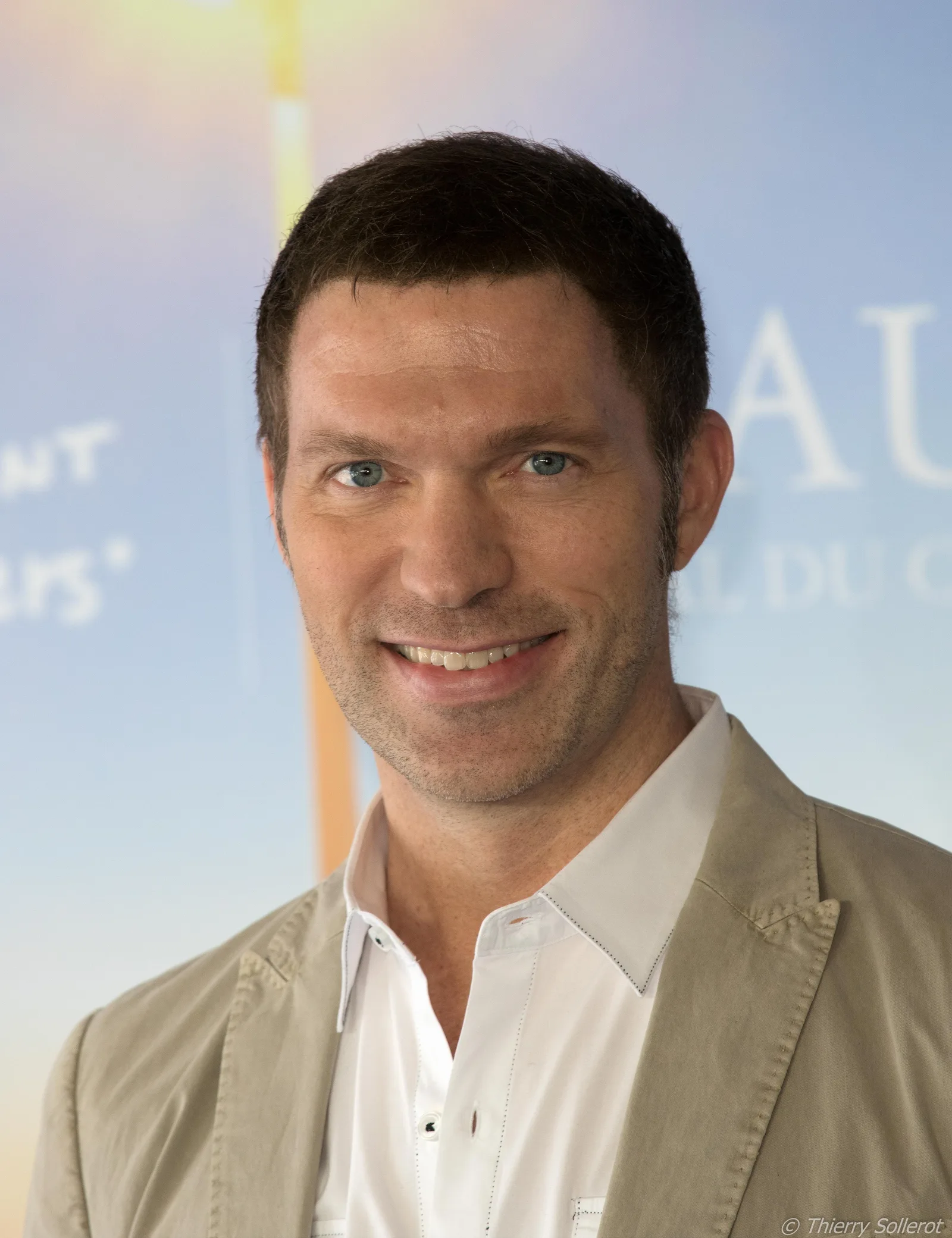 File photo
What happened
Key facts
- Knight said he expected the team to complete Wildwood but was unsure how it would do so (per goldderby.com, hollywoodreporter.com, The Sydney Morning Herald).
- Knight said that seven years earlier, the team had needed to grow as filmmakers before making the project (per goldderby.com).
- Knight said the team shot about 10 to 12 exposures for each frame of a battle sequence because of its fire, smoke, sunlight and puppet lighting (per goldderby.com).
- Knight had completed postproduction on Wildwood in London before discussing the film in Beverly Hills (per hollywoodreporter.com).
- Knight said Wildwood was Laika’s most expensive film to date but did not disclose its budget (per hollywoodreporter.com, goldderby.com, The Sydney Morning Herald).
The brief
Travis Knight said the making of Wildwood, a stop-motion feature from Laika, took 16 years to reach the screen. The director described a prolonged creative challenge, saying he believed the team could finish the film but did not know how it would manage that when the effort began. Knight discussed the project after completing postproduction in London.
He spoke about it in Beverly Hills, where he also said Wildwood was Laika’s most expensive film to date. He did not disclose the budget, adding that the studio tries to put more on screen than its spending might suggest. The reporting emphasizes different parts of Knight’s account.
The Hollywood Reporter focuses on the scale of the undertaking and Knight’s description of the film as an unusually large experiment. Gold Derby highlights his uncertainty about how the team would pull it off and the filmmaking growth he said the studio needed before tackling the project.
The Sydney Morning Herald places the film within Knight’s personal history, noting his childhood interest in Ray Harryhausen films as well as the production’s long path to completion. Knight said that seven years earlier, the team had needed to mature as filmmakers before making Wildwood.
He also described the technical demands of a battle sequence: for each frame, the crew shot roughly 10 to 12 exposures to capture elements including fire, smoke, sunlight filtering through smoke and lighting on the puppets. The production’s duration and technical process help explain why Knight characterized the undertaking as challenging.
The account connects the 16-year effort with the complexity of stop-motion work, but does not provide a full production timeline or a breakdown of how the time was spent. Knight is Laika’s founder and the film’s director.
His discussion links the studio’s production ambitions with the effort required to realize them, while his remarks about the budget make clear that the film represents a substantial expense for the company without specifying its cost. The immediate next milestone reported is the film’s scheduled theatrical release on October 23.
Knight said the film’s real test still lay ahead, framing completion as a stage rather than the final measure of its success.
Why it matters
- Laika’s production team bore the documented technical workload: Gold Derby reports that a battle scene required about 10 to 12 exposures for each frame.
- The studio committed to its most expensive film to date, according to Knight, although he did not disclose a budget figure.
- The 16-year production effort and Knight’s account of the team’s need to grow as filmmakers show the scale of the studio’s creative and production challenge.
- Knight’s childhood interest in Ray Harryhausen films offers personal context for his later work in stop-motion, as reported by The Sydney Morning Herald.
What to watch next
- Whether Wildwood meets Knight’s stated next test when it reaches theaters on October 23.
- How audiences respond to the film after its theatrical release.
- Whether Laika discloses the budget for Wildwood; Knight did not provide it in the reported remarks.
- Whether Knight or Laika discusses the production process further, including the reported 10 to 12 exposures per frame for a battle sequence.
How it's being covered
Coverage analysisShow details5 source articles · 4 unique outletsOutlet political mix: Center Only· 4 CenterWhere the outlets are based: US/Canada 50% · Asia 25% · Other 25%
- Coverage is currently concentrated among Center-rated outlets (4 of 4 rated sources); comparatively few Left or Right-rated outlets have published on the event.
How outlets' accounts compare
3 framing differences · 2 uncorroborated claims · 2 information gaps- The Hollywood Reporter emphasizes the film as a large-scale experiment and Knight’s view that its real test remains ahead.
- Gold Derby focuses on Knight’s uncertainty about how the team would complete the project and the filmmaking growth he said was needed.
- The Sydney Morning Herald links the production story to Knight’s childhood interest in Ray Harryhausen films.
- Knight said he expected the team could complete the project but did not know how.
- Knight described Wildwood as Laika’s most expensive film to date, without disclosing its budget.
- The sources do not provide the film’s budget, despite Knight saying it is Laika’s most expensive film.
- The reporting does not provide a full breakdown of the 16-year production period.
Timeline
Developments from this story's sources, dated background we compiled and fact-checked, and our earlier coverage. Each row says which.- Phil Knight founded Laika.Background · compiled and fact-checked by Updat3
- Laika released Coraline, directed by Henry Selick.Background · compiled and fact-checked by Updat3
- Colin Meloy’s novel *Wildwood*, illustrated by Carson Ellis, was published in 2011, providing the source material for Laika’s feature adaptation.Background · from our historical context
- Laika released ParaNorman.Background · compiled and fact-checked by Updat3
- Laika released The Boxtrolls.Background · compiled and fact-checked by Updat3
- Laika released Kubo and the Two Strings.Background · compiled and fact-checked by Updat3
- Laika released Missing Link.Background · compiled and fact-checked by Updat3
- Laika publicly announced the film in 2021, with Travis Knight attached to direct; the adaptation’s development therefore preceded that announcement by years.Background · from our historical context
How we got here
Colin Meloy’s novel *Wildwood*, illustrated by Carson Ellis, was published in 2011, providing the source material for Laika’s feature adaptation. Laika publicly announced the film in 2021, with Travis Knight attached to direct; the adaptation’s development therefore preceded that announcement by years.
Laika, founded in 2005 by Phil Knight, established its stop-motion feature operation with *Coraline*, released in 2009 and directed by Henry Selick. The studio followed with *ParaNorman* (2012), *The Boxtrolls* (2014), *Kubo and the Two Strings* (2016) and *Missing Link* (2019).
Original sources
1 of 5 articles · Asia · Show allEvery story links to the reporting it was built from. How we choose sources
Spotted a factual error, a broken link or a misleading summary? Tell us.