
Bessent dodges whether the U.S. considers Ukraine an ally
A Treasury secretary declined three times on Sunday to say whether the United States considers Ukraine an ally, offering no direct answer on how Washington describes the relationship.
AI-assisted synthesis · Based on 4 independent reports from 6 outlets · Article text read from 1 of 4 reportsHow it's made
View timeline · 7 entries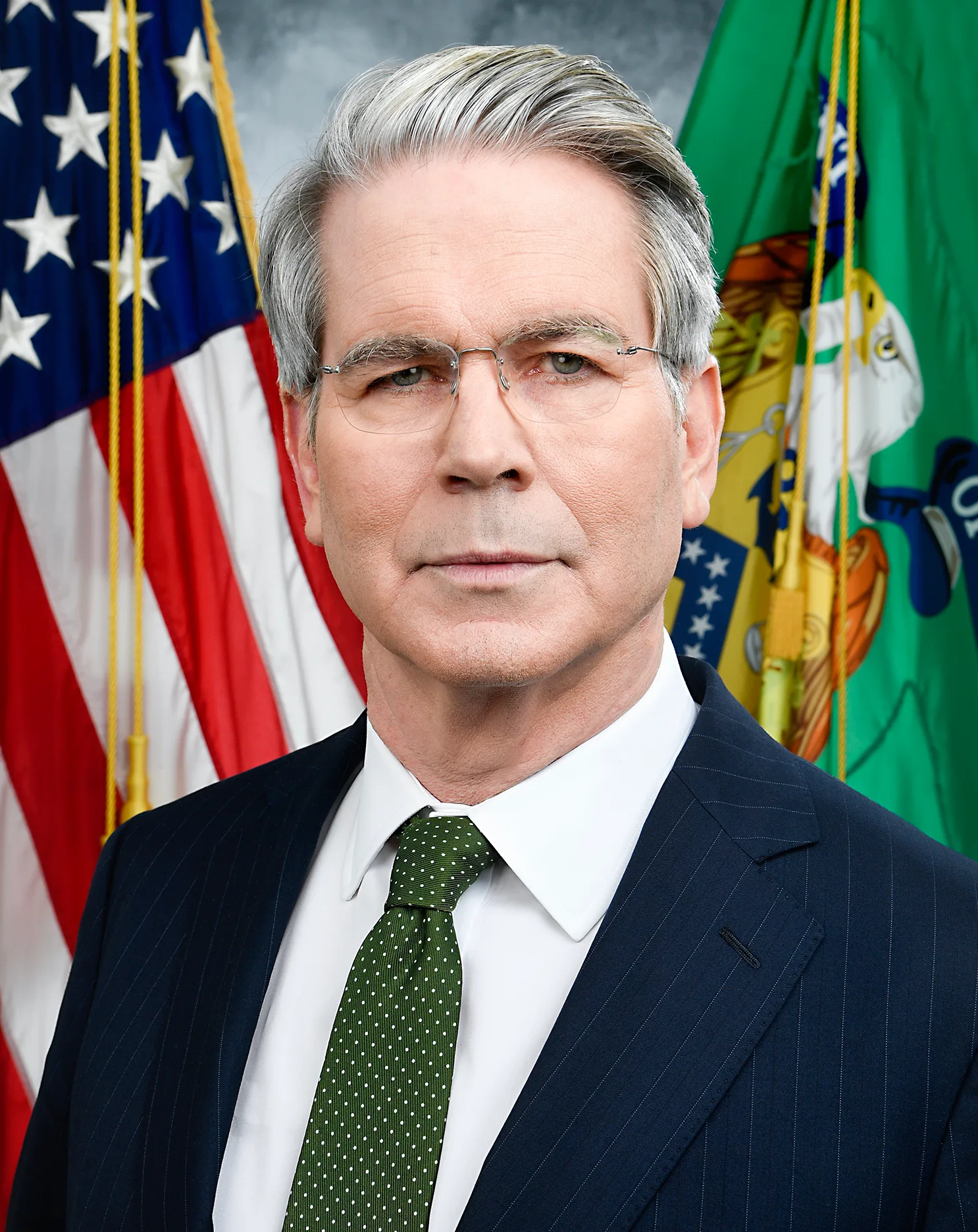 File photo
What happened
Key facts
- NBC News reported that a U.S. Treasury secretary declined to say whether the United States considers Ukraine an ally.
- The sole source excerpt does not verify claims about Bessent, Zelenskyy, or Starlink.
- The sole source excerpt does not verify claims about Trump, Zelenskyy, or an energy ceasefire.
The brief
Treasury Secretary Scott Bessent declined three times on Sunday to say whether the U.S. considers Ukraine an ally, NBC News reported. The exchange places a direct question about the U.S.-Ukraine relationship alongside a separate dispute over Starlink: Bessent described Ukrainian President Volodymyr Zelenskyy as “reckless” for saying the U.S. government caused a Starlink lag.
The account identifies Bessent’s repeated non-answer, but does not give his explanation for avoiding the question or describe any U.S. policy change toward Ukraine. His criticism of Zelenskyy concerned the Ukrainian leader’s statement about the cause of the Starlink lag; NBC News does not provide further detail about the lag itself.
A headline from unn.ua likewise attributes to Bessent a negative assessment of Zelenskyy’s Starlink statements, using the word “irresponsible.” UA.NEWS characterizes Bessent as “outraged” by Zelenskyy’s comments. Those headlines present descriptions of Bessent’s view; they do not supply additional detail about the Starlink issue.
NBC News connects the exchange to what it calls current tension between U.S. President Donald Trump and Zelenskyy. It says that tension followed Trump’s statement the previous weekend that Ukraine and Russia had agreed to an “energy ceasefire,” a move the report says surprised some European allies.
The article does not name those governments or explain their reactions beyond that characterization. Trump then added: “The only thing that has been lifted is the diesel embargo.” NBC News reports the statement but does not specify who lifted the embargo or give further terms.
The remark qualifies the scope of what Trump said had been lifted, while the report does not describe how it relates to the proposed energy ceasefire. The account therefore links Bessent’s refusal to answer the alliance question with a wider disagreement involving Trump’s account of the Ukraine-Russia energy arrangement and Bessent’s criticism of Zelenskyy.
It does not report a subsequent answer from Bessent on whether Ukraine is an ally, or a response from Zelenskyy to Bessent’s characterization.
Why it matters
- Ukraine has no U.S. mutual-defense treaty, so Bessent’s refusal does not change a formal guarantee, but it leaves Kyiv with less clarity about how firmly Washington views the partnership. That uncertainty matters as Ukraine weighs its reliance on U.S. military and financial support and negotiates with Russia; U.S. lawmakers and allies also have less clarity about the administration’s intended commitments.
What to watch next
- Whether Bessent states whether the U.S. sees Ukraine as an ally.
- Whether Zelenskyy responds to Bessent’s criticism of his Starlink statement.
- Whether Trump or another named party clarifies who lifted the diesel embargo and what the energy ceasefire agreement covered.
How it's being covered
Coverage analysisShow details6 source articles · 6 unique outlets · 4 distinct reportsOutlet political mix: Mostly Center· 1 Left · 2 Center · 3 unratedWhere the outlets are based: Unknown 50% · US/Canada 33% · Other 17%
How outlets' accounts compare
Timeline
Developments from this story's sources, dated background we compiled and fact-checked, and our earlier coverage. Each row says which.- On December 5, 1994, Ukraine, Russia, the United States and the United Kingdom signed the Budapest Memorandum.Background · from our historical context
- At its April 2008 Bucharest Summit, the alliance declared that Ukraine and Georgia “will become members,” but set no date for accession and did not extend Article 5 protection to either country.Background · from our historical context
- Ukraine established non-alignment as state policy.Background · compiled and fact-checked by Updat3
- Russia seized and annexed Crimea in 2014, a move condemned by the United States and most other governments.Background · from our historical context
- The February 2015 Minsk II agreement, negotiated by Ukraine, Russia, France and Germany, set out measures for a ceasefire and political settlement in Donbas; its provisions were not fully implemented.Background · from our historical context
- Ukraine made NATO membership a strategic foreign-policy objective.Background · compiled and fact-checked by Updat3
- Russia launched its full-scale invasion of Ukraine on February 24, 2022.Background · from our historical context
How we got here
Ukraine became independent when the Soviet Union dissolved in 1991, and the United States recognized it on December 25 of that year. The relationship was a strategic partnership, not a mutual-defence treaty: Ukraine was not a member of NATO, whose Article 5 obliges members to treat an armed attack on one as an attack on all.
On December 5, 1994, Ukraine, Russia, the United States and the United Kingdom signed the Budapest Memorandum.
Original sources
3 of 6 articles · Unknown · Show allEvery story links to the reporting it was built from. How we choose sources
Spotted a factual error, a broken link or a misleading summary? Tell us.