
Trump order directs federal agencies to use ‘super intelligence’
Donald Trump directed federal agencies to use “Super Intelligence” and “SI” instead of “artificial intelligence” and “AI” in official communications where permitted by law. His executive order also gives the Assistant to the President for Science and Technology 60 days to propose a federal definition and related legislative changes.
AI-assisted synthesis · Based on 5 outlets' reporting · Article text read from 2 of 5 outlets · 1 article captured only in partHow it's made
View timeline · 8 entries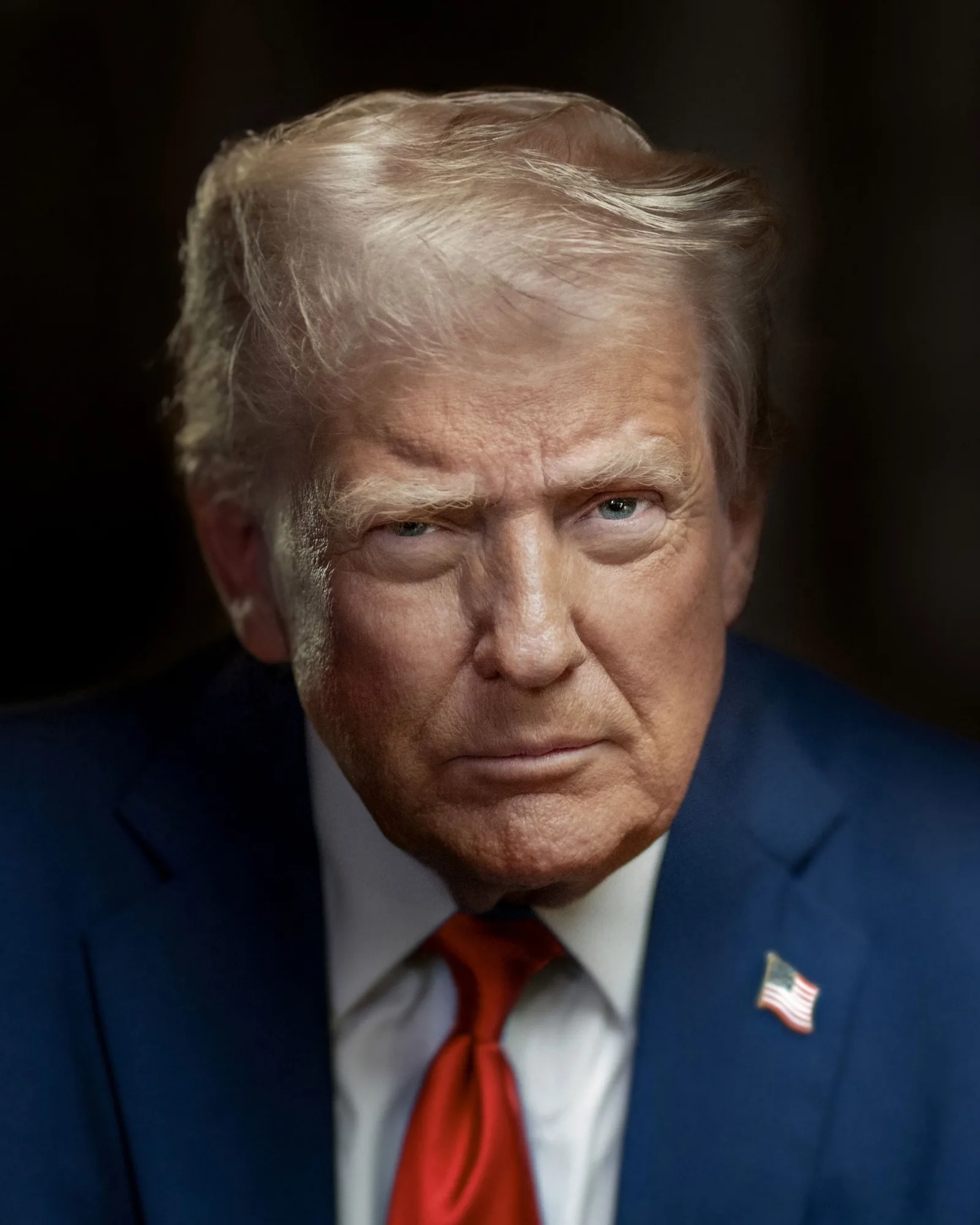 File photo
What happened
Key facts
- Trump questioned on Truth Social why The Wall Street Journal was not using his preferred terminology.
- The order says frontier systems now do more than imitate or automate aspects of human intelligence.
- Existing regulations, government contracts, grants and historical archival records will not be changed retroactively.
The brief
Donald Trump directed federal agencies to replace “artificial intelligence” and “AI” with “Super Intelligence” and “SI” in official use, while his administration says the terminology change will apply to official documents and communications where permitted by law.
The policy follows Executive Order 14434, “Inaugurating the Era of Super Intelligence,” which the two accounts date differently: ibtimes.co.uk says Trump signed it on September 29, 2026, while The Times of India gives September 30. Trump made his latest remarks in a Truth Social post on Tuesday, 27 October 2026.
He questioned why The Wall Street Journal was not using his preferred term, calling “Artificial Intelligence (AI)” a “very bad and inaccurate name” and saying the alternative was “the name which virtually everyone else is using, or soon will be.” His administration’s stated terminology preference is the focus of the directive; the sources do not describe a change to the underlying technology itself.
The Times of India says the Assistant to the President for Science and Technology has 60 days to submit proposed legislation to Congress that would define “Super Intelligence” in federal law and recommend corresponding changes to existing laws. ibtimes.co.uk describes the same 60-day period as a requirement to send proposed legislative language to Trump.
The accounts therefore differ on the stated recipient of the proposal and how its next step is described: Congress and recommended legal revisions in The Times of India, Trump in ibtimes.co.uk. The Times of India reports that existing regulations, government contracts, grants and historical archival records would not be revised retroactively.
Its account also cites the order’s argument that frontier systems now go beyond imitating or automating aspects of human intelligence, and says they amplify human ingenuity and enable new forms of creativity across fields including science and medicine.
The timing is connected in the accounts to events at the White House: ibtimes.co.uk says Trump’s remarks followed a meeting and luncheon on super intelligence held on 29 September. The Times of India describes the order as establishing the administration’s preferred terminology, while ibtimes.co.uk emphasizes questions about how broadly the policy reaches.
The outlets’ emphasis differs, but both report a push to replace the existing terms in federal use. The next procedural question is whether the Assistant to the President for Science and Technology submits proposed legislative language within the order’s 60-day period, and whether the proposal goes to Congress or Trump as each outlet describes.
The reported scope also leaves agencies with a legal qualification: the terminology change applies where law permits, while the Times of India says existing records and agreements remain unchanged retroactively.
Why it matters
- Federal agencies would change terminology in official communications and documents where law permits, affecting how government materials refer to the technology.
- The Times of India says the directive would leave existing government contracts, grants, regulations and archival records unchanged retroactively, limiting the change’s reach into prior records and arrangements.
- The proposed federal definition could shape how “Super Intelligence” is used in law; the accounts differ on whether the Assistant to the President for Science and Technology submits its proposal to Congress or to Trump.
- Trump has framed “artificial intelligence” as inaccurate and promoted “Super Intelligence” as the preferred term; the order’s stated rationale is that frontier systems now do more than imitate or automate human intelligence.
What to watch next
- Whether the Assistant to the President for Science and Technology submits proposed legislative language within the order’s 60-day period.
- Whether the proposal goes to Congress, as The Times of India reports, or to Trump, as ibtimes.co.uk reports.
- Whether proposed legislation defines “Super Intelligence” under federal law and recommends changes to existing laws, as The Times of India describes.
- How federal agencies apply the terminology change where existing law permits it.
How it's being covered
Coverage analysisShow details5 source articles · 5 unique outletsOutlet political mix: Center Only· 5 CenterWhere the outlets are based: US/Canada 40% · Asia 40% · Other 20%
- Coverage is currently concentrated among Center-rated outlets (5 of 5 rated sources); comparatively few Left or Right-rated outlets have published on the event.
How outlets' accounts compare
3 framing differences · 2 uncorroborated claims · 2 information gaps- The Times of India foregrounds the order’s limits, including no retroactive changes to regulations, contracts, grants or archival records; ibtimes.co.uk focuses on questions about the scope of the terminology policy.
- The Times of India says the proposed definition and related changes would go to Congress; ibtimes.co.uk says proposed legislative language would be submitted to Trump.
- The Times of India and ibtimes.co.uk both give a 60-day period for the proposal, but differ on its stated recipient.
- Trump called “Artificial Intelligence (AI)” a “very bad and inaccurate name” in his Truth Social post, according to The Times of India.
- The Times of India says the order characterizes frontier systems as doing more than imitating or automating aspects of human intelligence.
- Neither account provides agency-by-agency implementation instructions or identifies which existing laws would limit the terminology change.
- The Times of India dates Trump’s signing of the executive order to September 30; ibtimes.co.uk dates it to September 29, 2026.
Timeline
Developments from this story's sources, dated background we compiled and fact-checked, and our earlier coverage. Each row says which.- Alan Turing published “Computing Machinery and Intelligence,” asking whether machines can think.Background · compiled and fact-checked by Updat3
- John McCarthy used “artificial intelligence” in a proposal for a Dartmouth summer research project.Background · compiled and fact-checked by Updat3
- In 1965, statistician I. J. Good described a hypothetical “ultraintelligent machine” and considered the consequences of machines improving their own design.Background · from our historical context
- Nick Bostrom published *Superintelligence*, discussing forms of intelligence that could exceed human capacity.Background · compiled and fact-checked by Updat3
- The National Artificial Intelligence Initiative Act established a federal framework for coordinating AI research and development.Background · compiled and fact-checked by Updat3
- The Biden administration’s Executive Order 14110, signed on October 30, 2023, directed federal agencies to develop safety and security standards for AI and encouraged the responsible use of the technology.Background · from our historical context
- The Office of Management and Budget followed with memorandum M-24-10 on March 28, 2024, setting requirements for federal agencies’ governance and use of AI.Background · from our historical context
- Trump’s remarks followed a White House meeting and luncheon on super intelligence on 29 September.
How we got here
At a White House meeting and luncheon on September 29, 2026, officials discussed “super intelligence,” the terminology later at issue in federal policy.
The debate over what to call advanced machine intelligence has roots in the field’s founding: computer scientist John McCarthy used “artificial intelligence” in the proposal for the Dartmouth summer research project held in 1956.
Original sources
2 of 5 articles · US/Canada · Show allEvery story links to the reporting it was built from. How we choose sources
Spotted a factual error, a broken link or a misleading summary? Tell us.