
Trump links Venezuela statehood idea to oil shipment bound for Texas
Donald Trump said Venezuela could become a prosperous 51st U.S. state while promoting a shipment of 1 million barrels of Venezuelan oil that he called a gift. He said the oil would be refined in Texas, including in Corpus Christi, where he made the remarks.
AI-assisted synthesis · Based on 5 outlets' reporting · Article text read from 3 of 5 outletsHow it's made
View timeline · 9 entries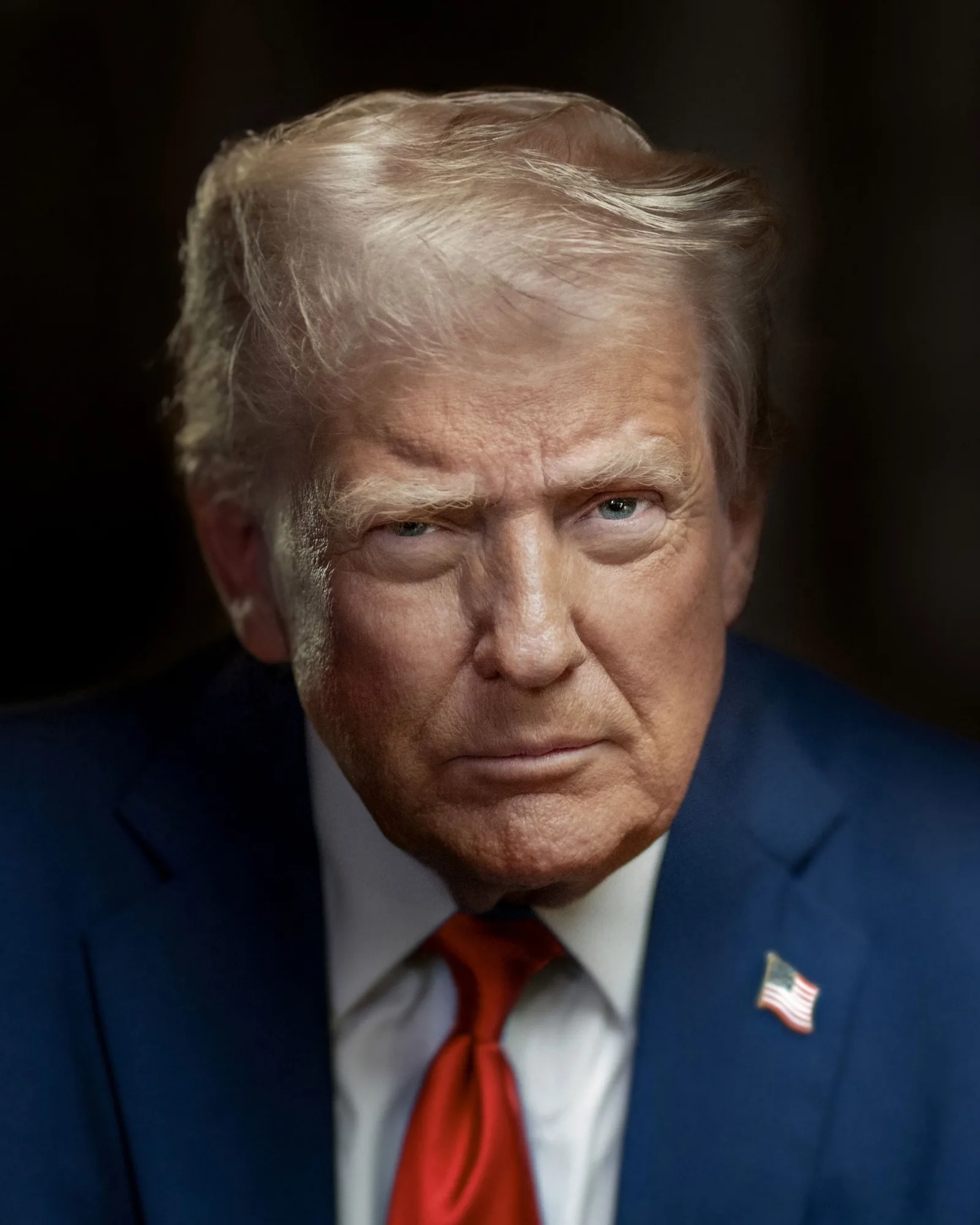 File photo
What happened
Key facts
- Donald Trump suggested Venezuela could become a prosperous 51st U.S. state (per WION, timesnownews.com, mercopress.com).
- Trump said Venezuela could elect a governor instead of a president (per WION, timesnownews.com, mercopress.com).
- The shipment was associated with an agreement between Washington and Caracas (per mercopress.com).
- Trump said the oil would be refined in Texas, including in Corpus Christi (per WION, mercopress.com).
- Trump described the oil shipment as an oil victory and said the United States had control over a large part of the world's oil supply (per WION, mercopress.com).
- Venezuela's acting President Delcy Rodríguez said in May that her country had no plans to become a U.S. state (per timesnownews.com, mercopress.com).
- A State Department official said Marco Rubio traveled to Texas with Trump as national security adviser, not as secretary of state (per timesnownews.com, mercopress.com).
The brief
Donald Trump used remarks in Corpus Christi, Texas, to suggest Venezuela could become a prosperous 51st U.S. state, while promoting a shipment of 1 million barrels of Venezuelan oil that he called a gift. He said Venezuelans could elect a governor instead of a president.
The remarks linked the statehood proposal to the oil relationship: Trump said Venezuela could grow wealthy and pointed to its oil resources. Trump said the shipment was headed for U.S. refineries and would be refined in Texas, including in Corpus Christi.
Mercopress described the arrival as the first shipment under an agreement between Washington and Caracas; Times Now also connected the shipment to an agreement. Trump called the oil free, according to Mercopress, while WION and Times Now reported his description of it as a gift.
The outlets report the central statehood proposal and the 1 million-barrel shipment, but emphasize different aspects. WION foregrounded the higher cost of fuel, reporting that unleaded gasoline was 40% more expensive than a year earlier and diesel prices nearly 75% higher. It said those increases were adding pressure on Republican candidates.
Mercopress focused on the oil agreement and Trump's claim that the shipment marked a historic victory and gave the United States control over a large share of world oil supplies. The fuel-price context gives Trump's promotion of the shipment a domestic political dimension, though WION's account does not establish that the oil shipment will lower prices.
WION reported that Trump said a U.S. operation in Venezuela earlier in the year had increased U.S. oil supplies and that he called this an oil victory. That characterization is Trump's; the outlets do not independently quantify the operation's effect on supply.
Venezuela's acting President Delcy Rodríguez said in May that the country had no plans to become a U.S. state, according to Times Now. That position contrasts with Trump's proposal, which he presented as a possibility tied to Venezuela's potential prosperity.
The reporting does not describe a Venezuelan government agreement to statehood; the agreement discussed concerns the oil shipment. The shipment is described as a million barrels, but WION also relayed a caption identifying the tanker as the Angerona and saying it was reportedly carrying half a million gallons of Venezuelan oil.
Those figures are not presented as the same measurement: the million-barrel amount is the shipment Trump announced, while the caption's gallon figure is a separate reported description of the tanker. Times Now said a State Department official described Marco Rubio as traveling to Texas with Trump as national security adviser, rather than as secretary of state.
The immediate questions are whether the oil is processed at the Texas refineries Trump named and how the Washington-Caracas oil arrangement proceeds. The reporting also leaves the statehood proposal as Trump's suggestion, set against Rodríguez's stated opposition; it documents no change in Venezuela's political status.
Why it matters
- U.S. consumers face higher fuel costs: WION reported gasoline prices 40% above a year earlier and diesel prices nearly 75% higher, the economic pressure Trump paired with his promotion of Venezuelan oil.
- Texas refineries, including facilities in Corpus Christi, are the stated destination for the 1 million-barrel shipment; processing there is the concrete mechanism connecting the agreement to U.S. oil supply.
- Washington and Caracas have an agreement associated with the shipment, while Rodríguez has said Venezuela has no plans to become a U.S. state. The oil arrangement and the statehood proposal are distinct stakes in the accounts.
What to watch next
- Whether the 1 million-barrel shipment is processed at Texas refineries, including in Corpus Christi, as Trump said.
- How the oil agreement between Washington and Caracas proceeds after the reported shipment.
- Whether Trump advances the statehood proposal and how Venezuela's acting President Delcy Rodríguez's stated position develops.
How it's being covered
Coverage analysisShow details5 source articles · 5 unique outletsOutlet political mix: Mixed· 3 Center · 2 RightWhere the outlets are based: Asia 40% · Europe 20% · Other 40%
One source is from a wire service (AP, Reuters, AFP or Bloomberg), whose reporting other outlets often republish.
How outlets' accounts compare
2 framing differences · 5 uncorroborated claims · 2 information gaps- WION emphasizes fuel-price increases and pressure on Republican candidates; Mercopress highlights the oil agreement and Trump's characterization of it as a historic victory.
- Mercopress describes the shipment as the first delivery under an agreement between Washington and Caracas, while WION and Times Now report Trump's description of it as a gift.
- WION reports Trump described a 1 million-barrel shipment and separately says a caption identified the Angerona as reportedly carrying half a million gallons; these are different quantities and are not established as competing measurements of the same figure.
- Trump proposed possible U.S. statehood, while Rodríguez said Venezuela had no plans to become a U.S. state; the sources do not report an agreement on statehood.
- Trump said Venezuela could become a “prosperous 51st state” and suggested it could elect a governor instead of a president.
- Trump called the shipment a gift; Mercopress also reports that he described the oil as free.
- Trump characterized the shipment as a historic oil victory and claimed it gave the United States control over a large part of the world's oil supply.
- The sources do not provide the terms, duration, or financial arrangements of the oil agreement between Washington and Caracas.
- The sources do not independently establish how the shipment affects U.S. oil supply or consumer fuel prices.
Timeline
Developments from this story's sources, dated background we compiled and fact-checked, and our earlier coverage. Each row says which.- Venezuela nationalized its oil industry in 1976, creating Petróleos de Venezuela, S.A. (PDVSA) as the state oil company.Background · from our historical context
- PDVSA acquired U.S. refiner Citgo in stages, completing its purchase in 1990; Citgo’s refineries and distribution network made it a major link between Venezuelan crude and U.S. consumers.Background · from our historical context
- In 1999, President Hugo Chávez took office, and a new constitution that year established a more prominent role for the state in the economy.Background · from our historical context
- In 2007, his government required foreign oil companies to accept majority state ownership in key projects; ExxonMobil and ConocoPhillips withdrew and pursued arbitration.Background · from our historical context
- In August 2017, President Donald Trump’s administration imposed financial sanctions that limited Venezuela’s access to U.S. financing.Background · from our historical context
- Washington recognized opposition leader Juan Guaidó as interim president on January 23, 2019, while Maduro retained control of the government; the dispute over recognition shaped subsequent U.S. policy.Background · from our historical context
- On January 28, 2019, the U.S. Treasury sanctioned PDVSA, restricting its dealings with U.S. entities and placing certain proceeds in blocked accounts.Background · from our historical context
- The U.S. Treasury issued Chevron a license to resume limited oil production and exports from its Venezuelan joint ventures.Background · compiled and fact-checked by Updat3
- In May 2026, Venezuela’s acting President Delcy Rodríguez said the country had no plans to become a U.S. state.Background · from our historical context
How we got here
In May 2026, Venezuela’s acting President Delcy Rodríguez said the country had no plans to become a U.S. state. That statement came against the backdrop of decades of political disputes between Washington and Caracas over Venezuela’s government, control of its oil industry and access to the U.S. market.
Venezuela nationalized its oil industry in 1976, creating Petróleos de Venezuela, S.A. (PDVSA) as the state oil company. PDVSA acquired U.S. refiner Citgo in stages, completing its purchase in 1990; Citgo’s refineries and distribution network made it a major link between Venezuelan crude and U.S. consumers.
Original sources
1 of 5 articles · Global · Show allEvery story links to the reporting it was built from. How we choose sources
Spotted a factual error, a broken link or a misleading summary? Tell us.