
Trump ties $1 million voter-fraud reward to convictions
Donald Trump said he would pay $1 million for tips about voter fraud in past elections or the upcoming midterms if they lead to arrests and convictions. His announcement came as he campaigned for Republicans, while he continued to claim that fraud affected past elections.
AI-assisted synthesis · Based on 5 outlets' reporting · Article text read from 2 of 5 outletsHow it's made
View timeline · 10 entries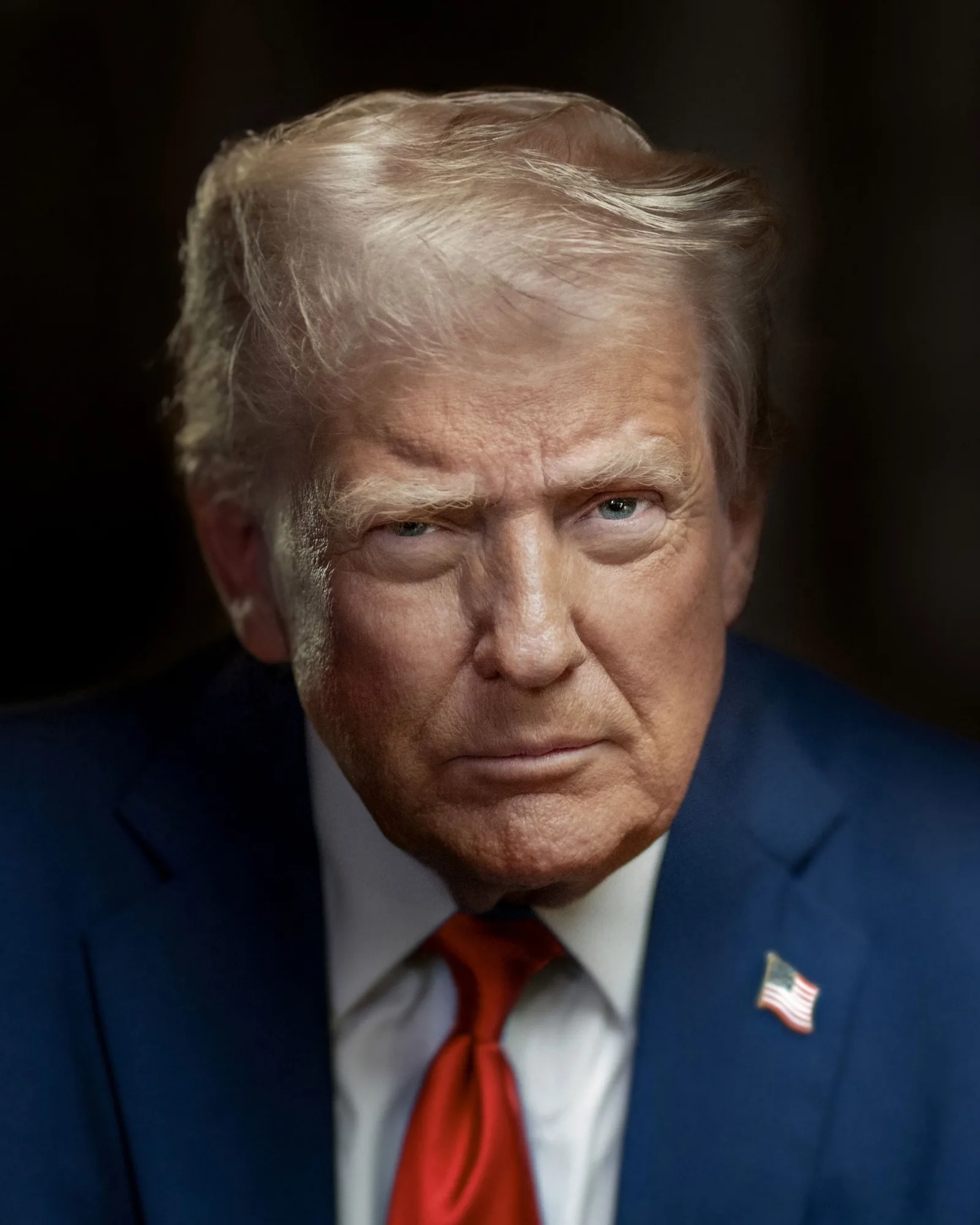 File photo
What happened
Key facts
- Trump announced the offer on Truth Social on Monday (per NBC News, Washington Examiner).
- Trump said the offer covered voter fraud in the upcoming election as well as past elections (per NBC News).
- Trump was traveling to Mississippi for a campaign rally supporting Sen. Cindy Hyde-Smith (per Washington Examiner).
- At a rally in Perry, Georgia, on Saturday, Trump claimed that Sen. Jon Ossoff would have lost his first Senate campaign in 2020 without widespread voter fraud in Fulton County (per Washington Examiner).
- Trump has maintained that voter fraud in several states caused his 2020 election loss (per Washington Examiner, NBC News).
- NBC News said there is no evidence of widespread voter fraud in U.S. elections (per NBC News).
- The Heritage Foundation tracker has collected more than 1,600 voter-fraud incidents over 40 years, which NBC News described as a tiny fraction of votes cast over that period (per NBC News).
- Trump had also announced a $25 million government-fraud whistleblower program and said he would decide who qualified for the prize (per NBC News).
The brief
Donald Trump said he would offer $1 million to people whose tips about voter fraud in past or upcoming elections lead to arrests and convictions. He made the announcement on Truth Social on Monday, describing the payment as conditional on both an arrest and a conviction. The offer applies to reports concerning prior elections as well as the upcoming 2026 midterm election.
Trump did not identify in the cited post how the administration would assess tips, administer payments or determine whether information led to a conviction. The announcement came as Trump campaigned for Republicans. The Washington Examiner reported that he was traveling to Mississippi for a rally supporting Sen. Cindy Hyde-Smith.
The Hill’s headline also reported that Trump was heading to Mississippi, while its headline said JD Vance was campaigning in Kansas; it did not provide further details about Vance’s activity. Trump has continued to assert that fraud affected past elections. At a rally in Perry, Georgia, on Saturday, he claimed Sen.
Jon Ossoff would have lost his first Senate campaign in 2020 without widespread voter fraud in Fulton County. Trump has also maintained that fraud in several states caused his own 2020 election loss. These are Trump’s claims, not findings established by the sources. NBC News said there is no evidence of widespread voter fraud in U.S. elections.
It also cited a Heritage Foundation tracker that has recorded more than 1,600 incidents over 40 years, describing that total as a tiny fraction of the votes cast during that period. The incident count and the claim of widespread fraud describe different scales: the tracker figure does not itself establish Trump’s broader allegations.
The reward announcement followed another financial pledge by Trump: NBC News reported that he had unveiled a $25 million government-fraud whistleblower program and told reporters he would decide who qualified for the prize.
NBC also reported that Trump had made other financial promises while campaigning for Republicans, including $5,000 payments to Americans if his party maintained control of Congress. The accounts emphasize different aspects of the announcement.
NBC foregrounded the absence of evidence for widespread voter fraud and situated the reward alongside Trump’s other financial promises; the Washington Examiner focused on the reward’s conditions and Trump’s claims about elections, including his allegation concerning Ossoff’s 2020 race.
The available reporting describes the promised payment and its stated conditions, but does not establish how the program will be administered.
Why it matters
- People who submit qualifying voter-fraud tips could receive $1 million, but payment depends on the tip leading to both an arrest and a conviction.
- The offer covers past elections and the upcoming 2026 midterm election, placing a federal reward proposal directly in the context of election reporting.
- NBC News says there is no evidence of widespread voter fraud; the Heritage Foundation tracker it cites records more than 1,600 incidents across 40 years, which NBC characterizes as a tiny fraction of votes cast.
- Trump’s separate $25 million government-fraud whistleblower program and reported promise of $5,000 payments if Republicans maintain congressional control show other financial offers he made while campaigning.
What to watch next
- Whether the administration establishes how it will assess voter-fraud tips and connect them to arrests and convictions.
- Whether anyone receives the promised $1 million after a tip leads to an arrest and conviction.
- Whether Trump repeats or elaborates on his voter-fraud claims during the campaign for Republicans.
- Whether the $25 million government-fraud whistleblower program and the reported $5,000 payment pledge receive further details.
How it's being covered
Coverage analysisShow details5 source articles · 5 unique outletsOutlet political mix: Mixed· 1 Left · 3 Center · 1 RightWhere the outlets are based: US/Canada 80% · Europe 20%
- Coverage is currently concentrated among outlets based in US/Canada (4 of 5 geographically-identified sources).
How outlets' accounts compare
3 framing differences · 2 uncorroborated claims · 3 information gaps- NBC News stresses that there is no evidence of widespread voter fraud and places the reward alongside other financial promises; the Washington Examiner focuses on the reward’s arrest-and-conviction condition and Trump’s allegations about past elections.
- The Washington Examiner reports Trump’s planned Mississippi rally for Sen. Cindy Hyde-Smith; The Hill’s headline independently says Trump was heading to Mississippi and adds that JD Vance was campaigning in Kansas.
- Trump attributes his 2020 election loss and the result of Jon Ossoff’s 2020 Senate race to voter fraud; NBC News says there is no evidence of widespread voter fraud in U.S. elections.
- Trump said tips would qualify for payment upon an arrest and conviction.
- NBC News described the Heritage Foundation tracker’s more than 1,600 recorded incidents over 40 years as a tiny fraction of votes cast over that period.
- The sources do not explain what agency would oversee the reward, what legal authority would fund it, or what process would determine eligibility.
- Trump’s claims that widespread voter fraud affected the 2020 election and Sen. Jon Ossoff’s first Senate campaign are not established as findings; NBC News says there is no evidence of widespread voter fraud in U.S. elections.
- The sources do not explain how the administration would evaluate tips, administer the reward or establish the link between a tip and a conviction.
Timeline
Developments from this story's sources, dated background we compiled and fact-checked, and our earlier coverage. Each row says which.- President George W. Bush signed the Help America Vote Act, providing funding for election-system improvements.Background · compiled and fact-checked by Updat3
- Donald Trump won the presidential election.Background · compiled and fact-checked by Updat3
- After the November 2020 election, Trump and his allies filed challenges in several states.Background · from our historical context
- Joe Biden won the presidential election, and Georgia held its general election for U.S. Senate.Background · compiled and fact-checked by Updat3
- Georgia completed a statewide hand audit of the presidential vote.Background · compiled and fact-checked by Updat3
- On December 11, 2020, the U.S. Supreme Court rejected Texas v. Pennsylvania, a suit seeking to invalidate results in four states, finding that Texas lacked standing.Background · from our historical context
- Raphael Warnock and Jon Ossoff won Georgia’s Senate runoffs, giving Democrats both of the state’s Senate seats.Background · compiled and fact-checked by Updat3
- The Electoral Count Reform Act, signed December 29, 2022, clarified procedures for counting electoral votes and limited the vice president’s role in that process.Background · from our historical context
- Donald Trump and J.D. Vance won the presidential election.Background · compiled and fact-checked by Updat3
- Donald Trump was inaugurated for a second, non-consecutive term as U.S. president.Background · compiled and fact-checked by Updat3
How we got here
At a Saturday rally in Perry, Georgia, Donald Trump claimed that Jon Ossoff’s 2020 Senate victory depended on widespread voter fraud in Fulton County. Georgia’s official results showed Ossoff defeating David Perdue in the January 5, 2021 runoff, after neither candidate received a majority in the November 3, 2020 general election.
In the presidential contest, Georgia conducted a statewide hand audit completed November 19, 2020, and certified Joe Biden’s victory on November 20; a machine recount requested by Trump also upheld the result. After the November 2020 election, Trump and his allies filed challenges in several states. On December 11, 2020, the U.S. Supreme Court rejected Texas v.
Original sources
1 of 5 articles · Europe · Show allEvery story links to the reporting it was built from. How we choose sources
Spotted a factual error, a broken link or a misleading summary? Tell us.