
Trump waives Russia sanctions, drawing criticism from Republicans and Democrats
Donald Trump signed an executive order waiving sanctions on Russia before the penalties were due to take effect. Republican and Democratic lawmakers criticized the decision, while Representative Thomas Massie praised it.
AI-assisted synthesis · Based on 7 outlets' reporting · Article text read from 3 of 7 outletsHow it's made
View timeline · 7 entries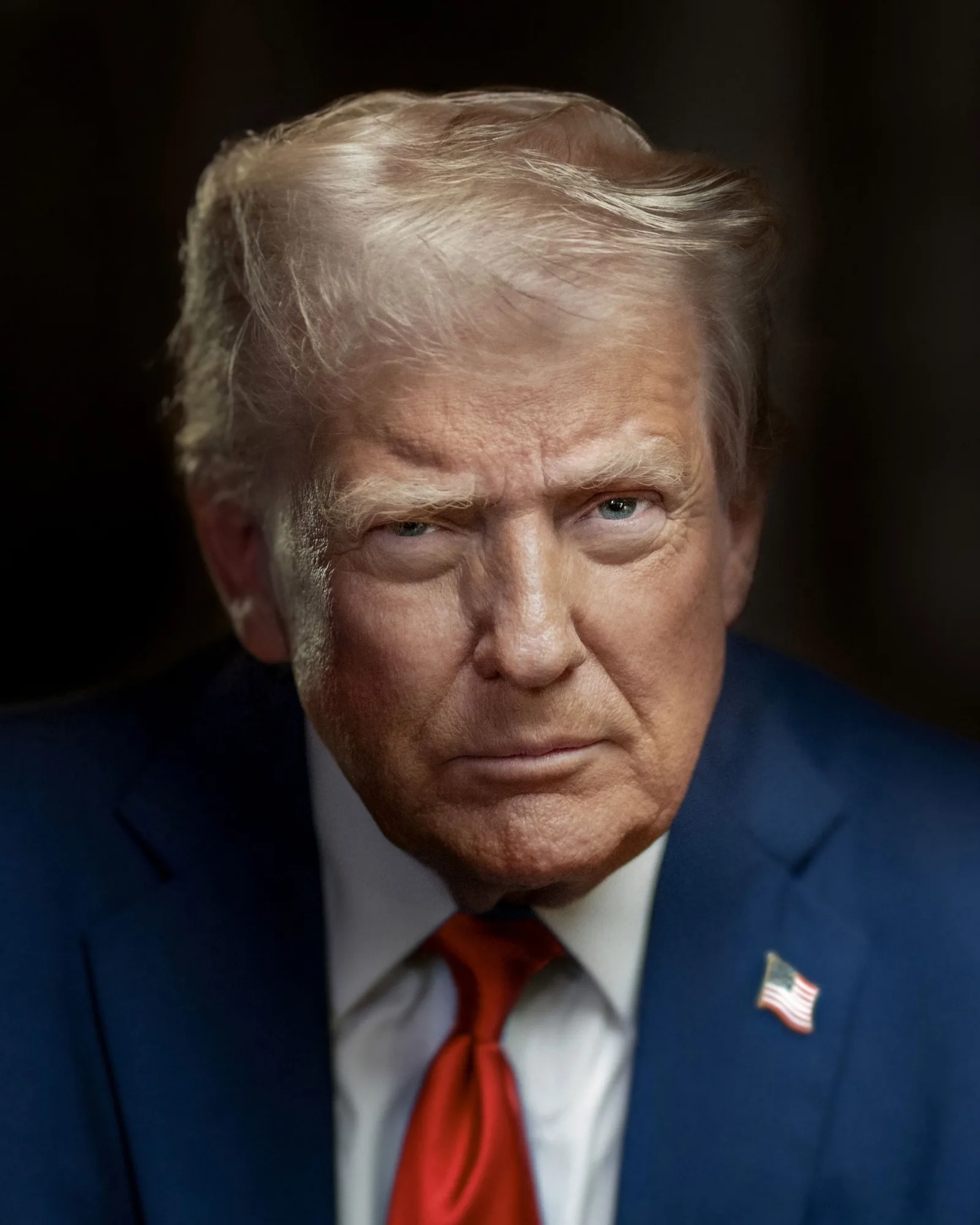 File photo
What happened
Key facts
- Donald Trump signed an executive order waiving sanctions provisions concerning Russia before the measures were due to take effect (per dailypioneer.com, texarkanagazette.com, Washington Examiner).
- The sanctions legislation passed the Senate 86-11 and had bipartisan support (per texarkanagazette.com).
- Democratic Senator Elizabeth Warren urged lawmakers to reverse the waiver, saying Trump was defying Congress and enabling Russia to continue its war against Ukraine (per dailypioneer.com, texarkanagazette.com, Washington Examiner).
- Senator Rick Scott said the United States should use economic pressure on Russia (per texarkanagazette.com).
- Representative Thomas Massie praised Trump’s decision and said he had voted against Lindsey Graham’s sanctions bill (per Washington Examiner, dailypioneer.com).
- Trump called the decision a “very good decision” and said it would benefit the United States and the world (per dailypioneer.com).
- Ukrainian President Volodymyr Zelenskyy said he hoped the sanctions could be revived (per texarkanagazette.com).
The brief
Donald Trump signed an executive order waiving sanctions provisions on Russia before the measures were due to take effect, prompting criticism from lawmakers in both parties and praise from one Republican member of Congress.
The order concerned penalties enacted in legislation that had passed the Senate 86-11, according to the Texarkana Gazette, which described the measure as having bipartisan support. Trump defended the decision to reporters at his Mar-a-Lago resort, calling it a “very good decision” and saying it would benefit the United States and the world.
The Daily Pioneer also reported that he said many people did not yet understand its implications. The sources do not detail the administration’s legal reasoning beyond Trump’s defence of the order.
Republican Senator Thom Tillis called the waiver “beyond irresponsible.” He questioned how the president and his advisers could fail to enforce a law passed by the Senate, according to the Texarkana Gazette. The Daily Pioneer reported that Tillis also challenged the administration’s authority to waive a measure Congress had passed.
His criticism focused on both the decision’s substance and whether the executive branch could set aside the law. Democratic Senator Elizabeth Warren urged colleagues to reverse the decision. The Daily Pioneer reported that Warren accused Trump of defying Congress and enabling Russia to continue its war against Ukraine.
The Texarkana Gazette likewise reported her call for lawmakers to act. These are Warren’s stated criticisms; the sources do not report a congressional vote to reverse the waiver. Republican responses were not uniform. Senator John Cornyn said Lindsey Graham, who championed the legislation, “would be appalled,” according to the Daily Pioneer and the Washington Examiner.
The Daily Pioneer also reported that Republican Senator Darline Graham questioned the waiver. By contrast, Representative Thomas Massie praised Trump’s use of executive authority, saying he had voted against Graham’s sanctions bill, the Washington Examiner reported.
Senator Rick Scott said the United States should use economic pressure on Russia, according to the Texarkana Gazette. The dispute concerns whether Congress’s sanctions measure should be applied as enacted or whether the president can waive its provisions.
The Texarkana Gazette reported the Senate vote as 86-11, while the Washington Examiner emphasized Massie’s opposition to the bill and his approval of the waiver. The Daily Pioneer also reported that the order waived 100 per cent tariffs on the five largest purchasers of Russian oil and gas, including China and India; the other sources do not describe that tariff provision.
Ukrainian President Volodymyr Zelenskyy said he hoped the sanctions could be revived, the Texarkana Gazette reported. That position, Warren’s call for lawmakers to reverse the decision, and Massie’s support for the waiver place the next steps with the president and Congress.
The sources establish the executive order and the competing public positions, but do not report a subsequent congressional action or a decision to restore the penalties.
Why it matters
- The order waives sanctions provisions on Russia, changing the economic-pressure measure that Congress passed 86-11.
- Ukrainian President Volodymyr Zelenskyy said he hoped the sanctions could be revived; the reported mechanism at stake is whether the penalties against Russia take effect.
- Senator Elizabeth Warren urged lawmakers to reverse the waiver, while Representative Thomas Massie praised it, placing Congress’s role in the dispute at the centre of the competing positions.
- The Daily Pioneer reported that the order also waived 100 per cent tariffs on five large purchasers of Russian oil and gas, including China and India.
What to watch next
- Whether Donald Trump or the administration takes further action on the waived sanctions provisions.
- Whether lawmakers act on Elizabeth Warren’s call to reverse the waiver.
- Whether Congress takes up a move to restore the sanctions measure that passed the Senate 86-11.
- Whether the sanctions are revived, as Ukrainian President Volodymyr Zelenskyy said he hoped.
How it's being covered
Coverage analysisShow details7 source articles · 7 unique outletsOutlet political mix: Mixed· 3 Center · 2 Right · 2 unratedWhere the outlets are based: US/Canada 43% · Unknown 43% · Other 14%
How outlets' accounts compare
3 framing differences · 4 uncorroborated claims · 1 information gap- The Daily Pioneer and Texarkana Gazette foreground bipartisan criticism of Trump’s waiver; the Washington Examiner also reports that Representative Thomas Massie praised it.
- The Daily Pioneer reports a waiver of 100 per cent tariffs on five major purchasers of Russian oil and gas, including China and India; the other article texts focus on the Russia sanctions provisions.
- Senator Thom Tillis questioned the administration’s authority to waive the law, but the sources do not provide a legal ruling on that question.
- Elizabeth Warren said the waiver defied Congress and enabled Russia to continue its war against Ukraine; this is her criticism, not an independently established finding in these reports.
- Thom Tillis called the waiver “beyond irresponsible.”
- Donald Trump called his decision a “very good decision.”
- Thomas Massie said he welcomed Trump’s use of executive authority to waive provisions concerning Russia.
- The sources do not provide a detailed account of the sanctions provisions, the administration’s legal rationale, or the practical effects of the waiver.
Timeline
Developments from this story's sources, dated background we compiled and fact-checked, and our earlier coverage. Each row says which.- Ukraine signed the Budapest Memorandum with Russia, the United States and the United Kingdom after joining the Nuclear Non-Proliferation Treaty as a non-nuclear-weapon state.Background · compiled and fact-checked by Updat3
- At NATO’s Bucharest summit on April 3, 2008, member states declared that Ukraine and Georgia “will become members,” without setting an accession date.Background · from our historical context
- In February 2014, Ukraine’s parliament removed President Viktor Yanukovych from office after months of protests; Russia subsequently annexed Crimea, a move rejected by Ukraine and most governments.Background · from our historical context
- The closest earlier framework for presidential action on Russia sanctions was the Countering America’s Adversaries Through Sanctions Act, signed by President Donald Trump on August 2, 2017.Background · from our historical context
- On February 24, 2022, Russia launched its full-scale invasion of Ukraine.Background · from our historical context
- Donald Trump was inaugurated for a second, non-consecutive term as U.S. president.Background · compiled and fact-checked by Updat3
- President Donald Trump signed the Graham Act, which included sanctions and tariffs intended to increase pressure on Russia.Background · compiled and fact-checked by Updat3
How we got here
The closest earlier framework for presidential action on Russia sanctions was the Countering America’s Adversaries Through Sanctions Act, signed by President Donald Trump on August 2, 2017. The United States had imposed earlier sanctions after Russia’s 2014 annexation of Crimea, and expanded them after Russia began its full-scale invasion of Ukraine in 2022.
In 1994, Ukraine joined the Nuclear Non-Proliferation Treaty as a non-nuclear-weapon state and signed the Budapest Memorandum with Russia, the United States and the United Kingdom, which provided security assurances in connection with its nuclear disarmament.
Original sources
3 of 7 articles · US/Canada · Show allEvery story links to the reporting it was built from. How we choose sources
Spotted a factual error, a broken link or a misleading summary? Tell us.