
Andy Burnham says he ruled out an early election on Good Morning Britain
Andy Burnham told Good Morning Britain he had ruled out calling an early general election, saying he would not seek to bring the next national vote forward.
AI-assisted synthesis · Based on 4 independent reports from 5 outlets · Article text read from 2 of 4 reportsHow it's made
View timeline · 9 entries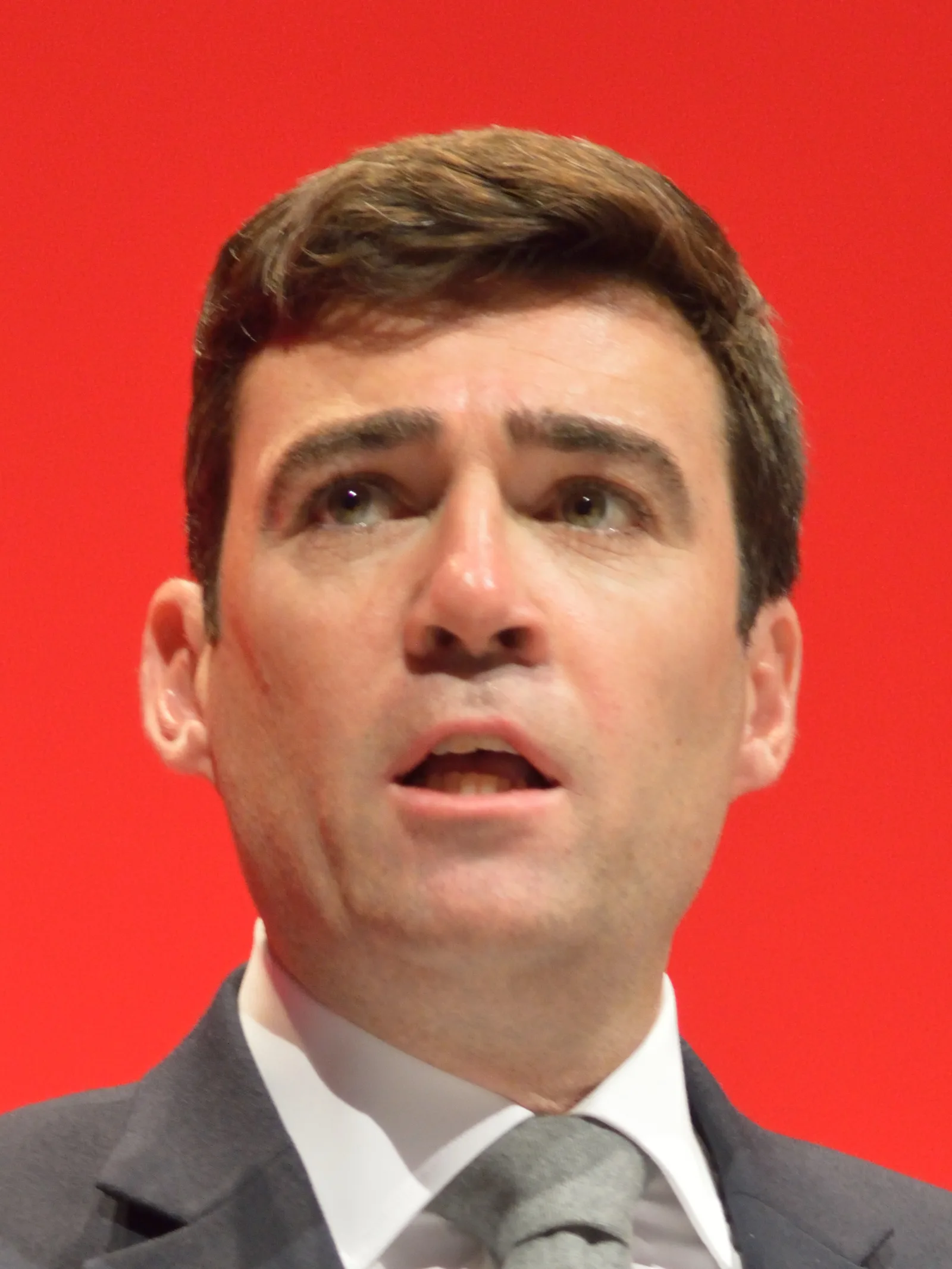 File photo
What happened
Key facts
- Burnham said that, after a decade of experience since Brexit, events had not unfolded as people said they would.
- Burnham said he wanted to strike a better deal with the bloc.
- Susanna Reid asked Burnham whether he was preparing viewers for an early general election; he said he had ruled it out.
- Susanna Reid asked when a manifesto proposing rejoining the European Union would be presented; Burnham replied, “No time soon, if at all.”
- The interview took place ahead of the Autumn Budget, and the article said Burnham was due to announce new funding to tackle homelessness.
The brief
Andy Burnham said he had ruled out holding a general election soon, telling Good Morning Britain that voters wanted him to concentrate on his job and improving people's lives. His comments came in an interview on Monday, October 26, ahead of the Autumn Budget on Wednesday.
Asked about an election, Burnham replied, “No, I’ve ruled that out.” He said he did not think an election was what people wanted and argued that he should get on with governing. The interview prompted complaints on social media, including calls for a general election and criticism of Burnham's performance.
Those reactions were individual posts quoted in the coverage, not evidence of wider public opinion. Alongside the election question, Burnham set out his position on the UK's relationship with the European Union. He said he would not “move ahead of the public,” while expressing a personal hope that the UK would return to the bloc within his lifetime.
He also said that, after a decade since Brexit, events had not unfolded as people had predicted at the time. Burnham is due to meet European Commission president Ursula von der Leyen and other EU leaders in Brussels on November 20, as he seeks a better arrangement with the bloc.
He has argued that a closer economic relationship could add more than £10 billion annually to the UK economy by 2040. That figure is his estimate, not a reported outcome.
The path he has described faces a condition raised by the EU's chief Brexit negotiator: freedom of movement would be required for the UK to return to the single market, with no selective acceptance of its terms.
That position puts a specific issue at the centre of any discussion about closer economic ties, while Burnham's comments indicate that he does not intend to move faster than public opinion supports. The two strands of the interview—his rejection of an early election and his longer-term European ambition—were reported with different emphasis.
The election coverage highlighted Burnham's exchange with presenters and the critical social-media responses; the EU-focused account centred on the proposed Brussels meeting, his economic case, and the conditions attached to single-market access. Neither changes the immediate point he made: he said an election was not imminent and that his focus was on governing.
Why it matters
- UK voters are the constituency Burnham invoked when explaining his decision: he said they wanted him to focus on governing rather than call an election.
- The proposed closer EU economic relationship has a stated potential stake of more than £10 billion a year for the UK economy by 2040, according to Burnham.
- UK businesses and workers considering the implications of single-market access would face freedom of movement as a condition, according to the EU's chief Brexit negotiator.
What to watch next
- Whether Burnham meets Ursula von der Leyen and other EU leaders in Brussels on November 20.
- Whether Burnham advances his case for a closer economic relationship with the EU in discussions with EU leaders.
- Whether freedom of movement remains a stated condition for the UK to return to the single market.
How it's being covered
Coverage analysisShow details5 source articles · 5 unique outlets · 4 distinct reportsOutlet political mix: Mixed· 3 Center · 2 RightWhere the outlets are based: Europe 40% · US/Canada 20% · Other 40%
One source is from a wire service (AP, Reuters, AFP or Bloomberg), whose reporting other outlets often republish.
How outlets' accounts compare
2 framing differences · 3 uncorroborated claims · 2 information gaps- The AOL account emphasizes Burnham's Good Morning Britain interview and critical social-media reactions; LBC focuses on his European policy and planned meeting with EU leaders.
- The social-media posts quoted by AOL express conflicting views about whether voters want an election; the coverage does not establish how widely either view is held.
- Burnham said, “No, I’ve ruled that out,” referring to a general election.
- Burnham said he would not “move ahead of the public” on the UK's relationship with the EU.
- The EU's chief Brexit negotiator said freedom of movement would be a “key condition” for UK return to the single market.
- The sources do not provide polling on public support for an early election or for returning to the European Union.
- The sources do not describe the details of the proposed economic arrangement beyond the stated potential economic gain and the single-market condition.
Timeline
Developments from this story's sources, dated background we compiled and fact-checked, and our earlier coverage. Each row says which.- The UK joined the European Economic Community on January 1, 1973, under Prime Minister Edward Heath.Background · from our historical context
- In a referendum on June 5, 1975, 67.2% of voters backed continued membership.Background · from our historical context
- Greater Manchester voted to remain in the EU in 2016, with Remain receiving about 60% of the regional vote.Background · from our historical context
- A majority of UK voters chose to leave the European Union in the Brexit referendum.Background · compiled and fact-checked by Updat3
- Parliament formally notified the European Council under Article 50 of the Treaty on European Union on March 29, 2017.Background · from our historical context
- The United Kingdom left the European Union.Background · compiled and fact-checked by Updat3
- The United Kingdom and the European Union signed the Trade and Cooperation Agreement, which contains no general right to move freely to live and work.Background · compiled and fact-checked by Updat3
- The United Kingdom and the European Union agreed a framework for resetting relations at a summit in London.Background · compiled and fact-checked by Updat3
- Andy Burnham became UK Prime Minister.Background · compiled and fact-checked by Updat3
How we got here
The immediate backdrop to Andy Burnham’s European ambitions was the UK–EU summit in London on May 19, 2025, where Prime Minister Keir Starmer and European Commission President Ursula von der Leyen agreed a framework for resetting relations. The UK’s departure from the EU followed the 2016 referendum, in which 51.9% of voters chose to leave.
Parliament formally notified the European Council under Article 50 of the Treaty on European Union on March 29, 2017. The UK left the EU on January 31, 2020, and the transition period ended on December 31, 2020.
Original sources
1 of 5 articles · US/Canada · Show allEvery story links to the reporting it was built from. How we choose sources
Spotted a factual error, a broken link or a misleading summary? Tell us.