
Zelenskyy says Russian missiles carried cluster munitions in Kyiv
Ukraine said three Russian ballistic missiles that struck Kyiv carried cluster munitions. The Japan Times reported that Ukraine said Russia launched at least 21 ballistic missiles in three waves.
AI-assisted synthesis · Based on 4 independent reports from 5 outlets · Article text read from 1 of 4 reportsHow it's made
View timeline · 10 entries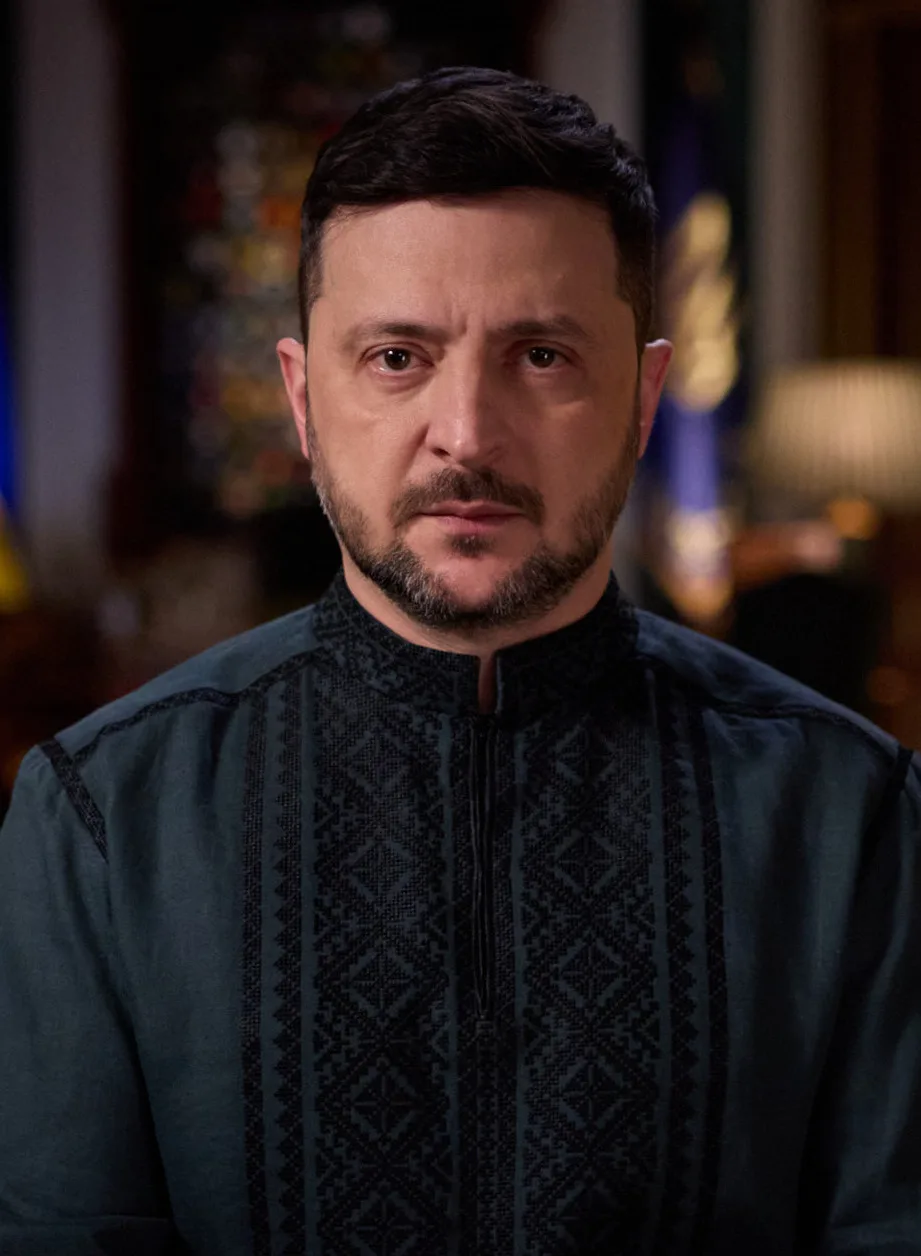 File photo
What happened
Key facts
- Russian missiles struck Kyiv (per The Japan Times, asiaone.com, PBS).
- Volodymyr Zelenskyy said three missiles that Russia fired at Kyiv carried cluster munitions (per The Japan Times, voiceofemirates.com).
- Ukraine said Russia fired at least 21 ballistic missiles in three waves (per The Japan Times).
- The Japan Times described the cluster munitions as bomblets that disperse over a wide area and said many countries ban them because of the danger to civilians (per The Japan Times).
- The Japan Times reported that firefighters worked at the site of a shopping center hit by a Russian missile attack in Kyiv (per The Japan Times).
- The Japan Times said the Starlink access issue was linked to a rift between Washington and Kyiv that had cast doubt on U.S. support for Ukraine (per The Japan Times).
The brief
Ukraine said Russian missiles that struck Kyiv carried cluster munitions, with President Volodymyr Zelenskyy saying three of the weapons contained them. The Japan Times reported that Ukraine said Russia fired at least 21 ballistic missiles in three waves. Its account described firefighters at a shopping center hit by a Russian missile attack in the Ukrainian capital.
The Japan Times explained that cluster munitions disperse bomblets over a wide area and are banned by many countries because of the danger to civilians. The account did not give a casualty figure for the Kyiv attack. Russia's defense ministry had not immediately responded to a request for comment, the newspaper reported.
Other headlines also described Russian missiles striking Kyiv. The AsiaOne and PBS headlines said Moscow reported that it had downed more than 800 Ukrainian drones. The Japan Times separately reported that Ukraine sent hundreds of drones toward Moscow, but did not provide a figure for the drones in that account.
These descriptions do not establish that the reported drone totals refer to the same measure. The Japan Times also reported that U.S. President Donald Trump said SpaceX CEO Elon Musk had restored Ukraine's Starlink access. The newspaper connected the access issue to a rift between Washington and Kyiv that had cast doubt on U.S. support for Ukraine.
The report did not state when access was restored or provide further details about the dispute. The account placed the attacks alongside a U.S. push to end the conflict, saying both countries continued attacks despite that effort.
A Reuters headline described Russia and Ukraine as exchanging strikes and said a U.S. envoy left after talks; it did not identify the envoy or give details about the discussions. The Japan Times did not specify the envoy's departure or connect it directly to the missile attack.
The central allegation about the missiles remains attributed to Ukraine: Zelenskyy said three carried cluster munitions. The Japan Times reported no Russian response to that claim, and its text provides no independent verification of the munition type.
It also reports no casualty total or damage assessment for the shopping center, limiting what can be stated about the attack's effects beyond the reported impact and the presence of firefighters.
Why it matters
- Kyiv residents face the danger from bomblets dispersed over a wide area; the reported cluster-munition claim concerns three missiles.
- Firefighters were at a shopping center hit by a Russian missile attack in Kyiv, but the account provides no casualty figure.
- The Japan Times linked the Starlink access issue to a Washington-Kyiv rift that had cast doubt on U.S. support for Ukraine.
What to watch next
- Whether Russia's defense ministry comments on Ukraine's claim that three missiles carried cluster munitions.
- Whether the reported shopping-center strike is followed by a casualty or damage figure.
- Whether further details emerge about the restoration of Ukraine's Starlink access and the Washington-Kyiv rift.
- Whether the U.S. envoy's departure after talks, mentioned in the Reuters headline, is followed by a stated outcome of those talks.
How it's being covered
Coverage analysisShow details5 source articles · 5 unique outlets · 4 distinct reportsOutlet political mix: Center Only· 4 Center · 1 unratedWhere the outlets are based: Asia 40% · US/Canada 20% · Other 40%
- Coverage is currently concentrated among Center-rated outlets (4 of 4 rated sources); comparatively few Left or Right-rated outlets have published on the event.
2 sources are from a wire service (AP, Reuters, AFP or Bloomberg), whose reporting other outlets often republish.
How outlets' accounts compare
Timeline
Developments from this story's sources, dated background we compiled and fact-checked, and our earlier coverage. Each row says which.- Ukraine, Russia, the United States and the United Kingdom signed the Budapest Memorandum on security assurances.Background · compiled and fact-checked by Updat3
- Ukraine signed the convention in 2008 but did not ratify it; Russia did not sign it.Background · from our historical context
- NATO declared at its Bucharest Summit that Ukraine and Georgia would become members.Background · compiled and fact-checked by Updat3
- The Convention on Cluster Munitions was adopted.Background · compiled and fact-checked by Updat3
- The Convention on Cluster Munitions entered into force.Background · compiled and fact-checked by Updat3
- Russia annexed Crimea from Ukraine.Background · compiled and fact-checked by Updat3
- Russian forces used cluster munitions during the opening phase of the full-scale invasion, including in attacks on Kharkiv in February 2022, according to Human Rights Watch.Background · from our historical context
- SpaceX activated Starlink service in Ukraine and terminals were supplied there.Background · compiled and fact-checked by Updat3
- The Pentagon confirmed it had contracted with SpaceX to provide Starlink services in Ukraine.Background · compiled and fact-checked by Updat3
- Donald Trump and Volodymyr Zelensky met at the White House; their planned minerals agreement was not signed.Background · compiled and fact-checked by Updat3
How we got here
Russian forces used cluster munitions during the opening phase of the full-scale invasion, including in attacks on Kharkiv in February 2022, according to Human Rights Watch. The United Nations Human Rights Monitoring Mission in Ukraine later documented civilian casualties from cluster-munition attacks in 2022.
The Convention on Cluster Munitions, adopted on May 30, 2008, and in force from August 1, 2010, prohibits its parties from using, producing, transferring or stockpiling cluster munitions. Ukraine signed the convention in 2008 but did not ratify it; Russia did not sign it.
Original sources
1 of 5 articles · US/Canada · Show allEvery story links to the reporting it was built from. How we choose sources
Spotted a factual error, a broken link or a misleading summary? Tell us.