
Zelenskyy seeks talks on Black Sea grain shipping
Ukraine’s President Volodymyr Zelenskyy said the country is discussing reopening Black Sea civilian navigation with Turkey, Egypt and India, particularly for agricultural exports. He said Black Sea ports can ship up to 40 million tons of grain during a marketing season, while Ukraine can currently export 38% of its regular volumes.
AI-assisted synthesis · Based on 3 independent reports from 5 outlets · Article text read from 1 of 3 reportsHow it's made
View timeline · 9 entries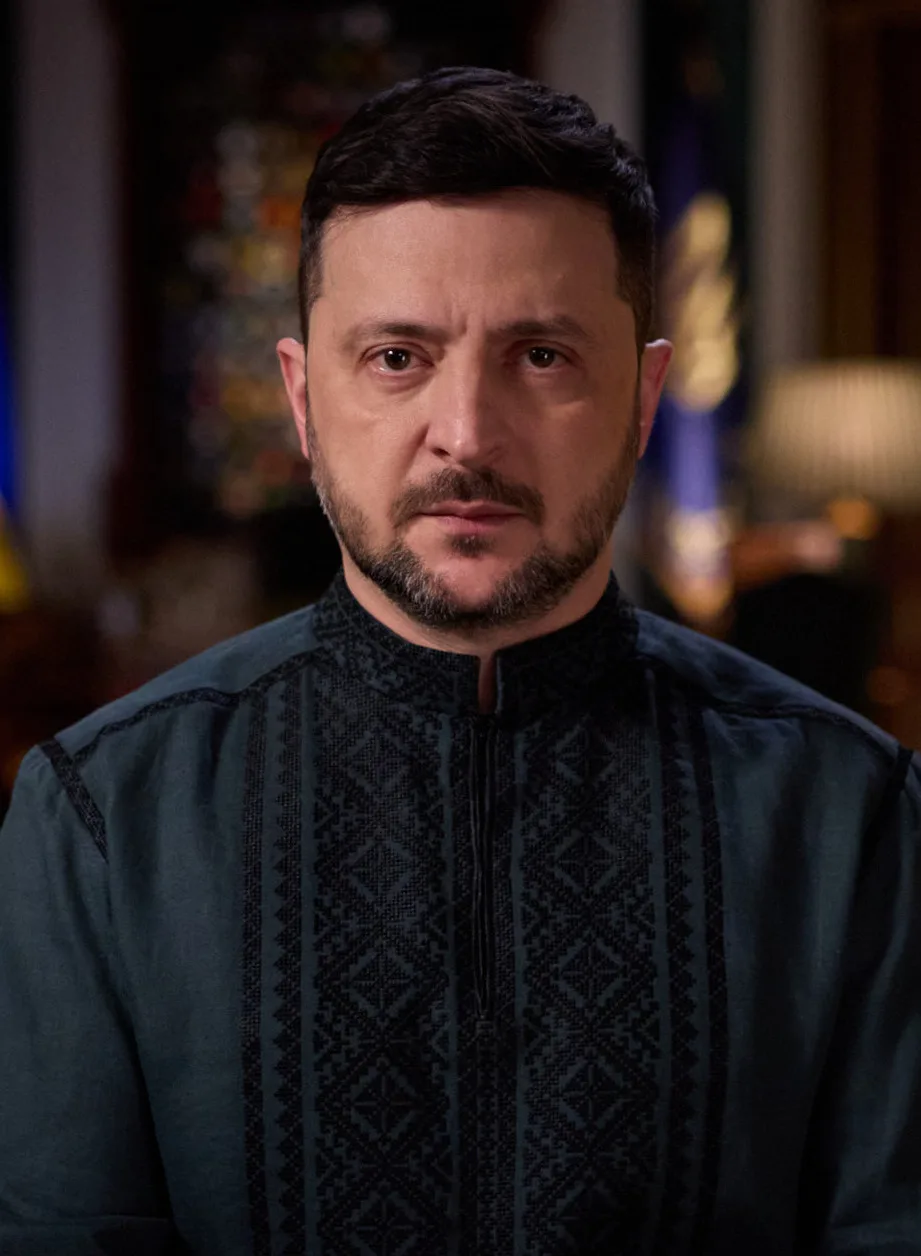 File photo
What happened
Key facts
- Ukraine is in talks with Turkey, Egypt and India about opening or restoring Black Sea trade or navigation (per gcaptain.com, nv.ua, The Economic Times).
- Ukraine’s President Volodymyr Zelenskyy said the discussions concern civilian navigation, particularly for agricultural exports (per gcaptain.com).
- Ukraine’s Black Sea ports are its main route for food exports (per gcaptain.com, nv.ua, The Economic Times).
- Zelenskyy said Ukraine cannot move this volume of shipments by rail (per gcaptain.com).
- Zelenskyy said Kyiv asked the European Union to renew the solidarity lanes program, which allowed Ukraine to export grain via European railways and ports at the beginning of Russia’s full-scale invasion in 2022 (per gcaptain.com).
The brief
Ukraine is discussing the reopening of Black Sea civilian navigation with Turkey, Egypt and India, with agricultural exports a particular focus, President Volodymyr Zelenskyy said in an interview with Bloomberg News. The talks concern a route for grain shipments through the Black Sea, according to the account published by gCaptain.
Headlines from The New Voice of Ukraine, The Economic Times, UA.NEWS and Bloomberg also describe discussions about restoring Black Sea trade or opening a grain corridor. Zelenskyy said Ukraine’s Black Sea ports serve as the main route for the country’s food exports. He put their potential shipping capacity at up to 40 million tons of grain within a marketing season.
He also said rail transport cannot handle shipments on that scale, underscoring the role he assigns to maritime navigation in moving Ukraine’s agricultural exports. The account does not report that an agreement has been reached with Turkey, Egypt or India, or that civilian navigation has reopened. It describes the matter as ongoing discussions about whether to open the route.
Zelenskyy’s remarks identify agricultural exports as the focus, but do not detail the terms under discussion or the positions of the three countries. Separately, Zelenskyy said Kyiv asked the European Union to reinstate its “solidarity lanes” program to help move grain exports.
He described the program as enabling exports over European railways and through ports when it operated at the beginning of Russia’s full-scale invasion in 2022. His request is distinct from the Black Sea discussions: it seeks the renewal of a European export route alongside talks about civilian navigation.
Ukraine’s Agriculture Ministry put current export capacity at 38% of regular volumes. The ministry’s figure and the 40-million-ton seasonal capacity cited by Zelenskyy describe different measures: one is a share of usual export volumes, while the other is the stated capacity of the country’s Black Sea ports.
The account does not give a time period or further breakdown for the 38% figure. The next steps identified in the account are the discussions with Turkey, Egypt and India and Kyiv’s request to the European Union. It gives no decision or timetable for reopening Black Sea navigation or renewing the solidarity lanes program.
The stated stakes in the talks are the maritime route’s role in Ukraine’s food exports and the limits Zelenskyy describes on moving comparable shipment volumes by rail.
Why it matters
- Ukraine’s agricultural export capacity is directly at stake: the Agriculture Ministry put current exports at 38% of regular volumes.
- Ukraine relies primarily on its Black Sea ports for food exports; Zelenskyy said they can ship up to 40 million tons of grain in a marketing season.
- Zelenskyy said rail cannot handle shipments at that scale, while he has asked the European Union to renew the solidarity lanes program for grain exports.
What to watch next
- Whether Ukraine, Turkey, Egypt and India advance the discussions on opening Black Sea civilian navigation.
- Whether the European Union renews the solidarity lanes program requested by Kyiv.
- Whether Black Sea navigation opens for agricultural exports, the stated focus of the talks.
How it's being covered
Coverage analysisShow details5 source articles · 5 unique outlets · 3 distinct reportsOutlet political mix: Center Only· 4 Center · 1 unratedWhere the outlets are based: Europe 40% · US/Canada 20% · Other 40%
- Coverage is currently concentrated among Center-rated outlets (4 of 4 rated sources); comparatively few Left or Right-rated outlets have published on the event.
2 sources are from a wire service (AP, Reuters, AFP or Bloomberg), whose reporting other outlets often republish.
How outlets' accounts compare
Timeline
Developments from this story's sources, dated background we compiled and fact-checked, and our earlier coverage. Each row says which.- The initiative followed the start of Russia’s full-scale invasion on February 24, 2022, which disrupted seaborne exports from Ukraine’s Black Sea ports.Background · from our historical context
- On May 12, 2022, the European Commission launched “Solidarity Lanes,” routes using rail, roads and inland waterways to move Ukrainian goods through the European Union.Background · from our historical context
- The immediate precedent for efforts to keep Ukrainian grain moving by sea was the Black Sea Grain Initiative, signed in Istanbul on July 22, 2022, by Ukraine, Russia, Turkey and the United Nations.Background · from our historical context
- The first vessel under the agreement left Odesa on August 1, 2022.Background · from our historical context
- In July 2023, Russian forces also struck Ukrainian port infrastructure, including facilities in Odesa and the Danube region.Background · from our historical context
- The collapse of that arrangement in July 2023 left Ukraine relying on its own corridor and overland routes to move exports.Background · from our historical context
- Russia announced on July 17, 2023, that it would not extend the initiative, saying its conditions for facilitating Russian food and fertilizer exports had not been met.Background · from our historical context
- Ukraine’s government said on August 10, 2023, that a temporary corridor for civilian vessels would pass through its territorial waters and onward to the Bosporus.Background · from our historical context
- The first ship to use that route since Russia’s withdrawal departed Odesa on August 16, 2023.Background · from our historical context
How we got here
The immediate precedent for efforts to keep Ukrainian grain moving by sea was the Black Sea Grain Initiative, signed in Istanbul on July 22, 2022, by Ukraine, Russia, Turkey and the United Nations. The first vessel under the agreement left Odesa on August 1, 2022.
Russia announced on July 17, 2023, that it would not extend the initiative, saying its conditions for facilitating Russian food and fertilizer exports had not been met. Ukraine’s government said on August 10, 2023, that a temporary corridor for civilian vessels would pass through its territorial waters and onward to the Bosporus.
Original sources
1 of 5 articles · Asia · Show allEvery story links to the reporting it was built from. How we choose sources
Spotted a factual error, a broken link or a misleading summary? Tell us.