
UN commission alleges Israeli forces continued genocide in Gaza during ceasefire
The UN commission of inquiry said Israeli authorities continued to commit genocide in Gaza after the ceasefire began last October. It said Israeli forces used heavy munitions, drones, quadcopters, artillery and sniper fire in densely populated areas during the ceasefire.
AI-assisted synthesis · Based on 4 independent reports from 5 outlets · Article text read from 1 of 4 reportsHow it's made
View timeline · 10 entries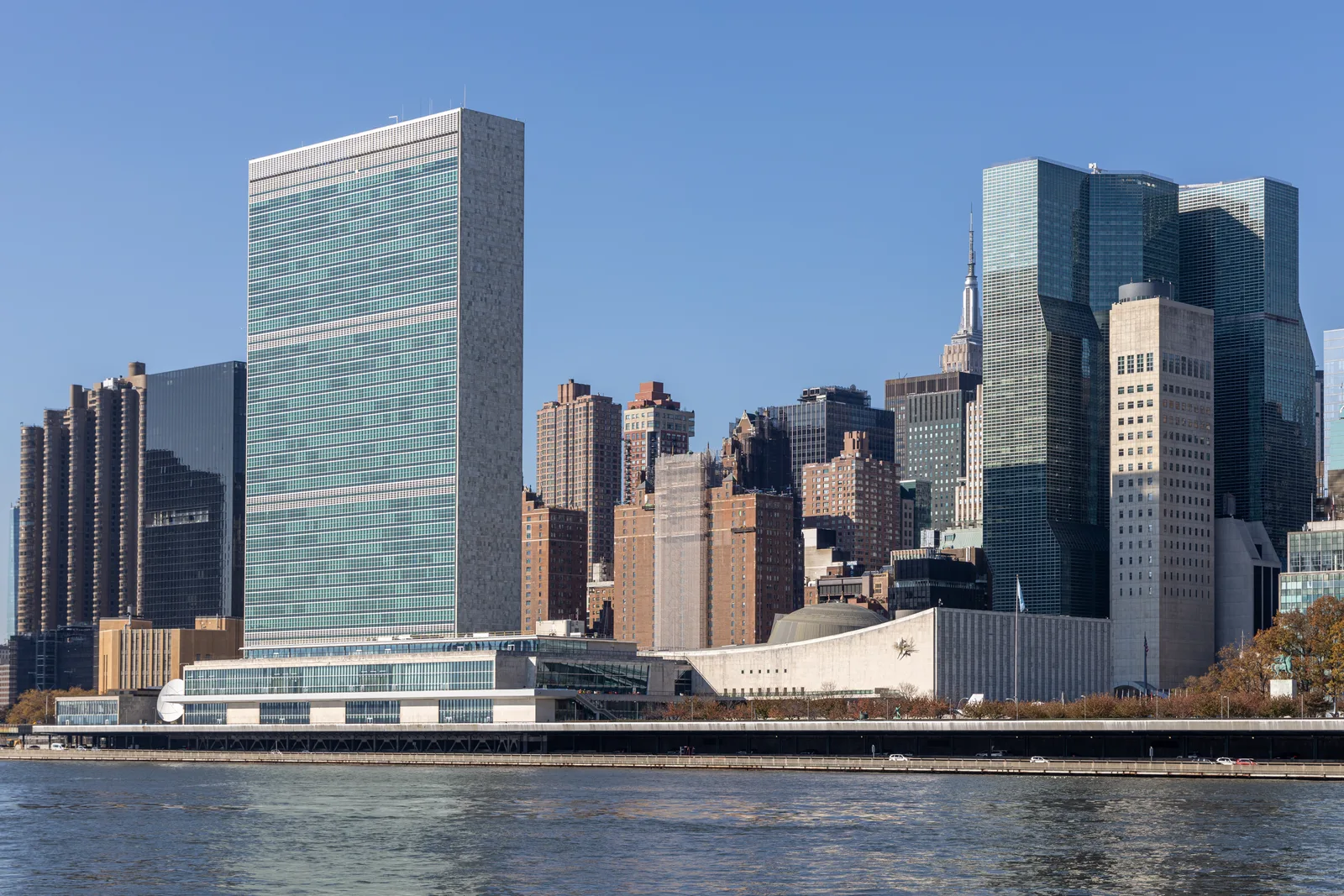 File photo
What happened
Key facts
- A UN commission said Israel continued committing genocide in Gaza after the ceasefire (per kiprinform.com, mercedsunstar.com, Reuters).
- The commission said Israeli forces used heavy munitions, drones, quadcopters, artillery and sniper fire in densely populated areas of Gaza during the ceasefire (per kiprinform.com).
- The commission said the Yellow Line, described as a temporary ceasefire demarcation, had moved further into Gaza and was becoming a de facto border (per kiprinform.com).
- The commission said conditions in the occupied West Bank continued to worsen (per kiprinform.com).
- Ambassador Daniel Meron said the commission's work sought to weaken Israel's legitimacy and deny its right to exist and defend itself (per kiprinform.com).
- An earlier report in September last year concluded that Israel had committed genocide in Gaza and that senior Israeli officials, including Prime Minister Benjamin Netanyahu, had incited such acts (per kiprinform.com).
The brief
The UN Independent International Commission of Inquiry on the Occupied Palestinian Territory, including East Jerusalem, and Israel said Israeli authorities continued to commit genocide in Gaza after the ceasefire began last October.
The commission’s latest findings concern conduct during the ceasefire, and Israel rejected them as part of what it called a misinformation campaign. According to the commission, Israeli forces used heavy munitions, drones, quadcopters, artillery and sniper fire in densely populated areas of Gaza during the ceasefire.
The commission characterized the authorities’ conduct as “genocidal acts with the genocidal intent to destroy, in whole or in part, the Palestinians in Gaza.” That is the commission’s allegation; Israel rejected the report’s findings.
The commission also said the Yellow Line, presented as a temporary demarcation under the ceasefire, had moved further into Gaza and was becoming a de facto border. Its account links that change in the line’s position to the ceasefire period, but does not describe the specific movements or incidents behind its assessment.
The report also covers violations against Palestinian children from the start of the war between Israel and Hamas on October 7, 2023, through September this year. The commission said conditions in the occupied West Bank continued to worsen. These findings broaden the report beyond Gaza, while its central allegation concerns Israeli conduct in Gaza during the ceasefire.
Israel’s mission in Geneva said the report was part of a misinformation campaign intended to demonize Israel. Ambassador Daniel Meron said the commission sought to weaken Israel’s legitimacy and deny its right to exist and defend itself.
Those statements set out Israel’s objection to the commission and its characterization of the report; the commission, in turn, presented its findings as an assessment of Israeli authorities’ actions.
The commission had previously concluded, in a report issued in September last year, that Israel had committed genocide in Gaza and that senior Israeli officials, including Prime Minister Benjamin Netanyahu, had incited such acts. Israel called those earlier accusations scandalous.
The latest report carries forward the commission’s genocide allegation into the ceasefire period, while Israel rejects the commission’s account and its conclusions.
Why it matters
- The commission alleges Israeli authorities continued genocide in Gaza during the ceasefire, identifying Palestinian residents of Gaza as the population affected and describing military activity in densely populated areas.
- The commission specifically cited heavy munitions, drones, quadcopters, artillery and sniper fire as mechanisms used by Israeli forces during the ceasefire.
- The commission said the Yellow Line had moved further into Gaza and was becoming a de facto border, a claimed change in the ceasefire demarcation.
- The commission’s report also addresses violations against Palestinian children and worsening conditions in the occupied West Bank.
What to watch next
- Whether the UN commission provides further findings on the military activity it says took place in densely populated areas during the ceasefire.
- Whether the commission reports further changes to the Yellow Line, which it says is becoming a de facto border.
- Whether Israel’s mission in Geneva issues additional public responses to the commission’s findings.
- How the commission’s findings address violations against Palestinian children through September this year.
How it's being covered
Coverage analysisShow details5 source articles · 5 unique outlets · 3 distinct reportsOutlet political mix: Center Only· 5 CenterWhere the outlets are based: Asia 40% · Global 40% · Other 20%
- Coverage is currently concentrated among Center-rated outlets (5 of 5 rated sources); comparatively few Left or Right-rated outlets have published on the event.
2 sources are from a wire service (AP, Reuters, AFP or Bloomberg), whose reporting other outlets often republish.
How outlets' accounts compare
Timeline
Developments from this story's sources, dated background we compiled and fact-checked, and our earlier coverage. Each row says which.- The Genocide Convention, adopted by the UN General Assembly on December 9, 1948, defines genocide and obliges its parties to prevent and punish it.Background · from our historical context
- Israel captured Gaza, the West Bank and East Jerusalem during the Six-Day War.Background · compiled and fact-checked by Updat3
- Israel withdrew its settlements and permanent ground forces from Gaza.Background · compiled and fact-checked by Updat3
- After Hamas took control of Gaza in 2007, Israel and Egypt imposed restrictions on movement into and out of the territory, which they described as security measures.Background · from our historical context
- The UN Human Rights Council established the Independent International Commission of Inquiry on the Occupied Palestinian Territory, including East Jerusalem, and Israel in May 2021 through resolution S-30/1.Background · from our historical context
- The October 2023 attack and ensuing war came after decades of conflict over land, statehood and occupation.Background · from our historical context
- Hamas-led fighters attacked Israel, killing about 1,200 people and taking about 250 hostages, according to Israeli authorities.Background · compiled and fact-checked by Updat3
- The International Court of Justice ordered provisional measures in South Africa’s case alleging Israel violated the Genocide Convention.Background · compiled and fact-checked by Updat3
- In September 2025, a UN commission of inquiry concluded that Israel had committed genocide in Gaza and said senior Israeli officials, including Prime Minister Benjamin Netanyahu, had incited such acts.Background · from our historical context
- A ceasefire began in Gaza.Background · compiled and fact-checked by Updat3
How we got here
In September 2025, a UN commission of inquiry concluded that Israel had committed genocide in Gaza and said senior Israeli officials, including Prime Minister Benjamin Netanyahu, had incited such acts. Hamas said the attack was a response to Israeli occupation and policies toward Palestinians.
Israel said its military campaign in Gaza was aimed at defeating Hamas and securing the hostages. The UN Human Rights Council established the Independent International Commission of Inquiry on the Occupied Palestinian Territory, including East Jerusalem, and Israel in May 2021 through resolution S-30/1.
Original sources
2 of 5 articles · Global · Show allEvery story links to the reporting it was built from. How we choose sources
Spotted a factual error, a broken link or a misleading summary? Tell us.